Ask Tembo
Protecting Botswana's National Parks (2026): Status & Strategy

Botswana protects over 40% of its land through 6 national parks, 6 game reserves, and 6 forest reserves, using technology, ranger patrols, and transfrontier partnerships. Climate change, habitat fragmentation, and targeted poaching remain persistent threats.
Conservation Status at a Glance
Botswana has designated over 40% of its land surface area to national parks and game reserves, making it one of southern Africa's leading conservation nations.[1] As of 2023, the country protects 29.14% of terrestrial and inland water areas through a network of 6 national parks, 6 game reserves, 6 forest reserves, 3 bird sanctuaries, and 1 game sanctuary.[2] These protected areas anchor the world's largest remaining elephant population and iconic landscapes like the Okavango Delta and Chobe National Park. However, emerging threats—climate change, habitat fragmentation from human development, and increasingly organized poaching for wildlife trade—demand intensified protection strategies and sustained investment.
Why Botswana's Parks Matter
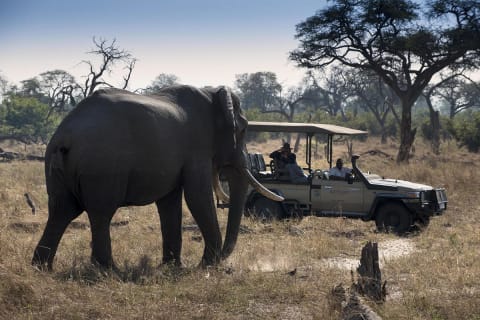
Botswana's protected areas form the ecological backbone of the southern African wilderness. Chobe National Park, covering approximately 11,700 square kilometres and established as Botswana's first national park, supports critical populations of African elephants, endangered wild dogs, and vulnerable cheetahs.[3] The park is part of the larger Kavango-Zambezi Transfrontier Conservation Area (KAZA), a multinational landscape linking reserves across Namibia, Zambia, and Zimbabwe to maintain migration corridors and genetic diversity for large predators and herbivores.[3]
These parks generate substantial socio-economic benefits through high-value, low-volume tourism. In 2023–2024, Botswana's revised protected area fee structure increased annual revenue from a projected US$1.8 million to US$7.8 million in the first year alone—funds reinvested directly into conservation infrastructure, ranger salaries, and community programmes.[4] This conservation-based economy model demonstrates that wildlife protection and sustainable development can reinforce each other.
Current Threats to Protected Areas
Habitat Loss and Fragmentation
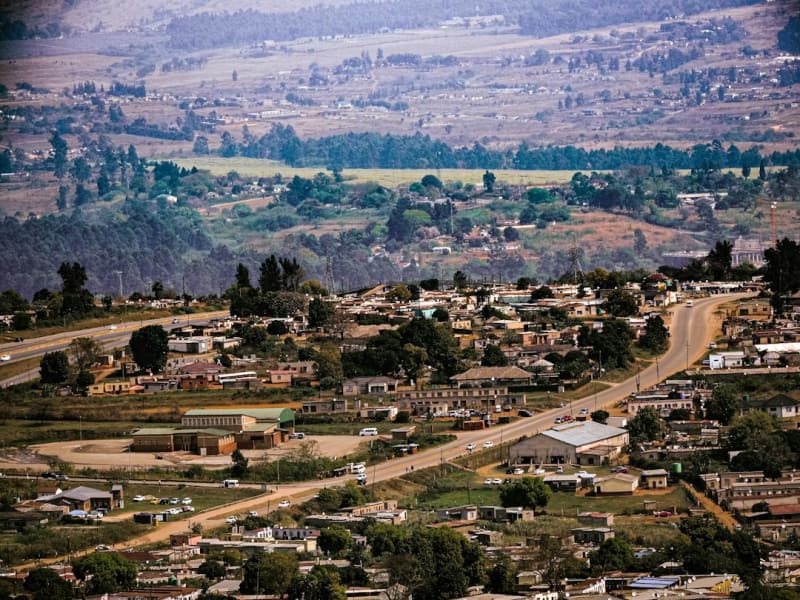
Human development—farming, urban expansion, and settlement—is fragmenting wildlife corridors across Botswana. A 2026 study using camera traps in Chobe District found that wildlife corridors connecting habitats through farmland and towns show altered species behaviour: baboons, hyenas, antelope, and sable respond differently depending on the presence and timing of human activity, indicating stress on movement and feeding patterns.[5] Desertification and land degradation in areas like the Tuli Block further reduce available habitat for large carnivores and herbivores.
Climate Change and Drought
Droughts are increasing in duration, frequency, and intensity across southern Africa. A 2026 analysis of 19 years of GPS data from African elephants in Botswana found that elephant space use and habitat selection change significantly across different drought timescales, forcing animals into smaller ranges and closer contact with human settlements—a recipe for conflict.[6] Water scarcity and vegetation loss threaten populations of vulnerable species and disrupt migration patterns that have sustained wildlife for centuries.
Targeted Poaching for Wildlife Trade
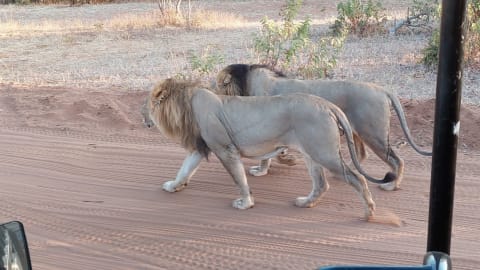
A new and poorly understood threat has emerged: targeted poaching for illegal wildlife trade. A 2026 synthesis across African range states found that lions are increasingly targeted for their body parts, driven by demand in African and Asian markets and facilitated by organized transnational crime networks.[7] Unlike traditional poaching motivated by bushmeat or retaliatory killing, this trade-driven poaching is growing, underreported, and distinct from habitat loss or prey depletion—making it harder to predict and counter with conventional anti-poaching methods.
Protected Areas Network and Management
Key National Parks and Reserves
| Park/Reserve | Size (km²) | Key Species & Features | Management Focus |
|---|---|---|---|
| Chobe National Park | ~11,700 | Elephants, wild dogs, cheetahs; floodplains, woodlands | Transfrontier corridors; ranger patrols; tourism revenue |
| Okavango Delta | ~15,000 (wetland complex) | Elephants, buffalo, predators; world's largest inland delta | High-value tourism; rhino conservation; community benefits |
| Central Kalahari Game Reserve | Extensive | Predators, herbivores; semi-arid ecosystem | Anti-poaching; habitat restoration; climate resilience |
| Tuli Block Conservancies | Multiple reserves | Large elephant population; diverse carnivores | Species research; soil conservation; anti-poaching |
Governance and Institutional Framework
The Department of Wildlife and National Parks (DWNP), operating under the Ministry of Environment, Wildlife and Tourism, is the primary government agency responsible for wildlife conservation and protected area administration.[8] The DWNP enforces the Wildlife Conservation and National Parks Act (1992), which regulates safari hunting, wildlife use, and management plans to ensure sustainable resource use.[9] The National Policy on Natural Resources Conservation & Development (1990) promotes integrated natural resource management and civil society participation, though weak legislative backing has limited its effectiveness in some contexts.[9]
Private and international partnerships strengthen management. Community conservancies and conservancy networks operate alongside government reserves, with organizations like Rhino Conservation Botswana managing programmes in the Okavango Delta.[10] Kalahari Research and Conservation, supported by the Lion Recovery Fund (which awarded US$300,000 across 3 years), develops projects to prevent habitat loss, increase wildlife management capacity, and address human-lion conflict in protected areas.[11]
Technology and Anti-Poaching Strategy
EarthRanger and Real-Time Monitoring
In July 2022, a US$2.4 million GEF grant (with US$4.8 million co-financing) launched a three-and-a-half-year project to deploy EarthRanger, a software platform combining real-time ranger patrol data, remote imaging, and sensor networks, across six protected areas in Africa—including Chobe National Park.[12] EarthRanger helps park managers, ecologists, and wildlife biologists make informed conservation decisions by integrating patrol reports, camera trap images, and GPS tracking in real time. The system has been operational since 2015 and is now scaling across the continent to strengthen protected area effectiveness.[12]
Partners executing the project in Botswana include the Department of Wildlife and National Parks, Conservation International, the Allen Institute for Artificial Intelligence (AI2), African Parks, and Peace Parks Foundation.[12]
Ranger Patrols and Law Enforcement
Protected areas in Botswana depend on trained, equipped ranger teams. In 2019–2020, the Kalahari Research and Conservation project supported by the African Wildlife Initiative provided 14 months of salaries and rations for 105 conservancy rangers across seven conservancies, enabling sustained anti-poaching operations.[13] Results were measurable: illegal logging incidents decreased from eight cases to just one by project end, and targeted species populations were maintained within a 7% natural fluctuation range, with only one poaching-induced fatality (a reticulated giraffe) reported during the period.[13]
The Wildlife Ranger Challenge 2020 awarded grants to protect organizations across 22 African countries. In Botswana, Rhino Conservation Botswana received funding to support anti-poaching and ranger operations in the Okavango Delta.[10]
Transfrontier Conservation and Regional Cooperation
Botswana's national parks do not exist in isolation. KAZA (Kavango-Zambezi Transfrontier Conservation Area) represents a multinational commitment to restore wildlife movement corridors across borders, particularly for the world's largest remaining elephant population.[14] This vision requires coordination on foot-and-mouth disease control, veterinary fencing policy, and commodity-based beef trade to allow pastoral livelihoods to coexist with unfenced wildlife movement.[14]
Current work in northern Botswana, in partnership with government officials and farming communities, is implementing a commodity-based trade approach for cattle that relies on vaccination protocols and veterinary inspections rather than veterinary fences—a shift that could unlock transfrontier movement corridors for elephants and other species.[14]
Community Involvement and Revenue Sharing
Botswana's conservation framework increasingly recognizes that sustainable protection requires community benefit. The BIOFIN (Biodiversity Finance Initiative), a UNDP programme, has partnered with the Government of Botswana to revise protected area fee structures and develop innovative finance solutions.[4] The revised fee structure, implemented in 2023–2024, increased annual revenue from US$1.8 million to US$7.8 million—a 333% increase—with these funds reinvested into conservation infrastructure, ranger training, and community development programmes.[4]
Community-based natural resource management (CBNRM) programmes, coordinated by the DWNP and NGO partners, enable rural communities to gain user rights over wildlife and tourism on communal land, creating incentives for protection. The UNDP Community Management of Protected Areas for Conservation (COMPACT) project, announced in 2020 in collaboration with the Government of Botswana, was designed to increase the effectiveness of biodiversity conservation through community stewardship.[11]
Conservation Results and Ongoing Challenges
Successes
- Elephant Population Stability: Botswana maintains the world's largest remaining elephant population, supported by habitat protection and transfrontier management. GPS-collared elephants are monitored to guide law enforcement and understand movement patterns.[5]
- Revenue Growth: The 2023–2024 fee reform increased protected area revenue by 333%, enabling sustained ranger operations and infrastructure investment.[4]
- Reduced Poaching in Targeted Areas: In 2019–2020, anti-poaching operations across seven conservancies achieved a 87.5% reduction in illegal logging incidents and maintained targeted species within natural fluctuation ranges, with minimal poaching-induced mortality.[13]
- Technology Deployment: EarthRanger and real-time monitoring systems are now operational in Chobe National Park, enhancing ranger effectiveness and enabling data-driven decision-making.[12]
Persistent Challenges
- Habitat Fragmentation: Wildlife corridors through farmland and towns are increasingly stressed by human activity, altering animal behaviour and movement patterns.[5]
- Climate-Driven Drought: Increasing drought frequency and intensity force elephants and other species into smaller ranges, increasing human-wildlife conflict and stress on populations.[6]
- Emerging Trade-Driven Poaching: Organized poaching for illegal wildlife trade—particularly lions and other iconic species—is growing, poorly understood, and difficult to counter with conventional anti-poaching methods.[7]
- Funding Gaps: While revenue has increased, protected areas still face resource constraints. The Department of Wildlife and National Parks has historically suffered from funding shortages, and donor-dependent programmes face sustainability risks.[8]
- Cross-Border Coordination: KAZA's vision of restored migration corridors requires sustained cooperation across multiple nations on veterinary policy, fencing, and land use—complex negotiations with competing interests.[14]
How Safari Tourism Supports Conservation
When you book a safari in Botswana, your fees directly fund park management. Lion conservation programmes and ranger operations depend on tourism revenue. On SafariFind, you can compare and book conservation-supporting safari lodges and tours; a portion of platform fees support anti-poaching initiatives and community programmes in protected areas.
Responsible tourism—staying at certified lodges, respecting wildlife distance guidelines, and supporting community-based tourism enterprises—creates economic incentives for local people to protect rather than exploit wildlife. High-value, low-volume tourism, Botswana's stated model, means fewer visitors, less infrastructure impact, and more sustainable revenue per park.
A question about Botswana? Ask Tembo
What Travellers Can Do
- Choose Certified Operators: Book with lodges and guides certified for sustainable practice and community benefit. Ask about ranger wages, anti-poaching funding, and community revenue sharing.
- Respect Wildlife Distance: Follow guide instructions on approach distances; stress from close contact weakens animals and disrupts natural behaviour.
- Support Local Communities: Buy crafts from community enterprises, eat locally sourced meals, and engage authentically with people living near parks.
- Reduce Your Carbon Footprint: Flights and vehicle use emit carbon that drives climate change—the largest emerging threat to Botswana's wildlife. Offset flights or consider longer stays to spread impact.
- Donate to Ranger Support: Organizations like the Wildlife Ranger Challenge and Kalahari Research and Conservation directly fund ranger salaries and anti-poaching operations.
- Advocate for Policy: Support transfrontier conservation initiatives and policies that prioritize wildlife corridors over veterinary fencing.
Looking Ahead: 2026 and Beyond
Botswana's national parks face a critical decade. Climate change will intensify drought cycles, pushing animals into fragmented habitats and closer to human settlements. Organized poaching for illegal wildlife trade is accelerating, requiring more sophisticated law enforcement and intelligence operations. At the same time, revenue increases from tourism and innovative finance mechanisms (like BIOFIN) offer unprecedented resources for protection.
Success will depend on sustained political commitment, cross-border cooperation through KAZA, continued technology deployment (EarthRanger, GPS tracking), and genuine community partnership in conservation. The parks that protect over 40% of Botswana's land are not just national treasures—they anchor the survival of Africa's largest remaining wilderness and its iconic species.
Last reviewed July 2026. Conservation data changes — see the cited sources for the latest figures.
Frequently Asked Questions
What percentage of Botswana is protected as national parks or reserves?
Over 40% of Botswana's land surface area is designated to national parks and game reserves. As of 2023, 29.14% of terrestrial and inland water areas are formally protected, comprising 6 national parks, 6 game reserves, 6 forest reserves, 3 bird sanctuaries, and 1 game sanctuary.
How many national parks does Botswana have?
Botswana has 6 national parks. The largest and most well-known is Chobe National Park (approximately 11,700 square kilometres), established as Botswana's first national park. Other major parks include those protecting the Okavango Delta and Kalahari ecosystems.
Which organization manages Botswana's national parks?
The Department of Wildlife and National Parks (DWNP), operating under the Ministry of Environment, Wildlife and Tourism, is the primary government agency responsible for wildlife conservation and protected area administration. The DWNP enforces the Wildlife Conservation and National Parks Act (1992) and works with NGO partners like African Parks, Rhino Conservation Botswana, and Kalahari Research and Conservation.
What is the Kavango-Zambezi Transfrontier Conservation Area (KAZA)?
KAZA is a multinational conservation landscape linking protected areas across Botswana, Namibia, Zambia, and Zimbabwe. It aims to restore wildlife movement corridors and maintain genetic diversity for the world's largest remaining elephant population and other iconic species. Chobe National Park is a key component of KAZA.
How much revenue do Botswana's protected areas generate from tourism?
Following a fee reform in 2023–2024 implemented by BIOFIN and the Government of Botswana, protected area revenue increased from a projected US$1.8 million to US$7.8 million in the first year—a 333% increase. These funds are reinvested into conservation infrastructure, ranger salaries, and community programmes.
What technology is being used to protect Botswana's national parks?
Chobe National Park is now equipped with EarthRanger, a real-time monitoring platform funded by a US$2.4 million GEF grant. EarthRanger combines ranger patrol data, remote imaging, and sensor networks to help park managers make informed conservation decisions and detect poaching threats more rapidly.
What are the main threats to Botswana's protected areas?
The primary threats are habitat fragmentation from human development (farming, urban expansion), increasing droughts driven by climate change, and emerging targeted poaching for illegal wildlife trade. Wildlife corridors are stressed by human activity, droughts force animals into smaller ranges increasing human-wildlife conflict, and organized poaching networks target species like lions for body parts sold in African and Asian markets.
How many rangers work in Botswana's protected areas?
Specific totals vary by year and funding. In 2019–2020, a single anti-poaching project supported 105 conservancy rangers across seven conservancies. Ranger numbers depend on conservation funding, which has historically been constrained but increased through tourism revenue and donor grants.
Do I need a visa to visit Botswana's national parks?
Visa requirements depend on your nationality. Citizens of many countries, including the United States, Canada, Australia, and the United Kingdom, do not require a visa for tourism visits of up to 90 days. However, requirements change—consult your local Botswana embassy or immigration authority before travel. SafariFind can help you understand current requirements.
What vaccinations do I need for a safari in Botswana?
Yellow fever vaccination is recommended if you are arriving from countries where yellow fever is endemic; it is not required by Botswana law but some countries may require proof if you visit Botswana and then travel onward. Malaria prophylaxis is strongly recommended for most areas, including national parks. Consult your travel health clinic at least 4–6 weeks before departure.
How much does a safari in Botswana cost?
Safari costs vary widely depending on park, lodge category, and season. Budget safaris may start around US$150–300 per person per day, while mid-range lodges cost US$400–800 per day, and luxury properties exceed US$1,000 per day. Park entry fees, recently reformed, are now higher but fund conservation directly. Prices reflect Botswana's high-value, low-volume tourism model.
What is the best time to visit Botswana's national parks for wildlife viewing?
The dry season (May–October) offers the best wildlife viewing because animals concentrate around water sources. June–August is peak season with cooler temperatures and excellent predator sightings. The wet season (November–April) brings lush vegetation and bird watching opportunities but can limit vehicle access in some areas.
Trips that match this guide