African Elephant Conservation in Botswana 2026
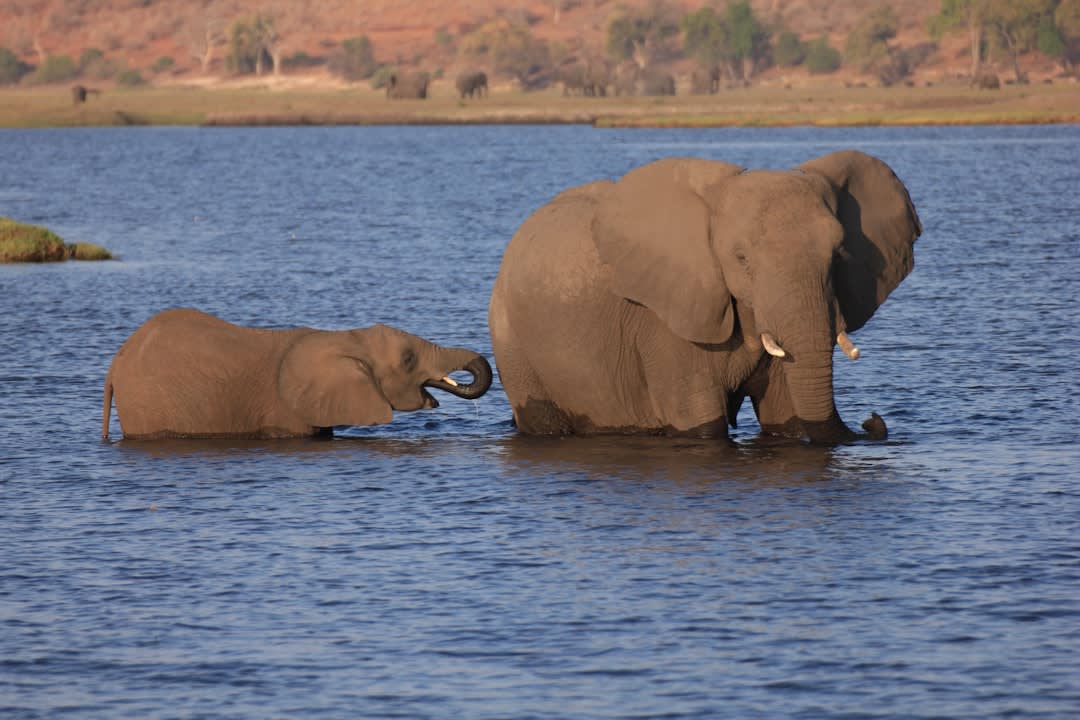
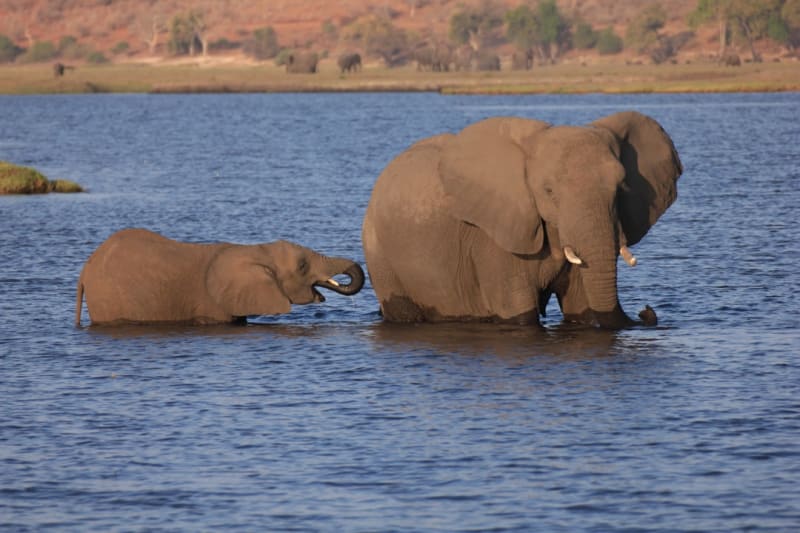
Botswana hosts approximately 130,000 African elephants—one-third of the continent's population—with stable growth over 25 years. Yet conservation faces new tensions: trophy hunting expansion, human-wildlife conflict, and transboundary coordination challenges in the Kavango-Zambezi region.
Conservation Status at a Glance
Botswana is home to approximately 130,000 African savanna elephants (Loxodonta africana), representing roughly one-third of Africa's entire elephant population.[1] Unlike much of the continent, where poaching has driven catastrophic declines, Botswana's elephant population has remained stable or growing for the past 25 years, with documented growth rates of 0.16% annually in southern African populations.[2] However, this success masks emerging tensions: trophy hunting quotas have expanded to record levels, human-elephant conflict is intensifying in farming communities, and transboundary management across the Kavango-Zambezi Transfrontier Conservation Area (KAZA)—which spans Angola, Botswana, Namibia, Zambia, and Zimbabwe and holds approximately 228,000 elephants—remains complex and contested.[3][4]
Why Botswana's Elephants Matter Globally
Botswana's elephant population is not merely a national asset; it is a continental lifeline. The African savanna elephant is classified as Endangered by the IUCN, with global populations estimated at 350,000–380,000 individuals—a decline of approximately 60% over 50 years in some regions.[5] Across the continent, 20,000–30,000 elephants are killed annually for ivory.[6] Elephants are a keystone species: they engineer ecosystems by dispersing seeds, creating water holes, and shaping vegetation structure. Their loss cascades through food webs and alters landscape resilience to climate change.[2]
Botswana's achievement—maintaining the world's largest contiguous elephant population while supporting wildlife tourism and hunting industries—offers a case study in large-scale mammal management. Yet it also exemplifies the tensions inherent in conservation: balancing anti-poaching success, community livelihoods, habitat integrity, and sustainable use.
The Botswana Elephant Landscape: Distribution and Habitat
Botswana's elephants are concentrated in northern regions, particularly the Chobe-Hwange ecosystem, which extends into Zimbabwe and Namibia. The Chobe-Hwange population alone numbers 200,000–250,000 animals across the transboundary region.[7] The wider Kavango-Zambezi Transfrontier Conservation Area (KAZA), established to manage transboundary wildlife movements, represents the world's largest terrestrial conservation landscape and harbors more than half of Africa's remaining elephants.[8]
Key protected areas include:
- Chobe National Park: One of Africa's most significant protected areas, with over 400 wildlife species and a core elephant population of roughly 70,000 individuals.[9]
- Okavango Delta: A UNESCO World Heritage site and Ramsar wetland that provides critical dry-season refuge and water sources.
- Makgadikgadi Pans: Seasonal grazing and dispersal habitat linked to larger elephant ranges.
However, less than 20% of Botswana's elephant habitat is under formal protection; the remainder exists in buffer zones, hunting concessions, and communal lands where human settlement and agricultural use are expanding.[8]
Historical Context: From Decline to Recovery
The Botswana elephant population's trajectory is remarkable. In the early 20th century, regional populations were fragmented and depleted by hunting and habitat loss. By the 1980s, northern Botswana held fewer than 20,000 elephants.[7] Over the past 40–50 years, the population has increased more than six-fold to its current 130,000, despite 60 years of trophy hunting and major culling operations in adjacent Zimbabwe's Hwange National Park.[7]
This recovery occurred because Botswana implemented consistent anti-poaching measures, established protected areas with enforceable boundaries, and created economic incentives for wildlife conservation through hunting and tourism revenues. These factors—combined with transboundary elephant dispersal from Angola and Zimbabwe—enabled population growth even as poaching ravaged elephant populations elsewhere in Africa.[1]
Current Threats to Botswana's Elephants
1. Human-Elephant Conflict and Habitat Fragmentation
While poaching remains a continental crisis, Botswana faces a different pressure: too many elephants in too little unprotected space. Northern Botswana communities report escalating crop raids, destroyed water infrastructure, livestock predation, and human fatalities.[10] As agricultural expansion and settlement spread into wildlife corridors, elephants increasingly overlap with human-dominated landscapes.
A 2026 study found that human activities—farming, urban expansion, and infrastructure development—are reshaping wildlife corridors in Botswana's Chobe District, forcing species including elephants to navigate landscapes with dense human presence.[11] This fragmentation reduces habitat connectivity, increases conflict, and complicates transboundary movement essential for genetic diversity and population resilience.
2. Trophy Hunting Expansion and Policy Debate
In 2024, Botswana announced a draft hunting quota of 430 elephants for 2026—the highest figure in the country's history.[12] The quota also introduced year-round hunting in place of the previous seasonal model. This expansion has sparked scientific and conservation debate:
- Government position: Director of Wildlife and National Parks Kabelo Senyatso states that Botswana uses hunting to generate sustainable income for rural communities, not to control elephant numbers, and emphasizes that the population is growing, not declining.[1]
- Scientific concern: A 2025 peer-reviewed technical report by Dr. Scott Schlossberg and Dr. Michael Chase reviewed Botswana's hunting programme and found that the government's population model is "very poor" and that the new quota may not align with evidence-based sustainability.[13] The report recommends improved modelling and monitoring before further quota increases.
- Community perspective: Siyoka Simasiku, Director of the Ngamiland Council of NGOs, argues that from a local standpoint, elephants are not endangered in northern Botswana—they are abundant and causing severe conflict.[1]
Trophy hunting in Botswana historically operated at quotas of 0.2%–0.7% of the population annually, while elephant population growth rates are 5%–6% per year, meaning hunting has had minimal impact on population size.[7] However, the 2026 quota represents a significant policy shift that requires transparent science-based justification.
3. Transboundary Coordination Challenges
The KAZA Secretariat, which coordinates conservation across five countries, faces persistent challenges in harmonizing hunting policies, anti-poaching strategies, and habitat protection. Angola's elephant population, severely depleted during its 27-year civil war, numbers only 1,437 individuals as of 2015—a decline from 1,827 in 2005—and remains vulnerable to poaching despite recovery efforts.[14] Zimbabwe's 80,000 elephants also face poaching pressure and economic constraints on park management.[14]
Misaligned policies across borders risk undermining regional conservation. For example, if one country increases trophy quotas while another prioritizes anti-poaching, elephants may experience inconsistent protection across their range.
4. Climate Change and Drought Stress
Southern Africa experienced severe drought cycles in recent years, exacerbating human-elephant conflict as elephants seek water and forage in human settlements and agricultural areas. Climate projections indicate increasing frequency and intensity of droughts, which will intensify pressure on water sources and vegetation—particularly in arid regions bordering the Makgadikgadi and Kalahari.[2]
Conservation Programmes and Organisations at Work
Government Leadership: Botswana Department of Wildlife and National Parks (DWNP)
The DWNP, led by Director Kabelo Senyatso, is the primary authority responsible for elephant management and anti-poaching operations. The department manages protected areas, sets hunting quotas, coordinates ranger patrols, and implements the anti-poaching strategies that have kept Botswana's elephant population stable.[1]
Elephants Without Borders (EWB)
Founded by Dr. Michael Chase and Dr. Scott Schlossberg, EWB is a Botswana-based NGO that conducts rigorous aerial surveys and produces peer-reviewed technical reports on elephant population trends and conservation status. The organization's 2024 technical report, using aerial survey data from 2010–2022, provides the most current population estimates for Botswana and KAZA.[3] EWB also publishes independent scientific reviews of hunting programmes and provides evidence-based recommendations to governments and conservation organizations.
WWF Southern Africa and KAZA Coordination
WWF works across the KAZA landscape with the five partner countries and the KAZA Secretariat to secure habitat connectivity, train rangers in elephant monitoring and anti-poaching techniques, and support community-based conservation initiatives.[8] WWF has advocated for large conservation landscapes like KAZA precisely because elephants require freedom to roam across borders; the organization emphasizes that maintaining this space is essential for long-term population resilience.
African Parks
African Parks manages protected areas across the continent, including sites with significant elephant populations. The organization uses intelligence-based conservation strategies, anti-poaching patrols, and human-wildlife conflict mitigation. Since 2015, the Elephant Crisis Fund—a joint initiative of Save the Elephants and the Wildlife Conservation Network—has contributed over US$4.7 million to African Parks' elephant protection efforts.[15]
CITES MIKE Programme and Ranger Training
The Monitoring the Illegal Killing of Elephants (MIKE) Programme, implemented by the Convention on International Trade in Endangered Species (CITES), partners with the Southern African Wildlife College (SAWC) to train rangers across the region in data collection, anti-poaching techniques, and evidence-based monitoring.[16] Since 2022, the MIKE Programme has trained more than 100 wildlife conservation officials from southern African range states, including Botswana, with funding from the European Union.[16]
Anti-Poaching Infrastructure and Technology
Botswana's success in maintaining its elephant population rests partly on investment in anti-poaching infrastructure and ranger capacity. Key components include:
- Ranger patrols and salaries: Consistent funding for community game guards and national park rangers is essential; interruptions in ranger pay have historically led to increased poaching in other African countries.[17]
- Aerial monitoring: Regular aerial surveys provide population estimates, distribution data, and surveillance of poaching hotspots. Botswana conducts periodic aerial censuses, most recently updated in 2024.
- Intelligence-led operations: Modern anti-poaching integrates intelligence gathering, forensic analysis, and targeted patrol deployment rather than random patrols.
- Cross-border coordination: The KAZA Secretariat facilitates information sharing and joint operations across national boundaries.
Community Livelihoods and Conservation Incentives
Botswana's elephant conservation is inseparable from community economics. The country generates revenue through two primary mechanisms:
Trophy Hunting and Hunting Concessions
Hunting operators pay concession fees and per-animal quotas to the government and often to local communities. These revenues fund anti-poaching patrols, ranger salaries, and wildlife management infrastructure. Proponents argue that hunting creates economic incentive for communities to tolerate elephants and prevent poaching; critics contend that expanding quotas prioritizes revenue over population sustainability and exacerbate human-elephant conflict by removing older, larger males that might otherwise disperse naturally.[12][13]
Wildlife Tourism and Safari Operations
Botswana is a premier safari destination, and visitors travel specifically to see elephants in Chobe National Park, the Okavango Delta, and other protected areas. Safari lodges, guides, and hospitality services employ thousands of Batswana and generate foreign exchange. Travellers booking conservation-supporting safari lodges in Botswana through SafariFind and other operators directly fund habitat protection and anti-poaching efforts through park fees and lodge contributions to conservation programmes. This tourism revenue is often more sustainable long-term than hunting revenue, as it does not require animal mortality and appeals to a growing global market for wildlife viewing.
Community Conservancies and Benefit Distribution
Botswana has established community conservancies in buffer zones around protected areas, allowing local communities to benefit from wildlife use—including hunting and tourism—while maintaining customary rights. However, benefit distribution remains uneven, and some communities report that elephant conflict costs (crop losses, fence repairs, human injuries) exceed their income from conservation.[10]
Regional Context: Botswana Within Southern Africa
Botswana's conservation success must be understood within the southern African region. The IUCN Red List assessment specifically notes that successful elephant conservation exists in countries with sport-hunting and community-based conservation programmes, including Botswana, Zimbabwe, Zambia, South Africa, and Namibia.[1] Across the SADC region, savanna elephant numbers have been stable or growing for decades, particularly in areas like KAZA.[2]
This contrasts sharply with Central and East Africa, where poaching has devastated populations. Tanzania lost 60% of its elephants between 2009 and 2014 (from 109,000 to 43,000), and Mozambique's national parks lost over 50% of elephants to poaching.[14] African forest elephants (Loxodonta cyclotis)—classified as Critically Endangered—declined by 86% over 31 years and now number only 35,000–40,000 individuals.[5][6]
Results: Conservation Successes in Botswana
- Population stability and growth: 130,000 elephants, up from fewer than 20,000 in the 1980s, representing one-third of Africa's total.[1][3]
- Reduced poaching: While illegal poaching occurs, Botswana's anti-poaching infrastructure has prevented the catastrophic losses seen in Central and East Africa.[1]
- Transboundary dispersal: Elephant range has expanded into Angola and Namibia, indicating population health and habitat connectivity in the KAZA region.[7]
- Ranger training and capacity building: Over 100 southern African rangers trained through the CITES MIKE Programme, enhancing data-driven conservation across the region.[16]
- Scientific monitoring: Elephants Without Borders and other research organizations provide peer-reviewed population assessments, enabling evidence-based policy.[3][13]
Remaining Challenges and Uncertainties
- Quota sustainability: The 2026 hunting quota of 430 elephants represents a significant increase from historical levels. The scientific community has raised concerns about whether this quota is supported by rigorous population modelling and whether it accounts for human-elephant conflict dynamics.[12][13]
- Habitat fragmentation: Ongoing agricultural expansion and settlement in buffer zones reduce available habitat and increase conflict. Wildlife corridors are increasingly constrained by human land use.[11]
- Transboundary coordination: Misaligned policies across KAZA countries, economic constraints in neighboring states (particularly Angola and Zimbabwe), and inconsistent anti-poaching enforcement create vulnerabilities.[14]
- Climate resilience: Drought cycles will intensify pressure on water and forage; the long-term carrying capacity of protected areas under climate change is uncertain.
- Ivory trade dynamics: Although the 1989 international ivory trade ban remains in effect, domestic ivory markets in some countries and demand from Asia continue to incentivize poaching regionally.[6]
How Travellers Can Support Elephant Conservation in Botswana
Visitors to Botswana play a direct role in elephant conservation. Here's how to contribute responsibly:
- Choose ethical safari operators: Select lodges and guides that are transparent about their conservation practices, anti-poaching contributions, and community benefit-sharing. Many lodges donate a portion of fees to elephant research and protection programmes.
- Support park fees and protected areas: National park entry fees directly fund ranger salaries and anti-poaching operations. Visiting Chobe National Park, the Okavango Delta, and other protected areas generates revenue for conservation.
- Respect wildlife guidelines: Follow ranger instructions on safe distances and behavior around elephants. Responsible wildlife viewing reduces stress on animals and supports the case for tourism-based conservation over hunting.
- Learn and advocate: Educate yourself about Botswana's elephant challenges—human-wildlife conflict, habitat loss, transboundary coordination—and share evidence-based information with others. Support organizations like Elephants Without Borders and WWF that produce rigorous conservation science.
- Engage with communities: Where possible, patronize community-owned lodges, purchase crafts, and participate in community tourism initiatives that distribute conservation benefits to local people.
- Stay informed on policy: Follow developments in Botswana's hunting quotas and conservation policies. Support transparent, science-based decision-making by governments and international bodies like CITES and the IUCN.
The Road Ahead: 2026 and Beyond
Botswana stands at a crossroads. The 2026 hunting quota announcement, combined with the IUCN's 2021 classification of savanna elephants as Endangered, has intensified scrutiny of the country's conservation model. Key questions for the coming years include:
- Will the 2026 hunting quota be implemented as announced, and will independent monitoring track its impact on population dynamics and human-elephant conflict?
- Can Botswana strengthen transboundary coordination with Angola, Zimbabwe, Namibia, and Zambia to ensure consistent conservation standards across KAZA?
- How will climate change and drought affect elephant habitat carrying capacity, and what adaptive management strategies will be deployed?
- Can communities in buffer zones receive greater benefit from conservation, reducing the perception that elephant conservation is imposed on them rather than chosen by them?
Botswana's 130,000 elephants represent a global conservation asset. The country's success in maintaining the world's largest elephant population, despite 50 years of legal hunting, demonstrates that large mammal conservation and sustainable use can coexist—but only with rigorous science, transparent governance, and genuine commitment to both wildlife and community welfare.
Last reviewed July 2026. Conservation data changes — see the cited sources for the latest figures.
Frequently Asked Questions
How many elephants are in Botswana?
Botswana is home to approximately 130,000 African savanna elephants, representing roughly one-third of Africa's entire elephant population and the world's largest contiguous elephant population.[1] This figure has grown from fewer than 20,000 in the 1980s, reflecting successful anti-poaching and habitat protection over the past 40 years.
Is the African elephant endangered in Botswana?
Globally, the African savanna elephant is classified as Endangered by the IUCN, with populations declining 60% over 50 years in some regions.[5] However, in Botswana specifically, the population has been stable or growing for 25 years due to strong anti-poaching measures and habitat protection. The apparent contradiction between global Endangered status and local population growth reflects regional variation in conservation success.
What is the biggest threat to elephants in Botswana?
While poaching remains a continental crisis, Botswana's primary elephant challenge is human-elephant conflict caused by habitat fragmentation and population density. Elephants raid crops, destroy water infrastructure, and cause human fatalities in northern farming communities.[10] Expanding agricultural settlement in wildlife buffer zones is reducing available habitat and intensifying these conflicts.
What is the 2026 elephant hunting quota in Botswana?
Botswana announced a draft hunting quota of 430 elephants for 2026, the highest figure in the country's history, and introduced year-round hunting in place of seasonal hunting.[12] This quota has sparked scientific debate; a 2025 peer-reviewed report found that the government's population model is inadequate and recommended improved monitoring before further quota increases.[13]
What is KAZA and why does it matter for elephant conservation?
The Kavango-Zambezi Transfrontier Conservation Area (KAZA) is the world's largest terrestrial conservation landscape, spanning Angola, Botswana, Namibia, Zambia, and Zimbabwe, and holding approximately 228,000 elephants.[3][8] KAZA matters because elephants migrate across borders, so transboundary coordination is essential for population resilience and habitat connectivity. WWF and the KAZA Secretariat work to maintain this space and harmonize conservation policies across countries.
How does trophy hunting affect Botswana's elephant population?
Historically, Botswana's hunting quotas have been set at 0.2%–0.7% of the elephant population annually, while the population grows 5%–6% per year, meaning hunting has had minimal impact on population size.[7] However, the 2026 quota increase represents a policy shift that scientists argue requires transparent justification. The impact will depend on quota implementation and monitoring.
Do you need a visa for Botswana if you're visiting for safari?
Visa requirements depend on your nationality. Citizens of many countries, including the US, UK, Canada, Australia, and EU nations, do not require a visa for tourist visits up to 90 days. However, requirements vary; consult your nearest Botswana embassy or check SafariFind's visa guides for your specific country before booking a safari.
What vaccinations do I need for a safari in Botswana?
Vaccinations recommended for Botswana include yellow fever (if traveling from endemic areas), malaria prophylaxis (essential for most regions), typhoid, and routine immunizations. Yellow fever is not endemic in Botswana itself, but proof of vaccination may be required if you're traveling from yellow fever zones. Consult your healthcare provider and review SafariFind's vaccination guides for your country before departure.
How can I support elephant conservation when visiting Botswana?
Choose ethical safari lodges that contribute to anti-poaching efforts and community benefit-sharing, pay national park fees (which fund ranger salaries), follow wildlife viewing guidelines, and support organizations like Elephants Without Borders and WWF. Booking through conservation-aware operators ensures your safari spending directly funds habitat protection and ranger patrols.
What is the difference between African savanna and forest elephants?
African savanna elephants (Loxodonta africana) are larger and live in grasslands and woodlands; they are classified as Endangered, with approximately 350,000–380,000 remaining.[5] African forest elephants (Loxodonta cyclotis) are smaller, live in Central African rainforests, and are Critically Endangered, with only 35,000–40,000 remaining and having declined 86% over 31 years.[5][6] Botswana's elephants are savanna elephants.
Is poaching still a problem in Botswana?
While Botswana's anti-poaching infrastructure has prevented the catastrophic losses seen in Central and East Africa (where 20,000–30,000 elephants are killed annually for ivory), poaching does occur regionally.[6] Botswana's success is due to consistent ranger patrols, aerial monitoring, and protected area enforcement. However, broader transboundary poaching networks and ivory trade demand remain ongoing regional threats.
How does climate change affect elephants in Botswana?
Southern Africa experiences periodic severe droughts that stress elephant populations by reducing water and forage availability. Droughts force elephants into human settlements and agricultural areas, intensifying conflict. Climate projections indicate increasing frequency and intensity of droughts, which will challenge the long-term carrying capacity of protected areas and require adaptive management strategies.