Ask Tembo
What Vaccines Does Rwanda Require for Belgian Travellers 2026?

Belgian citizens travelling directly from Belgium to Rwanda generally do not need a yellow fever certificate for entry, but the certificate can become necessary after travel or transit through a yellow-fever-risk country. Hepatitis A, typhoid and malaria prevention should be discussed with a travel-health professional for a Rwanda itinerary.
Quick answer: Belgian travellers arriving in Rwanda directly from Belgium generally do not need a yellow fever vaccination certificate. Rwanda requires proof of yellow fever vaccination for travellers aged 1 year or older arriving from countries with yellow fever transmission risk; Belgian travel-health guidance also states that yellow fever vaccination is no longer required when travelling from Belgium to Rwanda. Check every transit point before departure because the rule is based on the countries and airports in your itinerary, not only on your nationality. [4][5]
For health protection, CDC guidance recommends hepatitis A for unvaccinated travellers aged 1 year or older going to Rwanda and recommends typhoid vaccination for most travellers, particularly those visiting smaller cities or rural areas. Rwanda has malaria risk throughout the country year-round, so Belgian visitors should arrange an individual malaria-prevention plan before departure. [2][3]
Last checked July 2026 — always confirm with official sources before travelling. This article is informational content, not legal or medical advice. Vaccination and entry rules can change, and your doctor or travel clinic must assess your age, health, pregnancy status, medication, destination and route.
Rwanda vaccination requirements for Belgian citizens: at a glance
| Health item | What Belgian travellers should know |
|---|---|
| Yellow fever certificate | Generally not required when arriving from Belgium, which is not a yellow-fever-risk departure country in the cited guidance. It is required for travellers aged 1 or older arriving from countries with yellow fever transmission risk. [4][5] |
| Hepatitis A | Recommended by the CDC for unvaccinated travellers aged 1 or older travelling to Rwanda. Infants aged 6–11 months may also be advised to receive a travel dose; that dose does not replace the routine series. [1] |
| Typhoid | Recommended for most travellers, especially people staying with friends or relatives or visiting smaller cities and rural areas. [1] |
| Routine vaccinations | Review your routine vaccinations with a healthcare professional. Travel recommendations depend on age, health and itinerary. [9] |
| Malaria prevention | Malaria risk exists throughout Rwanda throughout the year, predominantly from Plasmodium falciparum. Ask a clinician whether prescription prevention is appropriate for your route and health. [4] |
The table separates entry requirements from health recommendations. A vaccine may be medically recommended without being an immigration requirement. Your route also matters: a traveller flying from Brussels may have different documentation obligations from someone connecting through an airport in a yellow-fever-risk country.
Before booking, Belgian travellers can also review Rwanda safari planning for 2026 because the time spent in Kigali, national parks and rural areas can affect the health discussion with a travel clinic.
Yellow fever certificate rules for Rwanda
Rwanda's cited entry rule requires a yellow fever vaccination certificate for travellers aged 1 year or older arriving from countries with a risk of yellow fever transmission. The WHO country information also records this requirement and states that Rwanda has no yellow fever vaccination recommendation for travellers. [4][5]
For a direct journey from Belgium, the Belgian Wanda travel-health service says yellow fever vaccination is no longer required for travel to Rwanda from Belgium. The CDC country information similarly identifies no yellow fever requirement for travellers arriving directly from the United States and explains that requirements can apply to travellers coming from countries with yellow fever risk. [1][8]
Do transit and layovers change the rule?
They can. Rwanda's entry assessment may take account of recent travel through a yellow-fever-risk country. The available travel-health guidance says vaccination is required when arriving within 6 days after leaving or transiting countries with yellow fever risk, while CDC guidance warns that the full itinerary should be considered, including airport transfers where a traveller may need to pass immigration during a long layover. [7][8]
Because the sources describe transit conditions differently, do not rely on a short connection being automatically exempt. Confirm the current rule with Rwanda's official authorities, your airline and an authorised Belgian travel-health centre, particularly if you leave the airport transit area, collect baggage, stay overnight or have a long connection.
What document is accepted?
Where proof is required, travellers must present the International Certificate of Vaccination or Prophylaxis showing yellow fever vaccination or an accepted medical waiver. CDC guidance specifically refers to the ICVP and says the itinerary should be assessed when determining whether proof is needed. [7]
Do not wait until arrival to resolve a certificate problem. Rwanda Biomedical Centre information says that travellers from an active yellow fever transmission country may be vaccinated at entry if they do not have a certificate, and that costs connected with vaccination or quarantine are covered by the traveller. [5]
Recommended vaccinations for a Rwanda trip from Belgium
Hepatitis A
CDC guidance recommends hepatitis A vaccination for unvaccinated travellers aged 1 year or older going to Rwanda. Infants aged 6–11 months should also be vaccinated for travel, but that travel dose does not count towards the routine two-dose series. [1]
If a traveller cannot receive the vaccine because of an allergy to a vaccine component, the CDC describes immune globulin as an alternative that can provide protection for up to 2 months depending on the dosage. Travellers over 40, immunocompromised people and people with chronic medical conditions departing for a risk area in less than 2 weeks may need the first vaccine dose and immune globulin at the same appointment. [1]
Typhoid
Typhoid vaccination is recommended for most travellers to Rwanda, especially those staying with friends or relatives or visiting smaller cities and rural areas. Discuss the choice and timing of vaccine with a clinician rather than assuming that an urban hotel stay and a rural safari carry the same exposure profile. [1]
Routine vaccines and individual recommendations
International-travel vaccination advice depends on factors including age, health and itinerary. Use a pre-travel appointment to review routine protection and any personal recommendations for the activities planned in Rwanda. [9]
That appointment is particularly important for children, older adults, pregnant travellers, people with weakened immunity and anyone with a chronic condition. The available research does not establish a single vaccine schedule for every Belgian visitor, so this article does not prescribe doses or claim that every traveller needs the same set of vaccines.
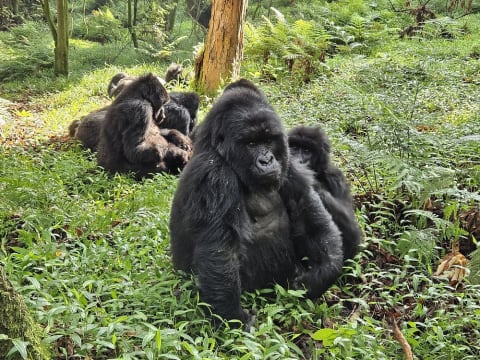
Gorilla trekking, extended rural stays and close contact with animals may lead a clinician to discuss additional precautions. The decision should be based on your activities and medical history, not simply on the fact that you are visiting Rwanda.
For accommodation planning alongside health preparation, compare options in these Rwanda safari lodges compared for 2026. Lodge location and the balance between city, park and rural travel are useful details to take to your travel-health appointment.
Malaria in Rwanda: risk areas, tablets and bite prevention
WHO information states that malaria risk due predominantly to P. falciparum exists throughout Rwanda throughout the year. This means a safari or city itinerary should not be treated as automatically malaria-free. [4]
Ask a Belgian doctor or travel clinic whether you should use prescription malaria prophylaxis. The suitable option depends on medical history, pregnancy or breastfeeding, allergies, age, other medicines and the precise itinerary. The research supplied for this article does not support naming one universal drug, dose or start date for all travellers.
Medication is only one part of prevention. Reduce mosquito bites by using the protection measures recommended by your clinician, such as covering exposed skin and using an appropriate repellent. Seek medical help promptly if you develop a fever during or after travel; tell the clinician that you have been in a malaria-risk area. Do not self-diagnose a post-travel fever.
Pack your prevention plan before leaving Belgium. Remote safari areas and trekking routes may not provide the same access to care as Kigali, so discuss what to do if symptoms occur away from a major town.
A question about Rwanda? Ask Tembo
Health documents and travel insurance
Carry your vaccination record and, if relevant to your route, your International Certificate of Vaccination or Prophylaxis. The ICVP is the document used to show yellow fever vaccination or a medical waiver when a country requires proof. [7]
- Keep a copy of your passport, travel insurance policy, emergency contacts and prescription details separately from the originals.
- Ask your insurer whether treatment, hospital care and medical evacuation in Rwanda are covered for your planned activities.
- Tell your clinician whether you will trek, camp, visit rural communities or spend time near animals.
- Check the entry rule again shortly before departure if your route changes.
Rwanda's official health information publishes an emergency contact of 114 and lists covid@rbc.gov.rw for its traveller information. Save current contact details before travelling, but use the official Rwanda Biomedical Centre channels to confirm that they remain current. [5]
Medication rules and what to pack
Bring enough prescribed medicine for the trip and keep it in its original labelled packaging. Ask your doctor or pharmacist for a written medication list showing generic names, strengths and daily instructions. This is practical preparation rather than a substitute for checking Rwanda's current import rules for controlled or restricted medicines.
Do not pack a medicine simply because another traveller used it. Malaria medicines and other prescriptions can have contraindications and interactions, and the correct choice depends on the patient. The CDC notes that international-travel vaccine recommendations vary according to age, health and itinerary, which is the same reason medication decisions should be individualised. [9]
- Prescription medicines in their original containers.
- A copy of prescriptions and a clinician's letter where appropriate.
- Your vaccination record and ICVP if your itinerary makes yellow fever proof relevant.
- Insect-bite protection recommended for your trip.
- Basic personal hygiene supplies and any products you routinely need.
Confirm airline and Rwandan authority rules before carrying syringes, strong pain medicines, sedatives or other controlled products. If you are unsure, ask the relevant embassy or border authority before departure rather than relying on an informal packing list.
Health facilities and emergencies in Rwanda
Plan your access to care before travelling, especially if your itinerary includes trekking or remote parks. Ask your safari operator where the nearest suitable clinic or hospital is for each overnight stop and how emergency transport would be arranged.
For a medical emergency, Rwanda Biomedical Centre's traveller information gives 114 as an emergency contact. Confirm the number and any current public-health instructions through the official Rwanda Biomedical Centre before departure. [5]
If you need care, explain your symptoms, recent travel, medicines and any exposure to mosquitoes or animals. A fever after visiting a malaria-risk country needs prompt professional assessment because Rwanda has year-round malaria risk throughout the country. [4]
Health preparation should fit the safari you choose. Travellers can compare safari packages on SafariFind, then take the final route—including parks, trekking areas, nights in rural accommodation and border crossings—to a qualified travel-health professional.
Before you leave Belgium: practical checklist
- Confirm whether your itinerary is direct from Belgium or includes a yellow-fever-risk country.
- Arrange a travel-health appointment and discuss hepatitis A, typhoid, routine vaccinations and malaria prevention.
- Check whether your age, pregnancy status, immune system or chronic conditions alter the advice.
- Obtain and carry an ICVP if yellow fever proof could apply to your route.
- Review insurance, evacuation cover, prescriptions and emergency contacts.
- Recheck official Rwandan and Belgian travel-health guidance before flying.
For a separate immigration question, read the Rwanda visa guide for Belgian citizens in 2026. Visa rules and health-entry rules are separate checks, and both should be verified before travel.
Frequently Asked Questions
Do Belgian citizens need a yellow fever certificate for Rwanda?
Generally no, if they arrive directly from Belgium. Rwanda requires proof for travellers aged 1 or older arriving from countries with yellow fever transmission risk, and Belgian guidance says the certificate is no longer required when travelling from Belgium to Rwanda. [4][5][8]
Is yellow fever vaccination recommended for Rwanda?
The WHO information cited here gives Rwanda no general yellow fever vaccination recommendation for travellers. A certificate can nevertheless be an entry requirement when arriving from a yellow-fever-risk country. [4]
Do I need a yellow fever certificate if I transit through another country?
Possibly. The cited guidance applies yellow fever rules to recent travel or transit through countries with yellow fever risk, while the exact treatment of airport transit depends on the itinerary and whether you pass immigration. Confirm the route with official Rwandan authorities and your airline. [5][7][8]
What vaccinations are recommended for Belgian travellers to Rwanda?
Hepatitis A is recommended for unvaccinated travellers aged 1 or older, and typhoid is recommended for most travellers, especially those visiting rural areas or smaller cities. Review routine vaccinations and individual needs with a travel-health professional. [1][9]
How far in advance should I get Rwanda travel vaccinations?
Arrange a travel-health appointment as early as possible, but the research supplied here does not establish one universal lead time for every vaccine or traveller. Timing depends on the vaccine, your health, your age and your itinerary, so follow your clinician's schedule. [1][9]
Is there malaria in Rwanda?
Yes. WHO information states that malaria risk exists throughout Rwanda throughout the year, predominantly from Plasmodium falciparum. Ask a clinician about prescription prevention and mosquito-bite protection before departure. [4]
Do I need malaria tablets for a Rwanda safari?
You may need prescription malaria prevention, but the correct decision is individual rather than automatic. A clinician should consider your route, health, pregnancy or breastfeeding, allergies and other medicines because malaria risk exists throughout Rwanda year-round. [4]
What health documents should I take to Rwanda?
Carry your vaccination record and, when relevant, an International Certificate of Vaccination or Prophylaxis showing yellow fever vaccination or an accepted medical waiver. Keep prescriptions and insurance details with you as well. [7]
What is Rwanda's emergency health number?
Rwanda Biomedical Centre traveller information lists 114 as an emergency contact. Confirm the number and current public-health instructions through official Rwanda sources before departure. [5]
Do Belgian citizens need a visa for Rwanda?
This article covers vaccinations and health rules, not the current visa position for Belgian citizens. Check the separate SafariFind Rwanda visa guide and confirm the latest immigration requirements with official Rwandan sources before travelling.
Trips that match this guide