Ask Tembo
What Vaccinations Does Uganda Require? British Travellers 2026

British travellers entering Uganda must carry proof of yellow fever vaccination if they are aged 1 or over. Hepatitis A, typhoid, routine vaccines and malaria prevention should be discussed with a travel-health professional based on the itinerary.
Quick answer: British citizens aged 1 year or over entering Uganda must have a yellow fever vaccination certificate. The UK government says you may be asked to submit the certificate with your online visa application and must carry the physical certificate in case Immigration requests it on arrival [1]. Yellow fever vaccination is also recommended for travellers aged 9 months and older because Uganda has a risk of transmission [3].
There is no single vaccine list that applies equally to every traveller. The NHS and UK government advise checking Uganda's recommended vaccines and health risks at least 8 weeks before departure, while a clinician should take account of your medical history, safari route, activities and length of stay [2]. This guide covers vaccinations and health rules for British citizens travelling from the United Kingdom in 2026; it is informational, not medical or legal advice.
Last checked July 2026 — always confirm with official sources before travelling.
Quick answer: required and recommended vaccines for Uganda
| Vaccine or prevention | Uganda entry rule or travel-health guidance | What British travellers should do |
|---|---|---|
| Yellow fever | Certificate required for arriving travellers aged 1 year or over [1][3] | Arrange vaccination through an authorised yellow fever vaccination service and carry the physical certificate. |
| Routine vaccines | The UK government advises checking that recommended vaccines are up to date before travelling [2]. | Review your UK vaccination history with a clinician. |
| Hepatitis A | Recommended for most travellers to the region, particularly those who are unvaccinated [5]. | Ask whether it is appropriate for your itinerary and previous vaccination history. |
| Typhoid | Recommended for most travellers, especially visitors staying with friends or relatives or visiting smaller cities and rural areas [4]. | Discuss vaccination and food-and-water precautions with a travel-health professional. |
| Rabies | Pre-exposure vaccination depends on animal exposure and how quickly safe post-exposure treatment could be reached [4]. | Discuss it if you will trek, cycle, work with animals, visit rural areas or have limited access to medical care. |
| Malaria | Malaria is identified as a health risk in Uganda [2]. | Ask a clinician about antimalarial medication and mosquito-bite prevention. |
Vaccine recommendations are separate from entry requirements. For example, a vaccine may be advised for personal protection without being checked at the border. Conversely, the yellow fever certificate is an entry document as well as evidence of vaccination.
Yellow fever certificate rules for British travellers
Uganda requires proof of yellow fever vaccination from arriving travellers aged 1 year or over under the country's entry requirements [1][3]. This applies to a British traveller arriving from the United Kingdom, so a direct flight from the UK does not remove the certificate requirement.
The certificate is the International Certificate of Vaccination or Prophylaxis, commonly called the yellow fever certificate or yellow card. GOV.UK says you may be asked to submit a yellow fever vaccination certificate as part of the Uganda visa application and must bring the physical certificate if Immigration requests it [1]. Keep it with your passport and other travel documents rather than relying only on a digital image.
International yellow fever rules recognise a completed certificate as valid for the life of the vaccinated person. TravelHealthPro states that Uganda requires the certificate from all travellers aged 1 year or over and that a valid certificate cannot be rejected simply because more than 10 years have passed since vaccination [3]. The CDC also says an International Certificate of Vaccination or Prophylaxis is considered valid for life after a completed yellow fever vaccination [6].
What if your route includes a transit airport?
Your full itinerary matters. The CDC advises travellers to consider transfers through airports where they may need to pass through immigration, including during a long layover, because transit arrangements can affect how vaccination documentation is assessed [6]. Do not assume that a connection is irrelevant: ask the airline, Uganda's immigration authorities or a Ugandan diplomatic mission how your precise route will be treated.
Rules can also matter when Uganda is one stop on a multi-country safari. If your journey continues through another country, check that country's yellow fever rules separately. Requirements can depend on the countries visited and the transit history, not only on British nationality.
Medical exemptions
Travellers who cannot safely receive yellow fever vaccine should discuss a medical waiver with a designated travel-health professional. The CDC describes an International Certificate of Vaccination or Prophylaxis as capable of recording either evidence of vaccination or a medical waiver where accepted by the country [6]. A waiver does not guarantee entry, so confirm in advance with the Ugandan authorities and your airline.
For visa planning, see SafariFind's guide to Uganda Visa for British Citizens 2026. Visa requirements and health-document requirements are separate checks.
Recommended vaccinations for Uganda, with timing
Start your travel-health planning at least 8 weeks before your trip. GOV.UK specifically advises travellers to Uganda to check the latest recommended vaccines and find out where vaccines are available at least 8 weeks before travel [2]. This lead time is useful where a vaccine needs more than one appointment or where a clinician needs to assess a medical condition.
Routine vaccines
Ask your GP, pharmacist or travel-health clinic to review routine immunisations as part of your consultation. The exact vaccines and boosters appropriate for you depend on your age, medical history, previous doses and UK vaccination records. Do not assume that a safari itinerary replaces routine vaccination advice; the US CDC advises travellers to Uganda to stay current with routine measures and separately lists diseases including hepatitis B, meningitis, polio, tuberculosis and other health risks present in Uganda [4].
Hepatitis A and typhoid
Hepatitis A vaccination is recommended for most travellers to the region, particularly people who are unvaccinated [5]. Typhoid vaccination is recommended for most travellers, with particular relevance for people visiting rural areas, smaller cities or friends and relatives [4]. These infections are associated with food and water, so vaccination should be combined with careful hygiene.
The UK government advises using boiled or bottled water, avoiding ice in drinks and avoiding food prepared by unlicensed vendors or in places where kitchen hygiene is a concern [2]. No vaccine eliminates every food- and water-related risk.
Rabies
Rabies pre-exposure vaccination is not automatically necessary for every visitor. The CDC says the decision should consider whether planned work or recreational activities increase the chance of contact with potentially rabid animals and whether prompt access to safe post-exposure prophylaxis could be difficult [4]. Discuss rabies vaccination if your trip includes gorilla trekking, remote camping, cycling, running, working with animals, frequent contact with dogs or other mammals, or travel far from medical facilities.
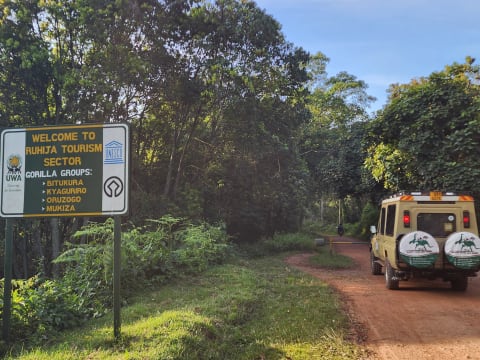
A safari involving remote parks or a gorilla trek may justify a more detailed discussion than a short city stay. You can compare relevant Uganda gorilla safari costs and trek options while separately asking a clinician how the planned activities affect vaccine advice.
Other vaccines
Depending on your itinerary and health history, a clinician may discuss hepatitis B, meningococcal disease, polio, influenza, COVID-19 or other vaccines. The available research identifies these diseases or vaccination considerations but does not establish one universal schedule for every British traveller [2][4][5]. Confirm the current recommendation with a UK travel-health provider rather than following a generic list.
Malaria in Uganda: medication and bite prevention
Malaria is a recognised health risk in Uganda [2]. The risk applies to safari and rural travel as well as urban travel planning, so ask a clinician whether antimalarial medication is suitable for your route, season, activities and medical circumstances.
There is no single antimalarial medicine that is appropriate for everyone. A travel-health professional should consider allergies, pregnancy, other medicines, mental-health history, kidney or liver conditions and the exact dosing schedule before prescribing. Do not start, stop or substitute antimalarial medication without professional advice.
Medication is only one part of malaria prevention. Reduce mosquito bites by using an effective insect repellent, covering exposed skin where practical and following accommodation advice on screens, air conditioning or bed nets. Uganda also has other mosquito-borne health risks, including yellow fever, which is why vaccination and bite avoidance should be planned together [2][3].
Seek medical help promptly for a fever during or after travel and tell the clinician that you have been in Uganda. A fever after returning does not prove malaria, but malaria can be serious and travel history is medically relevant. Ask your doctor or travel clinic how long after returning you should remain alert for symptoms.
Health documents and travel insurance
Carry the original physical yellow fever certificate with your passport. GOV.UK states that Immigration may request it at entry [1]. Keep a secure copy of important documents separately, but do not treat a scan or photograph as a replacement for the physical certificate unless the relevant authority confirms that it is accepted.
A question about Uganda? Ask Tembo
Also carry a list of prescription medicines, relevant medical conditions, allergies and emergency contacts. Ask your clinician or pharmacist whether you need a letter explaining your medicines, particularly if you use controlled drugs or injectable treatments. Uganda's rules for medicines can differ from those in the UK, and the FCDO advises travellers to check the legal status and regulation of medicines before travel [2].
Buy travel insurance that covers medical treatment, evacuation and repatriation for the activities you plan. The FCDO says medical facilities in Uganda are limited, especially outside Kampala, and that seriously ill or injured travellers may need an air ambulance; it also advises having appropriate insurance and accessible funds for treatment abroad and repatriation [2]. Check whether your policy covers gorilla trekking, walking safaris, rafting, remote parks and pre-existing conditions.
Medication rules and what to pack
Bring travel medicines only after checking their legality and documentation requirements. Prescription and over-the-counter medicines that are routine in the UK may be regulated differently in Uganda [2]. Contact the Ugandan High Commission, an official Ugandan mission or your healthcare provider if you are unsure about a medicine.
- Keep medicines in their original labelled packaging.
- Carry a copy of the prescription and, where appropriate, a clinician's letter explaining the medicine and dose.
- Ask your prescriber whether you should carry enough medicine for the full trip and what to do if your journey is delayed.
- Pack the physical yellow fever certificate with your passport.
- Include insect repellent and clothing that helps cover exposed skin.
- Plan safe drinking water and food precautions; GOV.UK advises boiled or bottled water and avoiding questionable ice and food preparation [2].
Do not buy unfamiliar medicines locally without professional advice. If a medicine is lost, stolen or confiscated, contact your insurer and a medical provider rather than changing treatment yourself.
Health facilities and emergencies in Uganda
Medical facilities are limited outside Kampala, and popular tourist attractions may have poor medical facilities [2]. Serious illness or an accident in a remote safari area can require evacuation, making insurance, emergency contacts and a clear evacuation plan important before departure.
For an ambulance in Uganda, dial 999 [2]. Medical help at the scene of an accident may be limited, particularly outside Kampala [2]. Contact your travel insurer quickly if a medical facility refers you for treatment or evacuation.
Before leaving the UK, give your safari operator and travel companions relevant emergency information, including allergies and essential medicines. Ask your operator how evacuation works from the parks and accommodation on your itinerary. This is especially relevant for remote activities such as gorilla trekking, where access to care may not be immediate.
For practical trip planning, travellers can compare safari packages on SafariFind, then match the selected route with a travel-health consultation. A longer itinerary, remote lodge, gorilla trek or cross-border journey may change the questions you need to ask your clinician.
Before you travel: Uganda health checklist
- Book a travel-health appointment at least 8 weeks before departure [2].
- Arrange yellow fever vaccination if medically suitable and obtain the certificate.
- Check that the certificate covers every traveller aged 1 year or over who is entering Uganda [1][3].
- Review routine vaccines, hepatitis A, typhoid and any itinerary-specific vaccines.
- Discuss malaria medication and mosquito-bite prevention.
- Check medicine legality, prescriptions and supporting letters.
- Buy insurance covering treatment, evacuation, repatriation and planned safari activities [2].
- Recheck Uganda's entry requirements, airline guidance and your transit-country rules immediately before departure.
Requirements can change and individual medical advice varies. Confirm the latest position with GOV.UK, Uganda's official immigration or diplomatic authorities, your airline and a qualified travel-health professional before travelling.
Frequently Asked Questions
Do British citizens need a yellow fever certificate for Uganda?
Yes. Uganda requires arriving travellers aged 1 year or over to show proof of yellow fever vaccination, and GOV.UK says you may need to present the physical certificate to Immigration [1][3].
Is yellow fever vaccination recommended for babies travelling to Uganda?
The CDC recommends yellow fever vaccination for travellers aged 9 months and older, while Uganda's entry requirement applies to arriving travellers aged 1 year or over [4]. Ask a travel-health professional about children younger than the entry threshold.
How long is the Uganda yellow fever certificate valid?
A completed International Certificate of Vaccination or Prophylaxis is valid for the life of the vaccinated person under current international rules [3][6]. Keep the original physical certificate because Uganda may request it at entry [1].
Do I need a yellow fever certificate if I fly directly from the UK to Uganda?
Yes. Uganda's entry requirement applies to arriving travellers aged 1 year or over, so a direct UK itinerary does not remove the requirement [1][3].
Can a transit stop affect Uganda's yellow fever rules?
It can affect how your documentation is assessed, depending on the airport and whether you pass through immigration. The CDC advises checking the full itinerary, including airport transfers and long layovers [6].
What vaccinations are recommended for British travellers to Uganda?
Hepatitis A and typhoid are commonly recommended, while routine vaccines and itinerary-specific options such as rabies should be reviewed with a clinician [2][4][5]. Yellow fever vaccination is required for entry for travellers aged 1 year or over.
How far in advance should I get Uganda travel vaccinations?
Start at least 8 weeks before travel. GOV.UK recommends checking Uganda's latest vaccine advice and vaccine availability at least 8 weeks before departure [2].
Do I need malaria tablets for Uganda?
Ask a travel-health professional about antimalarial medication because malaria is a recognised health risk in Uganda [2]. The appropriate medicine depends on your itinerary and personal medical circumstances, and mosquito-bite prevention is also important.
What should I do about prescription medicines when travelling to Uganda?
Check the legal status and regulation of every medicine before travelling because UK medicines may be treated differently in Uganda [2]. Keep medicines labelled and ask your prescriber whether you need supporting prescription information or a medical letter.
Is medical care available on a Uganda safari?
Medical facilities are limited outside Kampala, and some tourist attractions have poor medical facilities [2]. Travel insurance should cover treatment, evacuation and repatriation because an air ambulance may be needed after serious illness or injury [2].
What is Uganda's emergency ambulance number?
Dial 999 and ask for an ambulance [2]. Medical help at an accident scene may be limited outside Kampala, so contact your travel insurer quickly if you are referred for treatment [2].
Trips that match this guide