Ask Tembo
Vulture Conservation in Botswana 2026: Status & Action
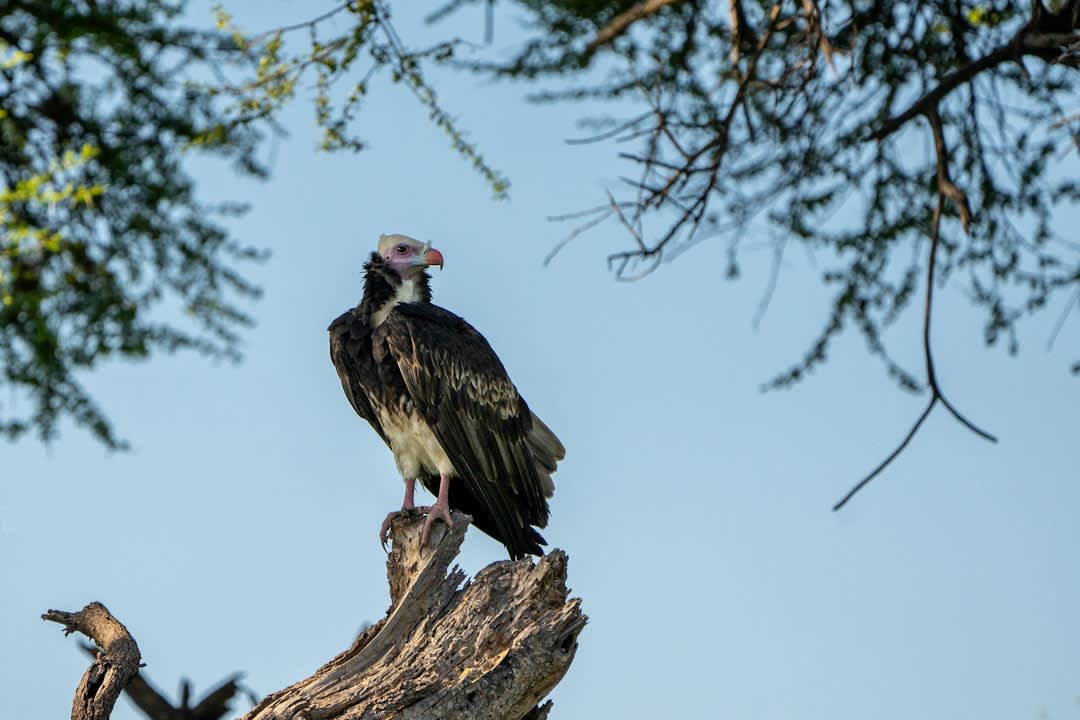
Over 90% of Africa's vulture populations have vanished in 50 years. Botswana is implementing targeted breeding support and poisoning interventions to stabilize Cape and African white-backed vultures—species critical to ecosystem health and valued at nearly USD 30 million annually in conservation benefits.
Vulture Conservation Status in Botswana 2026: Quick Answer
Botswana's vulture populations face a continental crisis: over 90% of Africa's vultures have disappeared over the past 50 years[1]. The country hosts two critically endangered species—African white-backed vultures (Gyps africanus) and Cape vultures (Gyps coprotheres)—both listed as Endangered or Critically Endangered on the IUCN Red List[2]. However, Botswana is pioneering regional recovery efforts through breeding support at Tswapong Hills, anti-poisoning interventions, and a dedicated government Vulture Conservation Coordinator appointed by the Department of Wildlife and National Parks[3]. The economic value of vulture ecosystem services in Botswana alone is estimated at nearly USD 30 million annually[4]—a stark reminder that letting populations collapse will cost far more than protecting them.
Why Vulture Conservation Matters in Botswana
Vultures are nature's essential sanitation system. These scavengers consume livestock and wildlife carcasses, preventing the spread of diseases like anthrax and rabies that would otherwise contaminate water sources and threaten human and animal health[4]. In Botswana's semi-arid landscape—home to vast cattle ranches and wildlife reserves—vultures have historically played an irreplaceable ecological role across the Kalahari, the Okavango Delta, and Chobe National Park.
The species most at risk in Botswana are the Cape vulture and the African white-backed vulture. The Cape vulture is endemic to southern Africa and breeds in large cliff colonies; Botswana supports one of the region's largest breeding populations[3]. The African white-backed vulture, distributed across sub-Saharan Africa, is now Critically Endangered globally[2]—a status unthinkable a generation ago.
Beyond ecology, vultures hold cultural and spiritual significance for many Botswana communities, and their decline reflects broader environmental degradation that affects tourism, livestock productivity, and food security.
The Vulture Crisis: Threats Facing Botswana's Populations
Poisoning: The Primary Threat
Deliberate poisoning is the leading cause of vulture mortality across Africa and in Botswana. In August 2022, over 150 vultures were poisoned in two separate incidents—one at Chobe, Botswana, and another at Kruger National Park, South Africa—highlighting the scale and coordination of this threat[5]. Poisoning occurs through two pathways:
- Livestock protection: Farmers and herders poison carcasses to kill predators (lions, hyenas, wild dogs), but vultures feeding on the same carrion are killed indiscriminately.
- Belief-based use and trade: Vultures are hunted and poisoned for traditional medicine, witchcraft, and illegal wildlife trade—a threat that has intensified in recent years, particularly in West Africa but increasingly documented in southern Africa[6].
Diclofenac and other veterinary NSAIDs used to treat livestock pain and inflammation are also toxic to vultures. While diclofenac is banned in many African countries, its use persists in border regions and through informal veterinary channels, posing a secondary poisoning risk[7].
Lead Ammunition and Ammunition Fragments
Elevated blood lead levels have recently been documented in White-backed and Cape vultures in South Africa, Namibia, and Botswana[8]. Vultures ingest lead fragments when feeding on wildlife carcasses killed by hunters using lead ammunition—a widespread and growing problem as hunting pressure increases.
Habitat Loss and Food Scarcity
Vultures depend on a steady supply of carcasses. As livestock farming intensifies and wildlife populations decline due to poaching and habitat conversion, vultures face food insecurity. In Botswana's semi-arid regions, drought exacerbates this by reducing both livestock and wild herbivore populations[7].
Infrastructure and Climate Threats
Power line collisions and electrocution are emerging threats as electricity infrastructure expands across southern Africa[6]. Climate change—triggering prolonged droughts and unpredictable food availability—poses a new, long-term risk to breeding success and survival, particularly for species already stressed by other threats[6].
What Botswana Is Doing: Conservation Action on the Ground
Tswapong Hills Breeding Support Programme
The most concrete conservation action in Botswana is the Cape Vulture breeding support project at Tswapong Hills in eastern Botswana, implemented by the Kalahari Research and Conservation Trust with IUCN Save Our Species (SOS) funding. The project's core objective is to ensure that fledged chicks successfully fledge and do not starve, allowing breeding colonies to stabilize or increase[3]. This targeted intervention addresses the reality that even where poisoning rates are controlled, breeding failure due to food scarcity threatens population recovery.
Government Leadership and Coordination
In a significant institutional commitment, Botswana's Department of Wildlife and National Parks appointed a full-time Vulture Conservation Coordinator[3]—a dedicated role that demonstrates government recognition of the crisis and intent to coordinate national action. This coordinator works to align conservation efforts across protected areas, implement anti-poisoning interventions, and liaise with regional and international partners.
Regional Strategy and Poisoning Response
Botswana is part of the Southern African Development Community (SADC) Vulture Conservation Strategy and Action Plan (VCSAP) 2025–2035, a regional framework aimed at reversing vulture decline across 12 SADC member states[9]. The strategy emphasizes coordinated poisoning response, law enforcement training, and stakeholder engagement.
The Endangered Wildlife Trust's Vultures for Africa Programme provides poisoning intervention training to rangers, law enforcement officials, and community members across southern Africa, including Botswana[3]. This training equips frontline personnel to recognize poisoning incidents, collect evidence, and support prosecution of perpetrators under wildlife laws.
Monitoring and Research
The CMS (Convention on the Conservation of Migratory Species) Vulture Multi-species Action Plan (MsAP) includes ongoing population monitoring and threat assessment across range states. Botswana contributes data to the African Wildlife Poisoning Database, a joint initiative that tracks poisoning incidents and informs intervention strategies[3].
Community Engagement and the Role of Tourism
Sustainable wildlife tourism is a critical funding mechanism for vulture conservation in Botswana. Safari operators and lodge owners benefit economically from healthy vulture populations—visible vultures enhance guest experiences and demonstrate thriving ecosystems. Revenue from tourism can fund ranger patrols, anti-poisoning campaigns, and breeding support programmes.
Local communities living alongside vultures often bear the cost of wildlife coexistence—livestock predation, competition for resources, and perceived threats. Conservation programmes that include benefit-sharing, livelihood support, and education about vulture ecological services are essential to building community tolerance. When communities understand that vultures prevent disease spread and that conservation organisations protecting Botswana's wildlife create employment and investment, support for protection increases.
Tourism that funds anti-poaching ranger patrols, veterinary education to reduce livestock poisoning, and habitat restoration creates a direct link between visitor spending and vulture survival—a virtuous cycle that benefits both conservation and local economies.
Economic Value and Conservation Investment
A recent economic valuation study found that the welfare gain from taking policy action to conserve and protect vultures in southern Africa is almost USD 30 million per year[4]. In Botswana specifically, local communities expressed significant willingness to pay for vulture conservation outcomes, with approximately 71% of households willing to contribute money to support vulture conservation[4]—a rare demonstration of public support for a species in crisis.
This economic case is compelling: the cost of inaction—ecosystem service collapse, disease spread, reduced tourism revenue—far exceeds the cost of targeted conservation investment. Yet funding remains constrained. The Strategic Implementation Plan for the CMS Vulture MsAP notes that although funding was secured for an Overarching Coordinator and three Regional Coordinators during the plan's development, that funding ended with the plan's finalization, leaving gaps in coordination capacity[10].
Progress and Remaining Challenges
Successes
- Institutional commitment: Appointment of a government Vulture Conservation Coordinator signals sustained political will[3].
- Targeted breeding support: The Tswapong Hills programme demonstrates that hands-on intervention can stabilize small breeding colonies[3].
- Regional coordination: SADC VCSAP 2025–2035 provides a strategic framework binding 12 countries to coordinated vulture conservation[9].
- Training and capacity: Poisoning response training and anti-poaching ranger support are building on-the-ground expertise[3].
Ongoing Challenges
- Poisoning persistence: Despite interventions, poisoning remains the primary threat. The 2022 mass poisoning at Chobe demonstrates that perpetrators are still active and organized[5].
- Funding gaps: Dedicated conservation funding is insufficient. Many programmes depend on short-term grants and donor cycles, limiting long-term planning[10].
- Law enforcement: Prosecution of poisoning perpetrators requires coordination between wildlife authorities, police, and prosecutors—a capacity that varies across Botswana[3].
- Belief-based demand: The market for vulture parts in traditional medicine and witchcraft is persistent and, in some regions, growing[6].
- Lead ammunition: No comprehensive lead ammunition ban exists in Botswana, and hunting with lead ammunition remains common[8].
- Climate vulnerability: Drought cycles are intensifying, threatening food availability for vultures and their prey species[6].
How Travellers Can Support Vulture Conservation Responsibly
Visitors to Botswana can contribute to vulture conservation through informed choices:
A question about Botswana? Ask Tembo
- Choose conservation-focused safaris: Book through operators and lodges that actively support wildlife protection. SafariFind connects travellers with conservation-committed safari providers across Botswana.
- Support protected areas: Visit Chobe National Park, the Okavango Delta, and other reserves where entry fees and tourism revenue fund ranger patrols and anti-poaching efforts.
- Avoid wildlife trade products: Do not purchase vulture feathers, bones, or products marketed as traditional medicine—this fuels poaching.
- Educate and advocate: Learn about vulture ecology and share your knowledge. Public awareness campaigns reduce tolerance for poisoning and belief-based use.
- Support grassroots organisations: Donate to local NGOs and the Kalahari Research and Conservation Trust, which implement on-the-ground breeding support and research.
- Report incidents: If you witness poisoning, habitat destruction, or illegal wildlife activity, report it to local authorities or the Department of Wildlife and National Parks.
Regional Context: Botswana's Role in Southern African Vulture Recovery
Botswana's vulture conservation efforts are part of a broader southern African recovery strategy. The region supports multiple vulture species with overlapping ranges, and cross-border poisoning incidents (like the 2022 Chobe–Kruger event) underscore the need for coordinated international action. Botswana, as a stable democracy with functional wildlife management institutions, is positioned to lead regional efforts—a responsibility reflected in its appointment of a national Vulture Conservation Coordinator and participation in the SADC VCSAP[9].
The success of vulture conservation in Botswana will influence conservation outcomes across southern Africa and beyond. If Botswana's Tswapong Hills breeding programme succeeds in stabilizing Cape vulture numbers, it will provide a replicable model for other range states facing similar breeding failure. Conversely, if poisoning incidents continue unchecked, regional populations will continue to decline.
The Broader Picture: Connecting Vulture Conservation to Botswana's Wildlife Heritage
Vulture conservation is inseparable from broader wildlife protection in Botswana. The same threats—poisoning, habitat loss, human-wildlife conflict—affect African wild dogs and other carnivores and giraffe populations. Integrated conservation approaches that address poisoning, land use conflict, and community engagement benefit all species simultaneously.
For safari operators and lodge owners, healthy vulture populations are a tourism asset—visible, charismatic, and ecologically important. Travellers visiting Botswana's protected areas can directly support vulture conservation by choosing operators committed to anti-poaching, habitat protection, and community engagement.
Looking Forward: 2026 and Beyond
The Vulture Conservation Action Plan (2023–2027) and the SADC VCSAP (2025–2035) provide a roadmap for the next phase of recovery[7][9]. Key priorities for Botswana include:
- Expanding poisoning intervention training and law enforcement capacity.
- Sustaining the Tswapong Hills breeding programme and evaluating its impact on colony stability.
- Implementing lead ammunition alternatives and awareness campaigns targeting hunters.
- Strengthening cross-border coordination with South Africa, Namibia, and Zimbabwe to prevent transnational poisoning.
- Securing long-term funding commitments to move beyond short-term project cycles.
- Integrating climate adaptation into conservation planning as drought and food scarcity intensify.
Last reviewed July 2026. Conservation data changes — see the cited sources for the latest figures.
Frequently Asked Questions
What vulture species live in Botswana?
Botswana hosts multiple vulture species, with the Cape vulture (Gyps coprotheres) and African white-backed vulture (Gyps africanus) being the most critically endangered and the focus of conservation efforts. Both are listed as Endangered or Critically Endangered by the IUCN, and their populations have declined dramatically over the past 50 years[1][2].
Why are vultures dying in Botswana?
The primary threat is deliberate poisoning—farmers poison carcasses to kill predators, and vultures feeding on those carcasses die indiscriminately. Additionally, vultures are hunted for belief-based use and traditional medicine, lead ammunition fragments from hunting contaminate carcasses, and habitat loss reduces food availability. In August 2022, over 150 vultures were poisoned in a single incident at Chobe[5].
What is Botswana doing to protect vultures?
Botswana has appointed a full-time Vulture Conservation Coordinator within the Department of Wildlife and National Parks and operates a Cape vulture breeding support programme at Tswapong Hills in eastern Botswana through the Kalahari Research and Conservation Trust. The country is also part of the SADC Vulture Conservation Strategy and Action Plan (2025–2035) and participates in regional poisoning response training and monitoring[3][9].
How much are vultures worth to Botswana's economy?
The economic value of vulture ecosystem services in Botswana and southern Africa is estimated at nearly USD 30 million annually. Approximately 71% of households in Botswana expressed willingness to contribute money to support vulture conservation, demonstrating significant public support[4].
What is the Tswapong Hills vulture project?
The Tswapong Hills breeding support programme, implemented by the Kalahari Research and Conservation Trust with IUCN Save Our Species funding, works to ensure that fledged Cape vulture chicks successfully survive and do not starve. The goal is to allow breeding colonies to stabilize or increase[3].
Is poisoning the only threat to Botswana's vultures?
No. While poisoning is the primary threat, vultures also face lead ammunition contamination from hunting, electrocution and collision with power lines, habitat loss, reduced food availability due to drought and wildlife decline, and emerging threats from climate change and avian influenza[6][7].
Can tourists help vulture conservation in Botswana?
Yes. Tourists can support vulture conservation by booking safaris through conservation-focused operators, visiting protected areas where entry fees fund anti-poaching efforts, avoiding wildlife trade products, reporting poisoning incidents, and donating to local conservation organizations. Tourism revenue is a critical funding source for protection programmes[3][4].
What is the SADC Vulture Conservation Strategy?
The Southern African Development Community (SADC) Vulture Conservation Strategy and Action Plan (VCSAP) 2025–2035 is a regional framework binding 12 SADC member states, including Botswana, to coordinated vulture conservation. It addresses poisoning, belief-based use, electrocution, habitat loss, and emphasizes stakeholder engagement and data-driven decision-making[9].
How many vultures are left in Botswana?
Specific population figures for Botswana are not provided in current public reports. However, the global African vulture population has declined by over 90% in the past 50 years, with Cape vultures and African white-backed vultures now listed as Endangered or Critically Endangered[1][2]. The Tswapong Hills colonies represent some of the largest remaining breeding populations[3].
What happens if vultures go extinct in Botswana?
Vulture extinction would collapse ecosystem services: carcasses would accumulate, spreading diseases like anthrax and rabies that threaten livestock and human health; predator populations might spike unchecked; and tourism revenue would decline. The economic cost of vulture loss is estimated at USD 47 million per year across southern Africa, far exceeding the cost of conservation[4].
Is lead ammunition banned in Botswana?
No comprehensive lead ammunition ban exists in Botswana. Hunting with lead ammunition remains common, and vultures are poisoned when feeding on carcasses containing lead fragments. Elevated blood lead levels have been documented in White-backed and Cape vultures in Botswana, Namibia, and South Africa[8].
How can I report vulture poisoning in Botswana?
Report poisoning incidents to Botswana's Department of Wildlife and National Parks or local wildlife authorities. Information can also be submitted to partner organizations like the Endangered Wildlife Trust or BirdLife Botswana. Documenting location, date, number of birds, and any visible evidence helps law enforcement investigate and prosecute perpetrators[3][10].
Trips that match this guide