Ask Tembo
Rothschild's Giraffe Conservation in Kenya 2026

Rothschild's giraffe (Nubian giraffe) rebounded from ~130 individuals in the 1970s to ~1,000 in Kenya by 2021, driven by protected areas, anti-poaching, and community conservancies. Threats remain: habitat fragmentation, poaching, and infrastructure development.
Conservation Status at a Glance
Rothschild's giraffe (scientifically Giraffa camelopardalis rothschildi, now classified as Nubian giraffe) has recovered from near-extinction to approximately 1,000–1,042 individuals across 14 populations in Kenya as of 2021.[1] Classified as Near Threatened by the IUCN,[2] this subspecies remains one of Africa's most endangered giraffe populations, with survival dependent on continued protected-area management, anti-poaching efforts, and habitat connectivity.
Why Rothschild's Giraffe Matters in Kenya
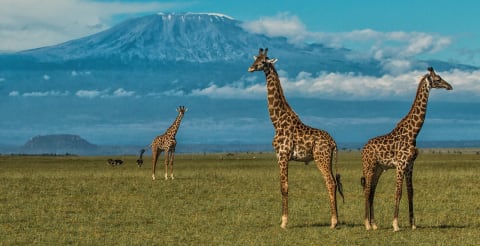
Rothschild's giraffe is not merely a symbol of Kenya's wildlife heritage—it is a flagship species whose recovery demonstrates what targeted conservation can achieve. Historically, these distinctive giraffes, recognisable by their large rectangular chestnut-brown patches and unmarked lower legs,[3] roamed the Rift Valley from western Kenya north through Sudan. Today, they exist in isolated populations confined to protected reserves and national parks, with Kenya hosting approximately 450 mature individuals and Uganda approximately 1,250 (primarily in Murchison Falls National Park).[4]
The species' recovery from a low of ~130 individuals in the mid-1970s to over 1,000 today represents a more than 700% increase—a genuine conservation success story.[1] Yet this population remains fragmented, vulnerable, and dependent on active human management. Understanding the current state of Rothschild's giraffe conservation is critical for visitors, conservationists, and policymakers seeking to ensure this iconic species does not slide toward extinction.
Historical Decline and Near-Extinction
Rothschild's giraffe experienced catastrophic decline throughout the 20th century. By the 1970s, fewer than 130 individuals remained in the wild—a precipice of extinction driven by habitat loss, unregulated hunting, and civil instability.[1] The species was extirpated from much of its historical range, including South Sudan and large areas of Kenya. By the 1980s and early 1990s, only scattered populations survived in isolated protected areas, primarily in central and western Kenya and northern Uganda.
This near-extinction was part of a broader giraffe crisis across Africa. Giraffe populations continent-wide declined from an estimated 151,702–163,452 individuals in 1985 to approximately 97,562 by 2015—a loss of roughly 40% in three decades.[5] For Rothschild's giraffe, the situation was far more severe, with the subspecies facing a 95% decline over the same period.[6]
Drivers of Decline: Habitat Loss, Poaching, and Fragmentation
Rothschild's giraffe today faces a complex web of interconnected threats. Understanding these pressures is essential for effective conservation and for visitors to appreciate why these animals require protected status.
Habitat Loss and Fragmentation
The primary threat to Rothschild's giraffe is habitat loss and fragmentation driven by human population expansion. Kenya's rapid urbanisation, agricultural conversion, and pastoral land use have carved protected areas into isolated islands, preventing natural population mixing and genetic diversity.[7] Infrastructure development—including the Standard Gauge Railway between Nairobi and Mombasa and expansion of national roads—further fragments remaining habitat, dissecting critical wildlife corridors across the Masai Mara, Tsavo, and other key ecosystems.[8]
Parks and conservancies that once formed continuous habitat are now separated by farms, settlements, and human infrastructure. As one wildlife researcher noted, "Some of the parks are within five to 50 kilometres of each other, but they are fenced in. Even if the giraffe wanted to migrate, they can't."[7] This isolation prevents natural range expansion and increases inbreeding risk—a concern evidenced by the discovery of dwarf Rothschild's giraffes in Murchison Falls National Park, Uganda, likely caused by genetic bottlenecking.[3]
Poaching and Illegal Hunting
Poaching remains a persistent threat, particularly in border regions and areas with weak law enforcement. Giraffes are killed for bushmeat, hides, and traditional medicine, with losses especially acute along the Kenya–Somalia border and in pastoralist regions where giraffes compete with livestock for grazing.[9] Indiscriminate snaring—traps set for other game—also kills giraffes incidentally. In some protected areas, poaching pressure has forced conservation teams to intensify anti-poaching patrols and increase penalties for wildlife crime.
The trade in giraffe meat across the Somalia border represents an emerging threat in eastern Kenya, where reticulated giraffe (a related species) and Rothschild's populations overlap. This illegal commerce is difficult to monitor and control in remote, conflict-affected regions.[9]
Human–Giraffe Conflict
As giraffe populations recover and human settlements expand, human–wildlife conflict has intensified. Giraffes crop vegetation on farmland, and farmers sometimes retaliate. In pastoral regions like Samburu, Isiolo, and Marsabit, giraffes compete directly with livestock herds for forage during droughts, creating tension with herding communities. Three Rothschild's giraffes were electrocuted by low-hanging power lines in Soysambu Conservancy, Nakuru, highlighting how modern infrastructure poses novel risks.[3]
Climate Change and Drought
Prolonged droughts—increasingly frequent in East Africa—stress giraffe populations by reducing forage and water availability. The 2021 drought across northeastern Kenya required emergency supplementary feeding and water provision to prevent mass mortality in giraffe populations, revealing the species' vulnerability to climate variability.[10]
Conservation Successes: Protected Areas and Anti-Poaching
The recovery of Rothschild's giraffe from ~130 to ~1,000 individuals in Kenya is primarily attributable to three interrelated conservation strategies: protected-area establishment and management, anti-poaching efforts, and community-based conservation.
National Parks and Protected Reserves
Kenya's network of national parks and conservancies provides the backbone of Rothschild's giraffe protection. Lake Nakuru National Park is one of the most important strongholds, alongside several privately owned and community-managed conservancies in the Rift Valley. These protected areas provide secure habitat, reduced poaching pressure through ranger patrols, and legal status that deters commercial exploitation.[1]
The Kenya Wildlife Service (KWS), in partnership with international organisations including the Giraffe Conservation Foundation, African Wildlife Foundation, and San Diego Zoo Global, manages these reserves and has progressively strengthened anti-poaching and monitoring capacity.[1] Increased penalties for wildlife crimes, codified in Kenya's Wildlife Conservation and Management (WCMA) Act 2013, have deterred poaching and raised the cost of illegal activity.[1]
Conservation Translocations and Rewilding
A critical tool in Rothschild's giraffe recovery has been conservation translocation—the deliberate relocation of individuals to establish or reinforce populations in suitable habitat. In 2021, Save Giraffes Now and partners executed a high-profile rescue of eight Rothschild's giraffes stranded on an island in Lake Baringo as water levels rose. These animals were successfully relocated to Ruko Community Conservancy, a community-owned reserve in Samburu County, where they have since bred and established a new wild population.[10] One calf was born during the translocation process itself, symbolising hope for the subspecies' future.
Translocation requires meticulous planning, veterinary expertise, and community buy-in. The Ruko Conservancy project demonstrates how community conservancies—which balance wildlife protection with livelihood benefits for local pastoralist communities—can serve as refuge and expansion zones for endangered species.[10]
Community-Based Conservancies and Ranger Patrols
Private and community-owned conservancies have emerged as vital conservation partners. Loisaba Conservancy, Lewa Conservancy, and Ruko Community Conservancy exemplify this model, combining habitat protection, anti-poaching patrols, and community engagement.[1] These reserves increase security, reduce poaching, and maintain habitat connectivity across fragmented landscapes.
In 2021, San Diego Zoo Global, in collaboration with KWS, Northern Rangelands Trust, Loisaba Conservancy, Lewa Conservancy, and the Giraffe Conservation Foundation, established the Twiga Walinzi ("giraffe guards") team—composed of local rangers who monitor giraffe populations, engage in anti-poaching patrols, and conduct community education and outreach.[1] This approach directly employs local people, builds conservation capacity, and ensures that giraffe protection aligns with community interests.
Similarly, the Hirola Conservation Programme monitors giraffe population trends and mortalities in eastern Kenya, providing real-time data to guide adaptive management.[1] The Somali Giraffe Project, led by researchers at Garissa, works to reduce human–giraffe conflict in border regions through community outreach and pilot interventions such as motion-sensor floodlights and bee fences to deter farm invasion.[9]
National Recovery and Action Plan
In 2018, the Kenya Wildlife Service, supported by the Giraffe Conservation Foundation and African Wildlife Foundation, launched Kenya's first-ever National Recovery and Action Plan for Giraffe (2018–2022).[8] This strategic document outlines conservation priorities for all three giraffe species in Kenya (Maasai, reticulated, and Rothschild's/Nubian), including direct species protection, improved land management, collaborative research and monitoring, and education and awareness-raising. The plan provides a coordinated framework that has helped focus effort and funding on the most critical conservation needs.
Population Monitoring and Census Data
Accurate population monitoring is the foundation of effective conservation. Kenya's National Wildlife Census 2021 provides the most recent comprehensive assessment of giraffe populations across the country.[1]
| Giraffe Species in Kenya | 2021 Population Estimate | IUCN Status |
|---|---|---|
| Rothschild's (Nubian) Giraffe | ~1,000–1,042 | Near Threatened |
| Reticulated Giraffe | ~19,740 | Endangered |
| Maasai Giraffe | ~13,530 | Endangered |
The 2021 census represents a notable methodological advance: the inclusion of updated data for reticulated giraffes in northern Kenya (Wajir, Mandera, Garissa, and Turkana counties) that had relied on 2011 estimates in previous surveys. This revision demonstrates the importance of comprehensive field surveys and the challenge of monitoring wildlife in remote, pastoralist regions with limited road access.[1]
Kenya's total giraffe population grew from approximately 23,000 in 2019 to 34,240 in 2021—a 49% increase in three years—though much of this reflects improved data collection rather than biological growth.[1] For Rothschild's giraffe specifically, the population has been relatively stable at ~1,000 individuals, with fluctuations driven by births, deaths, translocations, and census methodology.
Ongoing Challenges and Future Outlook
Despite substantial progress, Rothschild's giraffe conservation faces significant ongoing challenges that threaten long-term viability.
Habitat Fragmentation and Isolation
The 14 populations of Rothschild's giraffe in Kenya exist in isolation, separated by human settlements, farmland, and infrastructure. This fragmentation limits genetic flow, increases inbreeding risk, and reduces the species' adaptive potential in the face of environmental change. Unlike the reticulated giraffe, which maintains a relatively "large and relatively connected population" across northern Kenya,[1] Rothschild's giraffe populations are small, scattered, and largely dependent on human management for survival.
Climate Vulnerability
The 2021 drought and subsequent emergency feeding operations revealed Rothschild's giraffes' sensitivity to climate extremes. Climate change projections suggest increasing frequency and intensity of droughts in East Africa, placing giraffe populations under escalating stress. Conservationists warn that without proactive drought-preparedness planning—including secured water sources and emergency forage reserves—future droughts could reverse population gains.[10]
Persistent Poaching and Conflict
While improved law enforcement and anti-poaching patrols have reduced poaching in some protected areas, the threat remains active, particularly in border regions and areas with weak state presence. The growing trade in giraffe meat across the Kenya–Somalia border and ongoing human–giraffe conflict in pastoral zones require sustained investment in ranger capacity, community engagement, and alternative livelihood programmes.
Infrastructure Development
Ongoing infrastructure projects—roads, railways, power lines, and urban expansion—continue to fragment habitat and pose direct mortality risks (e.g., electrocution on power lines). Coordinating wildlife conservation with Kenya's development agenda remains a significant policy challenge, requiring landscape-level planning and environmental impact assessment.
The Role of Tourism and Visitor Engagement
Responsible wildlife tourism is a critical economic pillar of giraffe conservation in Kenya. When visitors travel on safari to see giraffes in protected areas—whether in Lake Nakuru National Park, Loisaba Conservancy, or other reserves—their fees directly fund ranger salaries, anti-poaching equipment, habitat management, and community benefit-sharing programmes. Tourism revenue provides an economic incentive for communities and governments to protect giraffe habitat rather than convert it to agriculture or pastoral use.
Visitors can support conservation by:
- Booking safaris through responsible operators that prioritise conservation funding and employ local guides and rangers. SafariFind connects travellers with vetted operators committed to wildlife protection.
- Visiting conservancies and community reserves that directly benefit local communities—such as Ruko Conservancy, Loisaba, and Lewa—where tourism revenue directly supports giraffe protection and community livelihoods.
- Choosing accommodation and operators with transparent conservation credentials, including documented anti-poaching efforts, habitat restoration, and community engagement programmes.
- Supporting organisations on-the-ground, such as Save Giraffes Now, the Giraffe Conservation Foundation, and the Hirola Conservation Programme, through donations or volunteer engagement.
- Learning about giraffe biology, conservation challenges, and community perspectives during safari experiences, and sharing this knowledge to build public support for protection.
Key Organisations and Programmes Protecting Rothschild's Giraffe in Kenya
A network of national and international organisations drives Rothschild's giraffe conservation in Kenya:
- Kenya Wildlife Service (KWS) – The government authority responsible for protected-area management, anti-poaching, law enforcement, and monitoring. KWS leads the implementation of the National Recovery and Action Plan.
- Giraffe Conservation Foundation (GCF) – An international NGO providing technical expertise, research coordination, and funding for giraffe conservation across East Africa. GCF supported development of Kenya's National Recovery and Action Plan and continues to guide conservation strategy.
- San Diego Zoo Global – Operates research and conservation programmes in Kenya, including establishment of the Twiga Walinzi ranger teams and collaborative population monitoring.
- Save Giraffes Now (SGN) – A grassroots NGO focused on rescue, rewilding, anti-poaching, and community coexistence. SGN led the Lake Baringo translocation and operates anti-poaching and human–giraffe conflict-reduction projects.
- African Wildlife Foundation (AWF) – A major conservation organisation partnering with KWS on the Tsavo-Mkomazi landscape initiative and broader giraffe recovery efforts.
- Northern Rangelands Trust (NRT) – Supports community-owned conservancies (including Loisaba and Ruko) that combine wildlife protection with pastoral community livelihoods.
- The Nature Conservancy – Works on landscape-level habitat connectivity and community engagement in giraffe conservation zones.
- Hirola Conservation Programme – Monitors giraffe population trends and mortalities in eastern Kenya, providing critical data for adaptive management.
- Lewa Conservancy and Loisaba Conservancy – Community and privately owned reserves that serve as key strongholds for Rothschild's giraffes, combining habitat protection with community benefit-sharing.
What Success Looks Like: The Road Ahead
For Rothschild's giraffe to move from "Near Threatened" toward "Vulnerable" or "Least Concern" status, conservation must achieve several key milestones:
- Population growth to 2,000+ individuals across Kenya and Uganda, with secure populations distributed across multiple protected areas to reduce extinction risk from localised disasters.
- Habitat connectivity restoration through corridor protection and translocation to expand the species' range beyond its current fragmented distribution.
- Sustained anti-poaching effectiveness, with poaching rates declining to near-zero and law enforcement capacity maintained across all populations.
- Climate adaptation planning, including drought-preparedness infrastructure and adaptive management protocols to buffer against increasing climate variability.
- Community integration, ensuring that giraffe conservation aligns with and benefits pastoral and farming communities, reducing human–giraffe conflict and building long-term social support.
- Genetic monitoring to track inbreeding and maintain genetic diversity as populations grow.
The 2018–2022 National Recovery and Action Plan has provided a strategic roadmap; continued political commitment and funding are essential for implementation of its successor frameworks beyond 2022.
How Visitors Can Help: Responsible Safari Tourism
Travellers planning a Kenya safari can directly support Rothschild's giraffe conservation by making informed choices:
- Choose conservation-certified operators and lodges that demonstrably fund anti-poaching, habitat restoration, and community programmes. Ask operators about their conservation investments and community partnerships.
- Visit community conservancies where tourism revenue directly benefits local herders and wildlife protection (e.g., Ruko, Loisaba, Lewa). Your fees support ranger employment, wildlife monitoring, and pastoral livelihood alternatives.
- Respect wildlife viewing guidelines – maintain safe distances, avoid off-road driving, and follow park rules to minimise stress on animals and habitat damage.
- Engage with ranger-led education – rangers are frontline conservationists; their insights into giraffe behaviour, ecology, and conservation challenges are invaluable and support their professional development and morale.
- Support conservation organisations – donate to GCF, Save Giraffes Now, or other on-the-ground programmes, or volunteer with research and monitoring initiatives if you have relevant skills.
- Share your experience – photographs, stories, and social-media engagement help build global awareness and public support for giraffe conservation.
Last reviewed July 2026. Conservation data changes — see the cited sources for the latest figures.
Frequently Asked Questions
What is the current population of Rothschild's giraffe in Kenya?
As of the 2021 National Wildlife Census, approximately 1,000–1,042 Rothschild's giraffes remain in Kenya, distributed across 14 populations.[1] This represents a recovery from fewer than 130 individuals in the mid-1970s—a more than 700% increase. However, the population remains small, fragmented, and classified as Near Threatened by the IUCN.[2]
Why is Rothschild's giraffe endangered in Kenya?
Rothschild's giraffe faces multiple threats: habitat loss and fragmentation from human settlement and infrastructure development, poaching for bushmeat and hides, human–giraffe conflict in pastoral regions, climate-driven droughts, and isolation of populations in small protected areas that limits genetic diversity.[1][7][8][9] The species' small population size and geographic restriction to a few reserves make it vulnerable to disease, environmental shocks, and localised extinctions.
Which protected areas in Kenya have Rothschild's giraffes?
Key strongholds for Rothschild's giraffe in Kenya include Lake Nakuru National Park, Loisaba Conservancy, Lewa Conservancy, Ruko Community Conservancy, and several other private and community-owned reserves in the Rift Valley and northern Kenya.[1][10] Most of Kenya's Rothschild's giraffes exist outside their natural historical range, in central and western protected areas, rather than in the pastoral north where they once roamed.
What is the Twiga Walinzi team?
The Twiga Walinzi ("giraffe guards") is a ranger team established in 2021 by San Diego Zoo Global in collaboration with the Kenya Wildlife Service, Northern Rangelands Trust, Loisaba Conservancy, Lewa Conservancy, The Nature Conservancy, and the Giraffe Conservation Foundation.[1] Composed of local community members, the team monitors giraffe populations, conducts anti-poaching patrols, and engages in community education and outreach in Loisaba and other reserves.
How did the eight Rothschild's giraffes stranded in Lake Baringo get rescued?
In 2021, rising water levels in Lake Baringo turned a peninsula into an island, stranding eight Rothschild's giraffes in an area too small to support them. Save Giraffes Now led an innovative rescue mission, relocating the giraffes to Ruko Community Conservancy in Samburu County. One calf was born during the translocation process, and the population has since established and bred successfully in its new habitat.[10]
What role does tourism play in Rothschild's giraffe conservation?
Wildlife tourism generates revenue that directly funds ranger salaries, anti-poaching equipment, habitat management, and community benefit-sharing programmes in protected areas and conservancies. When visitors book safaris to see giraffes, their fees provide economic incentives for communities and governments to protect giraffe habitat rather than convert it to agriculture or pastoral use. Responsible tourism that supports conservation-certified operators and community conservancies is essential to giraffe survival.
Are Rothschild's giraffes the same as Nubian giraffes?
Yes. Rothschild's giraffe (Giraffa camelopardalis rothschildi) is now scientifically classified as a subspecies of Nubian giraffe (Giraffa camelopardalis camelopardalis). Genetic analysis revealed that Rothschild's giraffes are genetically identical to Nubian giraffes, leading to their reclassification.[6] Both terms refer to the same population, though "Rothschild's" remains widely used in conservation literature and public communication.
What threats do Rothschild's giraffes face from climate change?
Prolonged droughts—increasingly frequent in East Africa due to climate change—reduce forage and water availability, stressing giraffe populations. The 2021 drought required emergency supplementary feeding and water provision to prevent mass mortality.[10] Climate projections suggest increasing drought frequency and intensity, placing giraffes under escalating stress. Conservationists emphasise the need for drought-preparedness planning, including secured water sources and emergency forage reserves.
How can I support Rothschild's giraffe conservation when visiting Kenya?
Book safaris through conservation-certified operators that fund anti-poaching and habitat protection; visit community conservancies (e.g., Ruko, Loisaba, Lewa) where tourism revenue directly benefits local communities and wildlife; respect wildlife viewing guidelines; engage with ranger-led education; donate to organisations like the Giraffe Conservation Foundation or Save Giraffes Now; and share your experience to build public support for giraffe conservation.
What is Kenya's National Recovery and Action Plan for Giraffe?
Launched in 2018 by the Kenya Wildlife Service with support from the Giraffe Conservation Foundation and African Wildlife Foundation, Kenya's National Recovery and Action Plan for Giraffe (2018–2022) is the country's first strategic framework for giraffe conservation.[8] It outlines priorities for all three giraffe species in Kenya (Maasai, reticulated, and Rothschild's), including direct species protection, improved land management, collaborative research and monitoring, and education and awareness-raising.
What is human–giraffe conflict and where does it occur in Kenya?
Human–giraffe conflict arises when giraffes crop vegetation on farmland or compete with livestock for forage during droughts, prompting farmers to retaliate or exclude giraffes. This conflict is particularly acute in pastoral regions like Samburu, Isiolo, Marsabit, and along the Kenya–Somalia border.[9] Organisations like the Somali Giraffe Project are testing interventions such as motion-sensor floodlights and bee fences to deter farm invasion and reduce conflict.
How are Rothschild's giraffe populations monitored in Kenya?
Population monitoring is conducted through the National Wildlife Census (conducted every few years by Kenya Wildlife Service, Wildlife Research and Training Institute, and partners), field surveys in national parks and reserves, photographic monitoring in conservancies, and dedicated programmes like the Hirola Conservation Programme (which monitors populations and mortalities in eastern Kenya).[1] These efforts provide data to guide adaptive management and track conservation progress.
Trips that match this guide
ACATREE TOURS AND SAFARIS · ★ 5.0
From £3,229 pp