Rothschild Giraffe Conservation in Ethiopia (2026)
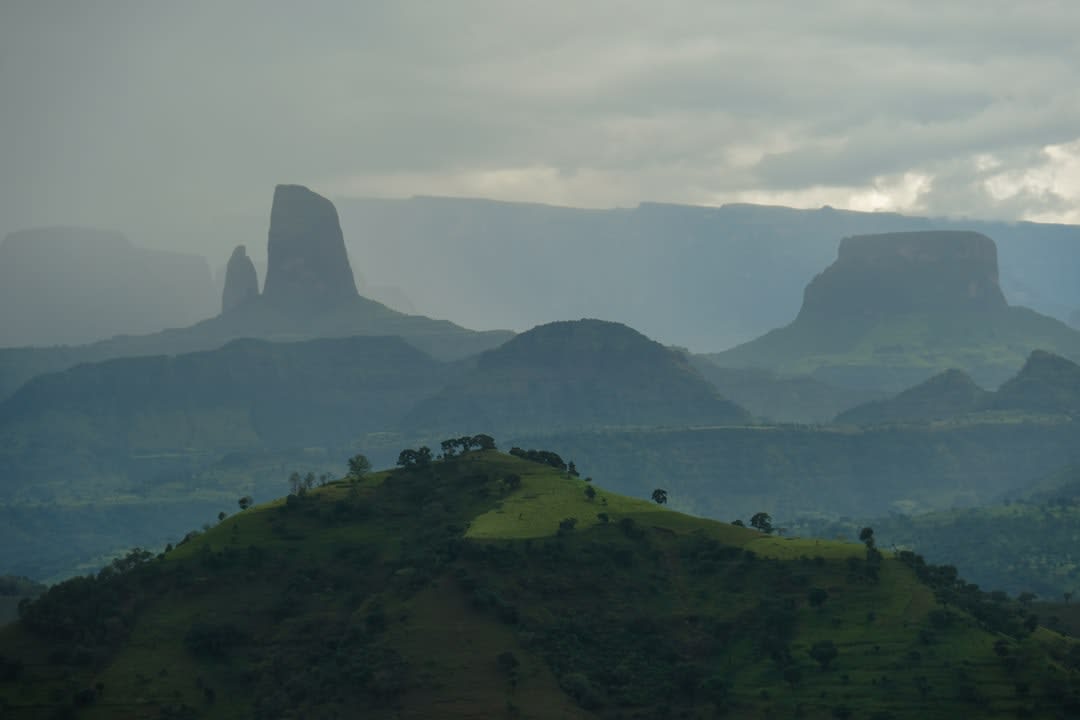
Rothschild’s giraffe is now commonly treated as the Nubian giraffe, a Critically Endangered northern giraffe lineage with only about 170 assumed to remain in Ethiopia. Habitat loss, fragmentation, illegal hunting, food insecurity and climate-related pressure make Ethiopia’s population a conservation priority.
Quick answer: Rothschild’s giraffe is the former name for a giraffe lineage now generally treated as the Nubian giraffe, or part of the northern giraffe under newer taxonomy. Approximately 170 Nubian giraffes were assumed to remain in Ethiopia, although the current status of the population is uncertain because it faces severe threats and has not been recently assessed in sufficient detail [1].
Conservation in Ethiopia depends on protecting remaining habitat, improving monitoring, reducing illegal hunting and supporting communities living alongside giraffes. The evidence indicates that habitat loss and settlement are already major pressures, while climate change, food insecurity, civil unrest and future poaching risk could intensify the challenge [1][2].
Last reviewed August 2026. Conservation data changes — see the cited sources for the latest figures.
Why Rothschild’s giraffe matters in Ethiopia
Rothschild’s giraffe, scientifically known in older literature as Giraffa camelopardalis rothschildi, was historically recognised as a separate subspecies. Genetic and taxonomic work has since increasingly grouped it with the Nubian giraffe, Giraffa camelopardalis camelopardalis, while a newer four-species framework places the lineage within the northern giraffe, Giraffa camelopardalis [2][3]. This terminology matters because population estimates and conservation assessments may not use the same boundaries.
Older Rothschild’s giraffe descriptions refer to animals with large, dark, irregular patches on a pale background and noticeably white, unmarked lower legs [4]. In Ethiopia, however, the conservation priority is not simply identifying a coat pattern. It is maintaining a small, isolated population in a country where natural habitat has been extensively settled and converted [2][3].
The Ethiopian population is significant because it represents one of the remaining small Nubian giraffe populations. The 2024 conservation review estimated that roughly 170 individuals remained in Ethiopia, compared with approximately 450 in South Sudan; the review also noted declining trends at the last assessment and said that the present status of both populations is unknown [2]. These figures should be treated as estimates rather than a current census.
Giraffes are browsers that depend on trees and shrubs for food, particularly in savanna and woodland habitats. When these habitats are cleared, divided by cultivation or settlement, or degraded by changing rainfall and temperature patterns, giraffes lose feeding areas and movement routes [1][5]. The loss of a small local population can be especially serious because isolated groups have fewer opportunities to recover naturally.
Rothschild giraffe conservation in Ethiopia: the main threats
Habitat loss, settlement and fragmentation
Habitat loss is one of the clearest threats to Nubian, or formerly Rothschild’s, giraffes in Ethiopia. The conservation review states that Ethiopian habitat has been extensively settled and identifies habitat loss as one of the greatest threats to the population [2]. The United States Federal Register assessment similarly identifies habitat loss, fragmentation and degradation as primary threats affecting giraffes in Ethiopia and neighbouring Kenya [1].
Fragmentation creates more than a reduction in total habitat. It can separate giraffes from seasonal food resources, water and breeding opportunities. Roads, farms, settlements and other land-use changes can also make it harder for animals to move between remaining habitat patches. The Federal Register projects continued pressure from land-use change as human populations and associated development increase [1].
Illegal hunting and poaching
Illegal hunting is a serious concern for Ethiopia’s small Nubian giraffe population, although the available research does not provide a reliable Ethiopia-specific poaching total. The 2024 review says that the Ethiopian and South Sudanese populations face severe threats from illegal hunting and poaching, while their current conservation status remains unknown [2].
The Federal Register assessment says poaching is not currently considered a significant threat to the reticulated giraffe in Ethiopia, but warns that it could become more important as food insecurity increases [1]. This distinction is essential: Ethiopia contains both northern giraffe lineages traditionally associated with Rothschild’s or Nubian giraffe and reticulated giraffes in the south-east, and the two should not be merged into one population estimate.
Human–wildlife conflict and food insecurity
As agricultural land and settlements expand into wildlife habitat, giraffes may come into closer contact with people. Competition over trees, crops, water and movement routes can create conflict, particularly where communities are already coping with poverty, insecurity or unreliable food supplies. The Federal Register links giraffe threats in Ethiopia to rapid human population growth, civil unrest and human food insecurity [1].
Conflict is not only about direct killing. Habitat conversion can remove browse, fences and cultivation can restrict movement, and insecurity can make ranger patrols and scientific surveys more difficult. SafariFind’s guide to human–wildlife conflict in Ethiopia provides wider context for how these pressures affect wildlife and communities.
Climate change and changing ecological conditions
Climate change is expected to compound existing pressures on giraffes through changing rainfall, temperature and vegetation conditions. The Federal Register identifies climate change as an interrelated threat alongside land-use change, food insecurity and civil unrest [1]. A 2017 review of giraffe survival in Ethiopia also identified physical and biological factors affecting population decline, while later research has examined temperature, rainfall, vegetation indices, management regimes and parasite infection in Rothschild’s giraffe populations [6].
The available evidence does not support a precise national estimate of giraffe deaths caused by drought or climate change. The responsible conclusion is that climate-related ecological change can reduce habitat quality and increase pressure on already isolated populations, rather than assigning an unsupported percentage to its effect.
What is being done to protect giraffes?
Better taxonomy and population monitoring
Accurate conservation begins with knowing which animals are being counted. The consolidation of Rothschild’s giraffe with the Nubian giraffe means that older Rothschild-specific estimates cannot always be compared directly with newer Nubian or northern giraffe assessments [2][3]. Conservation agencies and researchers therefore need consistent field methods, georeferenced sightings and transparent definitions of the population being monitored.
This is particularly important in Ethiopia because the best available estimate is approximately 170 animals, not a recent nationwide census [2]. Surveys should document group size, calf recruitment, deaths, habitat condition, movement routes and threats. Where security or access prevents complete surveys, conservation organisations should clearly publish the limitations rather than present an uncertain estimate as a precise total.
Protected-area management and enforcement
National wildlife departments, non-governmental organisations and international organisations support giraffe conservation through anti-poaching work, capacity building, education, technical assistance and financial support [1]. The Giraffe Conservation Foundation describes a broader conservation approach that combines increasing giraffe numbers and distribution with habitat protection, anti-poaching and conservation education across protected, community, forestry and private lands [3].
For Ethiopia, the practical priority is to ensure that any remaining giraffe habitat is effectively managed rather than protected only on paper. Ranger capacity, intelligence-led patrols, wildlife-law enforcement and cooperation with local residents all matter. These measures must be adapted to local security conditions; the research supplied for this article does not identify a single Ethiopian project with a verified national patrol total or measured reduction in giraffe poaching.
SafariFind’s overview of protecting Ethiopia’s national parks explains why park management, habitat connectivity and local participation are central to wildlife conservation beyond giraffes alone.
Research, technical support and collaboration
The Rothschild’s Giraffe Project was launched in 2010 to improve scientific understanding of the giraffe’s behaviour, ecology and habitat requirements [4]. The African Wildlife Foundation reported that the Giraffe Conservation Foundation supports the project and other giraffe research through technical assistance, funding, data sharing and collaboration [4]. Although these sources do not document a quantified Ethiopian population recovery from the project, the research model is relevant: small populations need field evidence before managers can choose between habitat protection, enhanced enforcement, community measures or carefully planned translocation.
Translocation should not be treated as a substitute for protecting habitat. Giraffe conservation organisations describe translocations as one tool used across Africa, but their success depends on suitable release habitat, veterinary planning, post-release monitoring and community support [1][3]. Any Ethiopian translocation proposal would therefore require current population data and a demonstrated reduction in the threats that caused the original decline.
Community conservation and tourism’s role
Giraffe conservation in Ethiopia cannot succeed through enforcement alone. Communities living near giraffe habitat bear many of the costs of conservation, including crop damage, restricted land-use choices and the risks associated with insecure areas. Conservation programmes should involve residents in decisions about habitat, water, corridors and reporting of illegal activity. Education and awareness are identified as established components of giraffe conservation across Africa [1][3].
Responsible tourism can provide a reason to retain wildlife habitat, but its benefits are not automatic. A wildlife safari contributes to conservation only when money reaches local workers, protected-area management, community initiatives or conservation partners through transparent arrangements. Travellers should ask operators how conservation fees are allocated, whether local guides and suppliers are used, and how wildlife encounters are managed.
Ethiopia is not currently presented in the supplied research as a major Rothschild’s giraffe safari destination with a verified, giraffe-specific tourism revenue programme. Visitors should therefore avoid assuming that every wildlife safari park or tour directly funds giraffe protection. Where a safari operator makes that claim, request evidence of the beneficiary organisation, programme activities and reporting.
Travellers can book conservation-supporting safaris on SafariFind, while choosing operators that explain their local partnerships and avoid promising sightings of a rare population whose status remains uncertain.
Results and setbacks: what does the evidence show?
| Issue | What the research shows | What remains unresolved |
|---|---|---|
| Population | Approximately 170 Nubian giraffes were assumed to remain in Ethiopia in the 2024 review [2]. | The current population size and trend are unknown [2]. |
| Taxonomy | Rothschild’s giraffe is increasingly treated as synonymous with Nubian giraffe, while newer assessments use four giraffe species [2][3]. | Older and newer estimates are not always directly comparable. |
| Threats | Habitat loss, fragmentation, degradation, illegal hunting, food insecurity, civil unrest and climate change are documented concerns [1][2]. | No reliable Ethiopia-specific total is supplied for poaching or conflict-related giraffe deaths. |
| Conservation response | Organisations support monitoring, anti-poaching, education, capacity building, technical assistance and translocation planning across giraffe range states [1][3][4]. | The supplied research does not demonstrate a quantified recovery for Ethiopia’s giraffe population. |
There are genuine conservation gains elsewhere that show what sustained intervention can achieve. The Giraffe Conservation Foundation reported that Rothschild’s giraffe had improved from Endangered to Near Threatened under the older subspecies-based IUCN framework after concerted efforts by governments and conservation organisations [3]. However, this historical improvement should not be used to imply that Ethiopia’s small population is secure. The 2024 review specifically describes Ethiopia’s population trend as declining at the last assessment and its current status as unknown [2].
The most important setback is therefore the information gap itself. A population of approximately 170 animals can change materially through births, deaths, movement or undetected local loss, yet the available evidence does not provide a current Ethiopian census [2]. Maintaining regular, independent monitoring is a conservation action, not merely an academic exercise.
How travellers can help responsibly
- Choose transparent operators. Ask which park authority, community group or conservation organisation receives conservation-related fees and what the money supports.
- Do not demand a sighting. With a small and poorly monitored population, responsible operators should prioritise animal welfare and habitat protection over guaranteed encounters.
- Respect local land users. Follow guide instructions, keep to authorised routes and avoid entering farms, settlements or wildlife habitat without permission.
- Never buy giraffe parts. Illegal hunting for meat and hide is identified as a threat to giraffes, and consumer demand can reinforce wildlife crime [1][3].
- Support evidence-based organisations. Prefer groups that publish their objectives, methods, partners and results rather than relying only on dramatic population claims.
- Share sightings carefully. Report unusual observations to the guide or relevant wildlife authority, but do not publish precise locations of vulnerable animals without expert advice.
Rothschild’s giraffe conservation in Ethiopia is ultimately a test of whether a small, isolated wildlife population can retain habitat and public support before its decline becomes irreversible. Protecting browse-rich landscapes, strengthening monitoring, reducing illegal hunting and making conservation compatible with community livelihoods are mutually reinforcing priorities. The evidence is concerning, but it also identifies practical actions that can improve the outlook if they are sustained and measured.
Frequently Asked Questions
How many Rothschild’s giraffes are left in Ethiopia?
Approximately 170 Nubian giraffes were assumed to remain in Ethiopia in the 2024 conservation review. This is not a current census, and the population’s present size and trend are uncertain [1].
Is Rothschild’s giraffe endangered in Ethiopia?
Ethiopia’s former Rothschild’s giraffe population is generally treated within the Nubian giraffe lineage, which is assessed as Critically Endangered under the subspecies framework. Newer taxonomy places it within the Endangered northern giraffe species [2][3].
Are Rothschild’s giraffe and Nubian giraffe the same?
Current genetic and taxonomic treatments increasingly regard Rothschild’s giraffe as synonymous with the Nubian giraffe. Older sources may still use Rothschild’s giraffe as a separate subspecies name [2][3].
Where do Rothschild’s giraffes live in Ethiopia?
The supplied research confirms a small Nubian giraffe population in Ethiopia but does not provide a reliable current list of occupied Ethiopian parks or locations. Because the population is vulnerable, travellers should rely on wildlife authorities and conservation researchers for current site information [1][2].
What are the biggest threats to giraffes in Ethiopia?
The main documented threats are habitat loss, fragmentation and degradation, illegal hunting, human population growth, food insecurity, civil unrest and climate-related ecological change [1][2].
Is poaching the main threat to giraffes in Ethiopia?
Illegal hunting and poaching are serious concerns for Ethiopia’s small Nubian giraffe population, but the research does not provide a reliable Ethiopia-specific poaching total. For reticulated giraffes in Ethiopia, the Federal Register assessment says poaching is not currently a significant threat but could become more important as food insecurity increases [1][2].
How can tourism help Rothschild’s giraffe conservation?
Tourism can help when fees and local spending are transparently directed to protected-area management, community initiatives, local employment or conservation partners. Travellers should ask operators for evidence rather than assume that every wildlife safari directly funds giraffe protection.
Are giraffe translocations being used in Ethiopia?
Translocation is recognised as one conservation tool used across giraffe range states, but the supplied research does not document a completed, quantified Rothschild’s or Nubian giraffe translocation result in Ethiopia. Any proposal would require suitable habitat, current population data and community support [1][3].
What is being done to protect giraffes in Ethiopia?
Conservation responses include population monitoring, anti-poaching, ranger and institutional capacity building, education, technical assistance, financial support and habitat protection. The available research does not show a quantified recovery of Ethiopia’s population, so continued monitoring is essential [1][3][4].
Why is the Ethiopian giraffe population difficult to assess?
Taxonomic changes make older Rothschild’s estimates difficult to compare with newer Nubian or northern giraffe figures, while conflict, insecurity and limited access can constrain field surveys. The latest review therefore describes the population’s current status as unknown [1][2].