Namibia Safari Car Rental: Self-Drive vs Guided Cost Breakdown
Compare self-drive vs guided Namibia safaris. Self-drive costs $1,500–$5,000 total; guided runs $350–$3,000+ per night. Find your best option with SafariFind.
A self-drive Namibia safari costs $1,500–$5,000 per person total, while guided safaris range from $350–$3,000+ per night all-inclusive. Self-drive offers flexibility and lower costs but requires planning and driving skills. Guided safaris provide expertise and convenience. The best choice depends on your budget, experience, and comfort level. Compare verified safari packages on SafariFind to find your ideal option.
At a Glance
Self-drive cost: $1,500–$5,000 per person (7–10 days)
Guided tour cost: $350–$3,000+ per person per night
Vehicle rental: $50–$150 per day depending on vehicle type
Best time to visit: May–September (dry season, wildlife viewing)
Duration: 7–10 days recommended for complete experience
Best for: Adventure seekers (self-drive), comfort-focused travelers (guided)
What Is Namibia Safari Car Rental: Self-Drive vs Guided?
Namibia safari car rental choices split into two main options: self-drive and guided tours. Self-drive safaris let you rent a vehicle and explore at your own pace. Guided safaris pair you with a professional driver and wildlife expert. Understanding the cost breakdown helps you choose the right option for your budget and travel style.
A self-drive safari in Namibia can cost as little as $80–$150 per person per day when you include car rental, fuel, park fees, and basic accommodation.[1] A guided safari at a mid-range lodge runs roughly $350–$700 per person per night all-inclusive.[1] The choice between self-drive and guided depends on your comfort level, budget, and what experience matters most to you.
Key Features of Self-Drive Safaris
Self-drive safaris give you complete freedom. You control when you stop, where you explore, and how long you stay in each location. You can visit remote areas that guided tours skip. This independence appeals to experienced travelers and adventure seekers.
However, self-drive requires you to handle navigation, vehicle maintenance, and wildlife safety decisions. You need a valid international driving permit and comfortable driving skills on rough terrain. You're responsible for finding your own wildlife—guides spot animals that untrained eyes miss.
Key Features of Guided Safaris
Guided safaris include professional drivers with years of wildlife experience. They know where animals gather at different times. They understand animal behavior and can position your vehicle for perfect viewing. Guides also handle all logistics, so you relax and enjoy.
Guided tours offer convenience and expertise. You don't worry about driving, navigation, or finding wildlife. However, you follow set itineraries and share vehicles with other tourists. You have less independence and flexibility compared to self-drive options.
Why This Matters for Your Safari Planning
Choosing between self-drive and guided directly impacts your total safari cost, experience quality, and stress level. Self-drive safaris seem cheaper upfront but add hidden costs like fuel, accommodation, and activity fees. Guided safaris bundle everything into one all-inclusive price, making budgeting easier.
Your decision also affects wildlife viewing success. Professional guides spot animals 5–10 times more often than self-drivers. Yet self-drivers enjoy solitude and personalized exploration. Most travelers find success by combining both approaches during their Namibia trip.
Complete Cost Breakdown: Self-Drive vs Guided
Understanding exact costs helps you compare these options fairly. Self-drive and guided safaris have different cost structures. Let's break down each expense category to show the real price difference.
Self-Drive Safari Costs (Per Person, 7–10 Days)
Self-drive costs vary widely based on accommodation tier and activities. A budget self-drive trip runs $1,500–$2,500 per person. A mid-range self-drive safari costs $2,500–$4,000. Luxury self-drive experiences exceed $5,000.[1]
Vehicle rental is your biggest expense. A simple SUV costs $50–$80 per day. A reliable high-clearance 4x4 runs $80–$120 per day. A premium 4x4 with strong insurance coverage costs $120–$150 per day.[2] For a 10-day trip, vehicle rental alone costs $500–$1,500.
Fuel costs depend on driving distance and vehicle type. Namibia's vast distances mean higher fuel expenses. Budget $300–$600 for a 10-day trip covering major parks like Etosha and Sossusvlei. Park entry fees add $50–$100 per park. Most self-drivers visit 2–3 parks, so expect $150–$300 in park fees.
Accommodation choices dramatically affect total cost. Budget camping costs $15–$30 per night ($150–$300 for 10 nights). Simple guesthouses run $50–$100 per night ($500–$1,000). Mid-range lodges cost $150–$250 per night ($1,500–$2,500). Luxury lodges exceed $300 per night.[2]
Food costs depend on whether you self-cater or eat out. Self-catering at campsites costs $20–$40 per day ($200–$400). Eating at lodges and restaurants costs $50–$100 per day ($500–$1,000). Activities like guided walks, dune drives, and boat tours add $50–$150 per activity.
Guided Safari Costs (Per Person Per Night)
Guided safaris charge all-inclusive prices covering transportation, fuel, park fees, accommodations, and meals.[3] A budget guided safari runs $350–$500 per person per night. A mid-range guided safari costs $500–$1,500 per night. Luxury guided safaris exceed $2,000 per night.[1]
For a 10-day guided safari, total costs range from $3,500–$15,000+ per person depending on lodge category. Private guided tours cost more because they include the guide's time, expertise, and vehicle.[6] Group tours cost less because costs split among multiple travelers.
Guided safaris bundle most expenses together, making budgeting straightforward. However, some extras cost more: premium alcohol, spa treatments, helicopter flights, and photography sessions add $100–$500 daily.
Cost Comparison Table
Cost Category
Self-Drive Budget
Self-Drive Mid-Range
Guided Budget
Guided Mid-Range
Vehicle rental (10 days)
$500–$800
$800–$1,200
Included
Included
Fuel (10 days)
$300–$500
$400–$600
Included
Included
Park fees (10 days)
$150–$300
$150–$300
Included
Included
Accommodation (10 nights)
$150–$1,000
$1,500–$2,500
$3,500–$5,000
$5,000–$15,000
Food
$200–$1,000
$500–$1,000
Included
Included
Activities
$0–$500
$200–$800
Included
Included
Total (10 days)
$1,300–$4,100
$3,650–$6,400
$3,500–$5,000
$5,000–$15,000
This table reveals an important truth: self-drive and guided safaris cost similarly at budget and mid-range levels.[3] The real difference is convenience. Self-drive requires more planning and effort but offers flexibility. Guided safaris handle everything but limit independence.
Hidden Costs to Consider
Both self-drive and guided safaris have hidden costs that surprise travelers. Self-drive extras include vehicle insurance (often $20–$50 daily), GPS rental ($10–$20 daily), and emergency repair funds. Airport transfers cost $30–$50 one way if not included.
Guided safari extras include tips for guides and staff (10–15% of daily cost), premium drinks and snacks, and photography permits ($20–$50 per park). Travel insurance costs $50–$200 for 10 days but protects against medical emergencies and trip cancellations.
Explore verified Namibia safari packages on SafariFind to compare real prices from tour operators and read authentic traveler reviews before booking.
Each option offers distinct advantages and disadvantages. Understanding these helps you choose based on your priorities, experience level, and comfort zone.
Self-Drive Safari Advantages
Self-drive safaris offer unmatched freedom and flexibility. You set your own schedule and stop whenever something interests you. You visit remote areas that guided tours skip. You move at your own pace and spend as much time as you want at each location.
Self-drive costs less per person, especially if you travel with friends or family who share vehicle rental and fuel costs. You avoid group tour constraints and don't feel rushed. You experience Namibia's vast landscapes more intimately.
Self-drive appeals to independent travelers who enjoy adventure and problem-solving. You feel accomplished navigating unfamiliar terrain and discovering wildlife on your own. This builds confidence and creates memorable stories.
Self-Drive Safari Disadvantages
Self-drive safaris demand significant planning and preparation. You must research routes, book accommodations, and arrange activities in advance. You handle navigation on challenging terrain using maps or GPS.
Wildlife spotting becomes harder without professional expertise. Guides spot animals that untrained eyes miss. You might spend hours searching for lions and see nothing. This frustrates many first-time safari visitors.
Self-drive requires valid driving skills on rough roads. Vehicle breakdowns happen in remote areas far from help. You're responsible for safety decisions around wild animals. Driving fatigue accumulates on long Namibian distances. Unexpected costs (fuel surcharges, repairs, toll roads) add up quickly.
Guided Safari Advantages
Guided safaris guarantee expert wildlife viewing. Experienced guides know where animals congregate at different times. They understand animal behavior and predict movements. You see 5–10 times more wildlife than self-drivers.[1]
Guided safaris eliminate planning stress. Tour operators handle logistics, navigation, and accommodation. You simply relax and enjoy. You receive daily briefings about what to expect and wildlife facts.
Guides provide safety expertise around dangerous animals. They know when to approach and when to maintain distance. They carry communication devices and emergency supplies. You don't worry about navigation or mechanical problems.
Guided safaris offer social experiences. You meet other travelers and share the adventure. Guides become your local experts, sharing cultural insights and history.
Guided Safari Disadvantages
Guided safaris cost significantly more than self-drive options. You pay for the guide's expertise, vehicle, and time. Private guides cost 2–3 times more than group tours.
Guided safaris follow fixed itineraries. You can't deviate from planned routes or extend time at favorite spots. You're bound by group schedules and other travelers' preferences. Morning and evening game drives happen at set times, not when you choose.
Shared vehicles mean crowded viewing. Multiple tourists compete for window seats and photo angles. You can't control group dynamics or other travelers' behavior. Privacy and solitude are limited.
Guided safaris offer less independence. You depend on your guide's knowledge and personality. If your guide is inexperienced or unfriendly, your experience suffers. You can't explore independently or visit unexpected locations.
Practical Guide: How to Choose and Plan
Deciding between self-drive and guided safaris depends on five key factors. Evaluate each honestly to make the best choice for your situation.
Factor 1: Your Budget and Flexibility
Calculate your total available budget including flights, accommodation, and activities. Self-drive safaris cost less overall but require upfront planning and payment. Guided safaris cost more but bundle everything into one all-inclusive price.
If your budget is under $2,500 per person for 10 days, self-drive makes financial sense. If your budget exceeds $5,000, guided safaris offer better value and convenience. If you're between these figures, compare specific packages on SafariFind to see real pricing from verified operators.
Factor 2: Your Driving Experience and Comfort
Self-drive requires comfortable driving on rough terrain in unfamiliar countries. You must handle navigation, vehicle maintenance decisions, and potential breakdowns. If you're an experienced 4x4 driver comfortable in remote areas, self-drive works well.
If you're nervous about driving on rough roads or navigating unfamiliar terrain, guided safaris eliminate this stress. If you've never driven a 4x4 or driven on the left side of the road, guided tours are safer and more enjoyable.
Factor 3: Your Wildlife Viewing Expectations
Self-drive safaris offer lower wildlife viewing success rates. You might spend hours searching for specific animals. This frustrates travelers expecting guaranteed sightings. Guided safaris significantly increase wildlife spotting through expert knowledge.
If you're a serious wildlife photographer or birder, guided safaris deliver better results. If you're flexible about wildlife viewing and happy with whatever you see, self-drive works fine. If you want guaranteed big cat sightings, choose guided tours.
Factor 4: Your Travel Style and Group Size
Self-drive works better for small groups (2–6 people) who can share costs and enjoy independence. It suits travelers who want flexibility and adventure. Self-drive appeals to experienced travelers comfortable with uncertainty.
Guided safaris work well for solo travelers and larger groups. They suit people who value convenience and expert knowledge. Guided tours appeal to first-time safari visitors and those prioritizing comfort over independence.
Factor 5: Your Time and Planning Energy
Self-drive requires significant planning: researching routes, booking accommodation, arranging activities, and studying maps. This takes 20–40 hours of preparation. You must handle logistics before and during your trip.
Guided safaris require minimal planning. Tour operators handle everything. You simply book, pay, and show up. If you're busy or prefer hassle-free travel, guided safaris save enormous time and energy.
Hybrid Approach: Combining Both Options
Many successful safari travelers use a hybrid approach. Spend 4–5 days on a guided safari to learn from experts and see major wildlife. Then spend 4–5 days self-driving to explore independently and discover hidden gems.
This combination costs $3,000–$5,000 per person for 10 days. You get expert wildlife viewing plus independence and flexibility. You learn from guides then apply that knowledge during self-drive days. This approach suits most travelers and maximizes both experience and learning.
Request quotes from verified tour operators on SafariFind offering both self-drive rental packages and guided safari experiences to find your perfect combination.
Timing your booking and following best practices ensures smooth safari planning. Namibia's peak season runs May–September when weather is ideal and wildlife viewing is excellent.[1]
Booking Timeline
Book guided safaris 3–6 months in advance during peak season. Popular lodges fill quickly, especially in July and August. Early booking secures better rates and preferred dates.
Self-drive car rentals should be booked 2–3 months ahead during peak season. This ensures vehicle availability and better pricing. Last-minute bookings often mean limited vehicle selection or higher rates.
Off-season (October–April) offers lower prices and fewer tourists. Book 4–8 weeks ahead for self-drive options and 2–4 weeks for guided tours. Off-season means hotter weather, occasional rain, and lower wildlife visibility, but you save 30–50% on costs.
Best Practices for Self-Drive Safaris
Get a valid International Driving Permit before traveling. Check your home country's driving license requirements. Namibian authorities require both your home license and an IDP.
Arrange comprehensive vehicle insurance including collision, theft, and third-party coverage. Understand the excess (deductible) you'll pay for damage. Some rental companies offer damage waiver options for additional cost.
Study route maps and download offline GPS maps using apps like Maps.me or Gaia GPS. Cell service is unreliable in remote areas. Carry printed maps as backup.
Book accommodation in advance, especially near popular parks. Last-minute availability is limited during peak season. Confirm park entry requirements and purchase permits before arriving.
Pack emergency supplies: water, first aid kit, tire repair tools, jumper cables, and a torch. Carry snacks, sunscreen, and binoculars. Inform someone of your daily route and expected arrival times.
Best Practices for Guided Safaris
Choose reputable operators with strong reviews and certifications. Verified operators on SafariFind display authentic reviews and ratings from past travelers. Read reviews carefully, noting comments about guide expertise and wildlife viewing success.
Confirm what's included before booking. All-inclusive means meals, accommodation, activities, and park fees. Some operators charge extra for premium alcohol, photography permits, or special activities.
Ask about group size. Smaller groups (4–6 people) mean better wildlife viewing and more personal attention. Larger groups (8–12+ people) cost less but offer less flexibility.
Discuss physical fitness requirements. Some safaris involve long game drives or hiking. Confirm you're comfortable with activity levels before committing.
Arrange travel insurance covering medical emergencies, trip cancellations, and evacuation. Safari areas are remote with limited medical facilities. Insurance provides peace of mind and financial protection.
Comparing Your Options: Real-World Examples
Let's look at realistic scenarios showing how self-drive and guided options compare for different traveler types.
Budget Traveler Example: $2,000 Total Budget
A budget-conscious traveler with $2,000 for 10 days should choose self-drive. Budget self-drive costs $1,300–$2,000 per person, fitting this budget perfectly. Guided safaris at $3,500+ exceed this budget significantly.
Self-drive strategy: Camp or stay in budget guesthouses ($15–$50/night), self-cater meals, visit free attractions, and skip paid activities. This leaves $1,300–$1,700 for vehicle rental, fuel, and park fees.
Mid-Range Traveler Example: $4,000 Total Budget
A mid-range traveler with $4,000 has excellent flexibility. Self-drive costs $3,650–$4,100, fitting perfectly. A budget guided safari costs $3,500–$5,000, also feasible.
For this budget, compare specific packages on SafariFind. Self-drive offers more independence and flexibility. Guided safaris offer convenience and expertise. Both options deliver good value.
Luxury Traveler Example: $7,000+ Total Budget
A luxury traveler with $7,000+ should prioritize guided safaris. Mid-range to luxury guided safaris ($5,000–$7,000+) offer superior comfort and expertise. You get premium lodges, excellent guides, and all-inclusive convenience.
Self-drive at this budget level allows for luxury accommodation and activities. However, you lose the convenience and expertise benefits of guided safaris. Most travelers in this category choose guided options.
Important Considerations for Namibia Safaris
Several factors specific to Namibia affect your self-drive vs guided decision. Understanding these ensures you make the best choice for Namibia specifically.
Namibia's Geography and Distances
Namibia covers 824,000 square kilometers with vast distances between attractions. Driving from Windhoek to Etosha National Park takes 4–5 hours. Sossusvlei dunes require 5–6 hours from Windhoek. These distances demand experienced driving and proper vehicle preparation.
Self-drive works in Namibia because roads are generally well-maintained compared to other African countries. However, distances are exhausting, especially for inexperienced drivers. Guided safaris eliminate driving fatigue through professional drivers.
Vehicle Requirements in Namibia
Namibia's terrain demands appropriate vehicles. A basic sedan works only on main highways. A high-clearance SUV handles most roads safely. A 4x4 vehicle is necessary for remote areas and seasonal roads.
Vehicle rental costs vary by type. A standard SUV costs $50–$80 daily. A 4x4 costs $80–$120 daily. A premium 4x4 with full insurance costs $120–$150 daily.[2] Choose based on your planned routes and comfort level.
Wildlife Viewing in Namibia
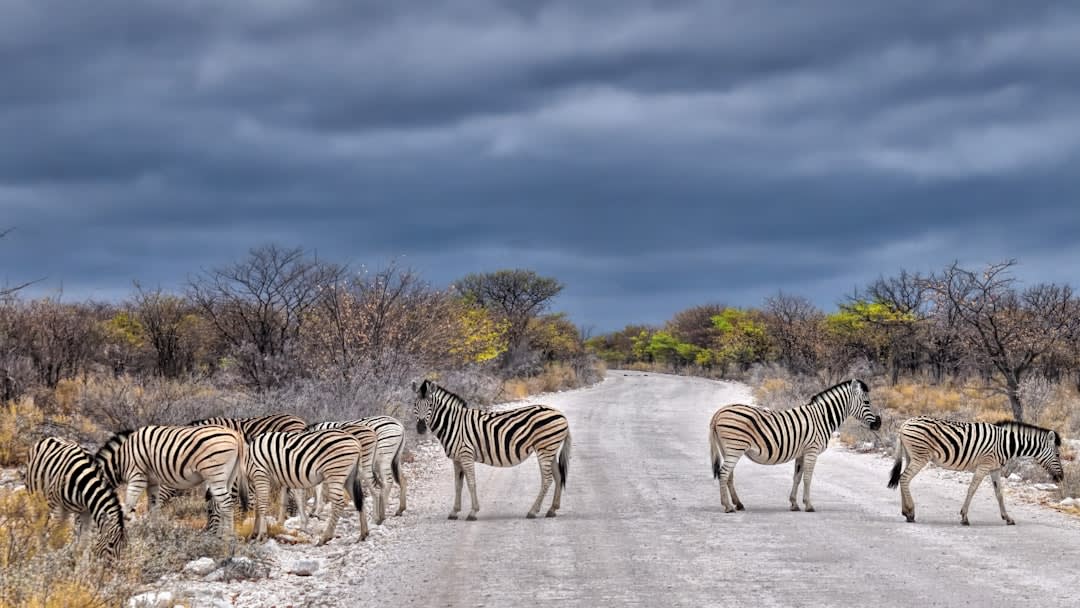
Namibia offers excellent wildlife viewing but less dense than Tanzania or Kenya. Etosha National Park is Namibia's premier wildlife destination, hosting elephants, lions, rhinos, and hundreds of bird species. However, animals are spread across vast areas.
Self-drivers find wildlife viewing challenging in Namibia due to sparse animal density. Guides dramatically increase spotting success through knowledge of animal patterns and water sources. If wildlife viewing is your priority, choose guided safaris.
Seasonal Considerations
Namibia's dry season (May–September) offers the best safari experience. Weather is cool and comfortable. Wildlife congregates around remaining water sources. This is peak season with higher costs and more tourists.
The wet season (November–March) brings lush vegetation and migratory birds. However, some roads become impassable, and wildlife disperses widely. Many guided safaris reduce services during wet season.
Namibia is generally safe for self-drive safaris. Crime rates are lower than in many African countries. However, you still need to follow safety protocols: don't drive at night, avoid isolated areas, and secure valuables.
Wildlife safety requires caution with self-drive. Never exit your vehicle in game reserves without guide permission. Respect animal space and follow park regulations. Guides provide safety briefings and manage risky situations.
Conclusion
Namibia safari car rental choices offer distinct benefits depending on your priorities. Self-drive safaris cost $1,500–$5,000 per person for 10 days and suit independent travelers seeking flexibility and adventure. Guided safaris cost $3,500–$15,000+ per person for 10 days and suit travelers prioritizing expertise and convenience.
The cost difference is smaller than many assume. Budget self-drive and budget guided options cost similarly. Mid-range options also overlap significantly. Your choice should prioritize experience quality and personal comfort over price alone.
Consider your driving experience, wildlife expectations, planning energy, and travel style. Many travelers find hybrid approaches work best: combine guided expertise with self-drive independence. This maximizes both wildlife viewing and adventure.
For detailed comparisons of real Namibia safari packages with current pricing and authentic reviews, explore Namibia safari packages for 2026. SafariFind's verified operators offer both self-drive vehicle rentals and guided safari experiences. Read reviews from previous travelers to understand what each option truly delivers.
Start comparing verified Namibia safari packages on SafariFind today. Request quotes from multiple operators, review authentic traveler feedback, and book your perfect safari adventure with confidence.
Key Takeaways
Book self-drive safaris 2–3 months ahead during peak season (May–September) to secure vehicle availability and save 15–20% on rental costs.
Choose self-drive if you budget under $2,500 for 10 days; choose guided if you budget over $5,000 for comparable experience quality and convenience.
Combine self-drive and guided options: spend 4–5 days with a guide learning wildlife patterns, then 4–5 days exploring independently for maximum value ($3,000–$5,000 total).
Rent a high-clearance 4x4 vehicle ($80–$120 daily) for self-drive safaris in Namibia to handle rough terrain safely and avoid emergency repairs.
Arrange comprehensive vehicle insurance and emergency supplies before self-driving; guided safaris include professional guides trained in wildlife safety and emergency response.
Frequently Asked Questions
How much does a self-drive safari in Namibia cost per person?
A self-drive safari in Namibia costs $1,500–$5,000 per person for 7–10 days, depending on vehicle type, accommodation choice, and activities.[1] Budget self-drive runs $1,500–$2,500. Mid-range self-drive costs $2,500–$4,000. Luxury self-drive exceeds $5,000. Vehicle rental ($50–$150 daily) and accommodation ($15–$300 nightly) are your largest expenses.
How much does a guided safari in Namibia cost?
Guided safaris in Namibia cost $350–$3,000+ per person per night, depending on lodge category and group size.[1] Budget guided tours run $350–$500 nightly ($3,500–$5,000 for 10 days). Mid-range guided safaris cost $500–$1,500 nightly ($5,000–$15,000 for 10 days). Luxury guided safaris exceed $2,000 nightly. All-inclusive pricing covers accommodation, meals, activities, and park fees.
Is self-drive always cheaper than guided safaris?
Self-drive is not always cheaper than guided safaris.[6] Budget and mid-range options cost similarly. A budget self-drive ($1,500–$2,000) costs less than a budget guided safari ($3,500–$5,000). However, a mid-range self-drive ($3,000–$4,000) costs similar to a budget guided safari. Luxury self-drive ($5,000+) costs less than luxury guided safaris ($15,000+). The real difference is convenience, not always price.
What vehicle should I rent for a Namibia self-drive safari?
Rent a high-clearance 4x4 vehicle for Namibia self-drive safaris.[2] A simple SUV costs $50–$80 daily but struggles on rough terrain. A reliable high-clearance 4x4 costs $80–$120 daily and handles most roads safely. A premium 4x4 with full insurance costs $120–$150 daily but offers maximum comfort and protection. Choose based on your planned routes and driving comfort level.
When is the best time to book a Namibia safari?
Book guided safaris 3–6 months in advance during peak season (May–September) for better rates and lodge selection. Book self-drive car rentals 2–3 months ahead during peak season to ensure vehicle availability. Off-season (October–April) requires booking 4–8 weeks ahead for guided tours and 2–3 weeks for self-drive. Early booking saves 15–30% on costs and guarantees preferred dates and accommodations.
Should I choose self-drive or guided safari for my first time in Namibia?
First-time Namibia visitors should choose guided safaris unless they're experienced 4x4 drivers. Guided safaris eliminate navigation stress and dramatically increase wildlife viewing through expert knowledge. Professional guides provide safety expertise and cultural insights. If you're comfortable driving rough terrain and planning logistics, self-drive works. Otherwise, guided safaris deliver better first-time experiences. Compare verified Namibia safari packages on SafariFind to find first-timer-friendly operators with excellent reviews.
Plan Your Safari with SafariFind
These recommendations use real data from SafariFind, where you can compare operators, browse packages, and read verified traveler reviews before you book.
5-Day Mid-Range Scenic Tour of Namibia • $1,517 • 5 days • by Africa Incoming
What Travelers Say (SafariFind Reviews)
"Tongesai was recommended to me by a friend who also booked his amazing safari through Cultural Vibes; I am glad we took his recommendation. Our safari across Victoria Falls and Botswana was top notch. Tongesai booked us in all of the best camps and with the best safari outfitters. Our excursions were extremely well planned and full of excitement. The restaurants were fantastic as well. Personally, I love planning my own vacations but honestly don't think there is an easy and reliable way to plan an African safari without using a travel agent very familiar with the region. Located in Zimbabwe and with a travel and tourism background, Tongesai was able to coordinate our stays between 5 safari camps which included private charter flights across the regions. He also personally escorted us into Botswana and helped with border crossing which was very helpful as well. Compared to larger companies, Tongesai's package rates were more reasonable and came with a customized touch. I highly recommend Cultural Vibes to anyone looking to go on safari in Zimbabwe and its bordering countries (Botswana, Zambia & Namibia). Thanks, T!"
Juliana Norvell•22 June 2026
"We were amazing group of 4 adults from Atlanta USA. Upon arrival we found our guide Stuart Muronga already waiting for us. He picked us up in a well air-conditioned vehicle and offered us water at soft drinks. Before going to check in we drove around the beautiful city . After checking in he dropped us off at the famous Boma restaurant..we had an amazing experience there over delicious meals and drums and dance. He picked us up and dropped us off at our hotel. The next morning he picked us up for out safari experience in Chobe which is in Botswana just an hour drive from Vic Falls. We spent 6 hrs there then drove another 40 or so minutes to some island in Namibia. Stuart was so knowledgeable with great communication skills which made the whole experience so smooth and fun."
Agola•7 May 2026
"Our trip around Namibia was booked through Kubwa Five Safaris, main contact was Sylvia (from their sister company Ompo Travel). Everything was organised perfectly, Sylvia listened to our needs and constantly adapted the trip according to our (many) changes of mind, to ensure we could get the best out of it, both in terms of things to do and accommodations where to stay; but she also added her local know-how to advise our decisions on what really worth seeing and what to skip (given the limited time of two weeks). She was also very responsive, both prior the trip as well as during the trip, taking immediate action if needed (only once, due to a misunderstanding on the check-out from a lodge). Namibia is an amazing place with plenty of wilderness and photo opportunities, and we have enjoyed it fully!"
Thomas•4 May 2026
"Excellent tour in GREAT Namibia. Professional service all along the trip and when arranging the tour in advance - prompt responses with all details and info provided with very high quality of service all along. They nominated a contact person for the whole trip which was great - provided specific plans and details for each day and ensured a smooth trip. Excellent accommodations and meals along the whole trip. Excellent tours were organized at each site. Gondwana accommodations were the best. Highlights: Namib Desert: highlyr ecommend Namib lodge with special stay at Namib Star camp. Very special sailing tour from Walvis Bay with excellent guide! Dune drive in Sandwich Harbor Area Twyfelfontein area Etosha Park Highly recommend Kubwa Five Safaris."
Yael•4 May 2026
"We planned a 10 day tour to see the best of namibia we personalised the tour to what we wanted to see.we had an issue with our flight but Sylvia replanned the tour on 9 days so we missed nothing very very appreciated since it wasn't their responsibility and could have simply made us skip the first day.the tour was fantastic we got to see everything we wanted to see. Wildlife and the landscape that are something of incredible.Our guide John was excellent 👏 really very prepared giving al the info of the diffrent places people, Wildlife towns...."

 Ask Tembo