Ask Tembo
Human–Wildlife Conflict in South Africa: 2026 Guide
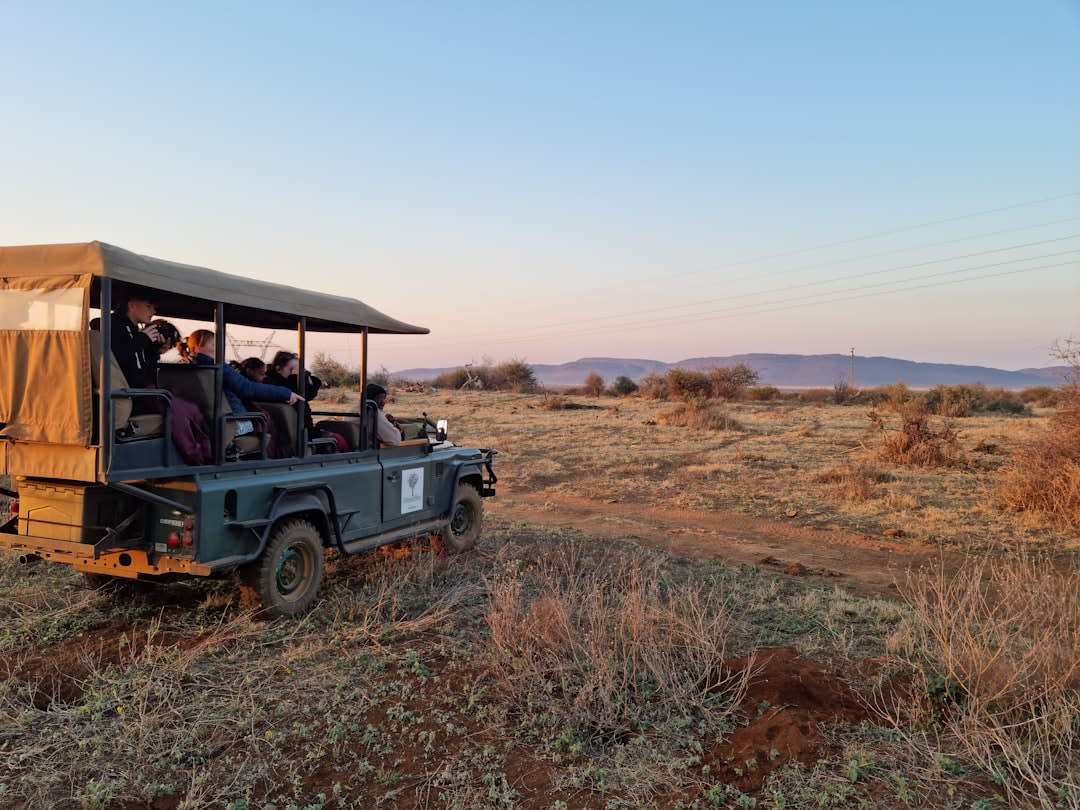
Human–wildlife conflict in South Africa affects people, farms and wildlife through crop raiding, livestock predation, property damage and threats to safety. Effective coexistence increasingly combines community participation, non-lethal deterrents, habitat planning and transboundary conservation rather than relying on wildlife removal alone [1][5].
Last reviewed July 2026. Conservation data changes — see the cited sources for the latest figures.
Quick answer: what is the current conservation status?
Human–wildlife conflict is a significant conservation and livelihood challenge in South Africa, particularly around protected areas and agricultural land. Elephants, lions, buffaloes, leopards and other wildlife can damage crops or property, kill livestock or threaten human safety; retaliatory killings then place additional pressure on wildlife populations [5].
The strongest response is not a single barrier or relocation programme. Evidence from the IUCN and southern African conservation initiatives points towards locally designed prevention, early warning, land-use planning, fairer sharing of conservation benefits and coordinated management across park boundaries [1][9]. South Africa's conservation institutions, including SANParks and partner organisations, are combining these approaches with habitat protection, monitoring and community conservation [8].
Why human–wildlife conflict matters in South Africa
South Africa's protected areas, private reserves, farms and rural settlements form a connected social and ecological landscape. Wildlife does not always remain inside park boundaries, while communities may depend on land and water resources located close to wildlife habitat. IFAW identifies crop raiding, livestock predation and threats to human safety as recurring concerns in areas near protected parks and agricultural land [5].
The IUCN Human-Wildlife Conflict & Coexistence Specialist Group defines conflict as a direct and recurring threat, real or perceived, to human interests or needs that produces negative effects for people or wildlife [1]. This definition matters because the problem is broader than an animal entering a field. It includes lost food, damaged fences, fear, disrupted livelihoods, injuries, financial losses and the political consequences of communities feeling excluded from conservation decisions.
South Africa's biodiversity is also under pressure beyond conflict. The country is one of the world's megadiverse nations, contains three global biodiversity hotspots and has nearly 10% of the world's plant species, according to the IUCN SOS country brief [8]. The same assessment reports that 13% of terrestrial species are threatened with extinction, including 17% of mammals, 20% of amphibians and more than half of freshwater fish [8]. Conflict therefore sits within a wider conservation challenge involving habitat loss, illegal wildlife trade, invasive species and climate change.
The main forms of conflict
Crop raiding and property damage
Elephants can break fences, damage trees and consume crops. In the wider Kavango-Zambezi landscape, a UNEP account describes a smallholder farmer whose mango trees and sections of fencing were destroyed by an elephant; the incident illustrates why household-level losses can quickly undermine tolerance for wildlife [7]. KAZA spans Angola, Botswana, Namibia, Zambia and Zimbabwe, so it is a regional example rather than a South African national statistic [7].
In South Africa, the same underlying pattern occurs where farms and settlements border wildlife habitat: households bear immediate costs while wider society may receive tourism, ecological or cultural benefits. IFAW reports that agricultural and livestock losses are among the principal forms of conflict in South African landscapes adjacent to protected areas [5].
Livestock predation and large carnivores
Lions, leopards, hyenas and other predators may kill livestock, especially where grazing areas are close to wildlife habitat or where livestock are insufficiently protected at night. WWF describes drought-related water scarcity as a factor that can increase contact between people and wildlife across Southern Africa, while livestock losses can reduce food security and increase retaliatory killings [6].
South African conservation work must therefore address both the predator and the husbandry system. Predator-proof enclosures, improved night-time livestock management, rapid response and reliable reporting can reduce losses without defaulting to lethal control. Wild at Life lists electric fencing, predator-proof livestock enclosures, crop rotation, education and other non-lethal measures among the available tools, while emphasising that solutions need to reflect local conditions [4].
Threats to human safety
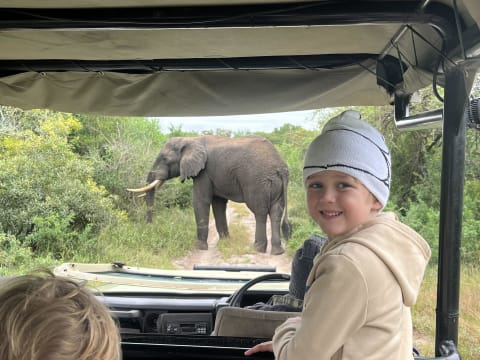
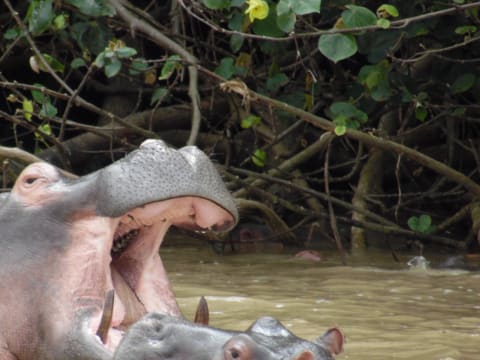
Conflict can involve direct encounters with elephants, buffaloes, hippos, lions or other potentially dangerous animals. The risk is not limited to tourists: people collecting water, tending crops, herding livestock or travelling through wildlife corridors may encounter animals outside protected-area boundaries. Research from Chebera Churchura National Park in Ethiopia is not a South African study, but it demonstrates a comparable regional pattern in which elephants and other wildlife cross park boundaries, damage crops and community water sources and strain park–community relations [3].
For South Africa, the practical lesson is that response systems need accurate incident reporting, trained wildlife officers, community communication and clear public-safety advice. A response that protects people while avoiding unnecessary escalation is more likely to maintain support for conservation than a system based only on emergency removal.
Habitat loss, fragmentation and climate pressure
Human population growth, agricultural expansion, roads, railways, fences, energy infrastructure and urban development can fragment habitat and interrupt wildlife movement. The IUCN identifies population growth, agricultural expansion, infrastructure development, climate change and habitat loss as broad drivers of increasingly frequent and serious human–wildlife conflict [1]. WWF similarly links habitat fragmentation, water infrastructure and drought to growing pressure on Southern African ecosystems and the people who depend on them [6].
Climate change can intensify conflict without creating a new species threat. Drought may reduce access to water, concentrate animals around remaining resources and push wildlife towards crops, livestock and settlements [6]. Land-use planning that protects corridors, maintains water sources and limits incompatible development is therefore a conflict-prevention measure as well as a biodiversity measure.
What is being done in South Africa?
Landscape-scale conservation
IFAW's Room to Roam initiative includes the Greater Limpopo Elephant Landscape, which connects South Africa with Botswana and Zimbabwe, and the Greater Maputo Elephant Landscape, which includes Mozambique [5]. These landscapes recognise that elephants and other wide-ranging species cannot be managed effectively through isolated park boundaries. Connectivity, coordinated planning and community engagement are central to reducing pressure on both wildlife and people.
SANParks is named among the South African partners involved in the IUCN SOS African Wildlife Initiative, alongside organisations including the Endangered Wildlife Trust, BirdLife South Africa, WildTrust, the Freshwater Research Centre and Wilderness Foundation Africa [8]. The partnership model is important because conflict intersects with species protection, water management, habitat restoration, law enforcement and local livelihoods.
Community-based mitigation
Non-lethal measures can include physical barriers, deterrents, early-warning systems, improved livestock enclosures, crop planning and rapid response. Wild at Life reports preliminary results from Maputo Special Reserve in Mozambique in which an experimental deterrent box used reflective tape, torches and an air horn; no conflict was registered at the monitored location during the four-week deployment, although this limited result should not be treated as proof that the method works everywhere [4].
Earlier southern African guidance records Resource Africa's work around communal lands near Kruger Park, including a model in which tourism earnings contributed to a self-insurance approach for farmers experiencing crop damage and livestock loss [11]. Compensation and insurance can help, but they need transparent eligibility rules, timely assessment and sustainable funding. Otherwise, promises that are delayed or inaccessible may deepen mistrust.
Rangers, monitoring and rapid financing
Rangers and field teams contribute to more than anti-poaching. Their work can include wildlife monitoring, incident reporting, community liaison, emergency response and evidence collection. The IUCN's African Wildlife Initiative Rapid Action Grants supported projects in 23 countries, including South Africa, and the programme reported that more than 80 million hectares of critical habitat were protected while more than 270,000 people benefited across the supported projects [10]. These are programme-wide figures, not a South Africa-only measure of conflict reduction.
The same initiative invested more than €1.3 million across 15 major projects between 2020 and 2024 and reported strengthened protection and management across more than 5.5 million hectares [8]. Such grants can provide vital flexibility during crises, but they do not replace long-term public funding, accountable governance or community participation.
Technology can support this work. The Southern African Wildlife College has received support to expand needs-based training, including Spatial Monitoring and Reporting Tools and community-based natural-resource-management capacity [12]. Monitoring systems are most useful when data leads to a practical response: a warning to farmers, a targeted patrol, safer livestock management or a change in land-use planning.
A question about South Africa? Ask Tembo
Community and tourism's role
Conservation is more durable when people living alongside wildlife have a meaningful role in decisions and receive fair benefits. The IUCN warns that conflict can erode support for protected areas and biodiversity, while retaliation can reverse conservation progress [1]. Benefit-sharing, employment, local procurement, community-led tourism and support for diversified livelihoods can help connect wildlife protection with household interests, although no tourism model automatically resolves conflict.
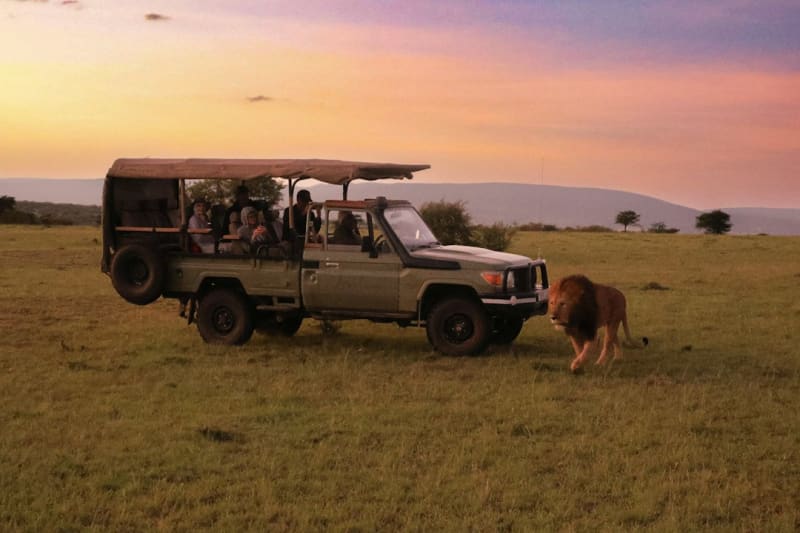
Responsible safari tourism can contribute through park fees, conservation levies, employment, guiding, accommodation, transport and purchases from local businesses. The effect depends on how revenue is governed and distributed; a visitor should not assume that every safari payment reaches a neighbouring community. Travellers comparing the South Africa safari cost in 2026 should ask operators how their fees support conservation and local communities.
For visitors considering a best safari in South Africa, the conservation value of a trip depends on more than the chance of seeing a particular species. Choose operators that explain their conservation partners, employ qualified local guides, respect park rules and communicate honestly about community and wildlife-management challenges. Travellers can book conservation-supporting safaris on SafariFind, but should still verify each operator's claims and policies.
Species-specific conservation is part of this picture. Travellers interested in African wild dog conservation in South Africa should remember that protecting den sites, prey, corridors and local tolerance is as important as seeing the animals. A similar principle applies to landscape restoration and rewilding and wildlife translocations in South Africa: moving animals is not a substitute for suitable habitat, careful planning and community consent.
Results and setbacks: what the evidence shows
There are credible signs of progress. Rapid grants have enabled organisations to respond to emerging threats, while South African partnerships have strengthened work on threatened species, habitats and community-linked conservation [8][10]. Cross-border landscape initiatives such as Greater Limpopo and Greater Maputo reflect a more realistic approach to managing wide-ranging wildlife than treating each protected area as an isolated island [5].
However, the evidence supplied for 2026 does not provide a single, comparable national time series showing that human–wildlife conflict has fallen across South Africa. It would therefore be misleading to claim a nationwide success rate or a definitive reduction in incidents. The available sources instead show a problem shaped by local conditions and a portfolio of interventions whose effectiveness can vary by species, season, landscape, governance and community participation [1][4].
Setbacks remain serious. Habitat fragmentation, drought, water stress, illegal wildlife trade and retaliatory killings continue to affect wildlife and people [5][6][8]. Interventions imposed without consultation may have limited success, according to the IUCN, while compensation schemes can fail if they are slow, poorly targeted or underfunded [1][11]. Coexistence is therefore an ongoing management process, not a one-off project.
How travellers can help responsibly
- Choose transparent operators. Ask who manages conservation contributions, whether local guides and businesses are involved and how the operator responds to wildlife incidents.
- Follow safety instructions. Stay inside vehicles where required, keep a safe distance, do not feed animals and never encourage a guide to provoke wildlife for photographs.
- Respect communities. Ask permission before photographing people, buy locally where possible and avoid treating homes, farms or cultural sites as tourist attractions.
- Support credible conservation. Prefer organisations that identify their partners, objectives, methods and evidence rather than making vague claims about "saving wildlife."
- Report concerns. Tell the operator or park authority about unsafe driving, harassment of animals, illegal feeding or suspicious wildlife trade.
- Plan around conservation realities. A knowledgeable South Africa safari guide can help set realistic expectations about wildlife viewing, seasonal conditions and responsible behaviour.
Human–wildlife conflict in South Africa will not be solved by choosing wildlife over people or people over wildlife. The practical goal is to reduce preventable harm, compensate fairly where losses occur, maintain connected habitat and ensure that communities have a genuine stake in decisions. That approach gives conservation a stronger social foundation while recognising that the costs and risks are often carried most directly by people living closest to wildlife.
Frequently Asked Questions
What is human–wildlife conflict in South Africa?
It is a direct and recurring threat, real or perceived, to human interests or needs caused by wildlife, producing negative effects for people or animals. In South Africa, common examples include crop raiding, livestock predation, property damage, safety risks and retaliatory killings [1][5].
Which animals are involved in human–wildlife conflict in South Africa?
Elephants, lions, buffaloes and leopards are among the species identified in South African conflict reporting, while predators can also kill livestock and elephants can damage crops or property [5][6].
Why is human–wildlife conflict increasing?
The main drivers include population growth, agricultural expansion, infrastructure development, habitat loss, climate change, drought and reduced access to water, all of which can bring people and wildlife into closer contact [1][6].
How can South Africa reduce human–wildlife conflict?
Effective measures include community-designed prevention, early-warning systems, suitable fencing, predator-proof livestock enclosures, crop planning, rapid response, habitat corridors and fair benefit-sharing. The IUCN cautions that interventions imposed without consultation often have limited success [1][4].
What is the best safari in South Africa?
There is no single best safari for every traveller. Conservation-minded visitors should compare the habitat, wildlife priorities, operator practices, local partnerships, safety standards and how tourism revenue is managed rather than choosing only by sightings.
When is the best time for safari in South Africa?
The research supplied for this article does not establish a national best season. Travellers should ask a reputable operator about the specific reserve, rainfall, water availability, wildlife movements and local conservation conditions before booking.
Does safari tourism help reduce human–wildlife conflict?
It can, when tourism generates fairly managed benefits through park fees, employment, local procurement, conservation support and community programmes. Tourism is not automatically beneficial, so travellers should ask operators how revenue and conservation contributions are governed [1][11].
What should I ask a South Africa safari operator about conservation?
Ask which organisations or parks the operator supports, how local communities benefit, whether guides are locally employed, how wildlife incidents are handled and whether conservation claims are backed by identifiable programmes or reports.
Are wildlife translocations a solution to conflict in South Africa?
Translocation can be one management tool, but it does not replace suitable habitat, land-use planning, monitoring or community participation. Measures that simply move animals may fail if the underlying causes of conflict remain [1].
How can visitors behave responsibly around wildlife?
Follow guide and park instructions, keep a safe distance, remain in designated vehicles or areas, never feed animals, avoid provoking wildlife for photographs and respect communities when taking photographs.
Trips that match this guide