How to Get Around Botswana: Flights and Roads in 2026

Most safari travellers reach remote camps in Botswana by light aircraft from Maun or Kasane, while major towns and accessible parks can be reached by road. Botswana drives on the left, and four-wheel drive is required in national parks, reserves and remote areas. [1][2]
Most travellers use scheduled flights to reach Maun, Kasane or Gaborone, then continue by light aircraft or road transfer to their safari camp. Botswana's main roads are generally suitable for driving, but four-wheel drive is required in national parks, reserves and remote areas. [1]
If you are comparing Botswana safari packages, check exactly how each itinerary handles domestic flights, bush flights, airport transfers, luggage and long road sections before booking. Those details can change the price and the amount of time you spend travelling.
Last checked September 2026. Always confirm with official sources before travelling. This article is for information only, not legal advice. Transport, border and entry requirements can change.
How to get around Botswana
The usual ways to travel around Botswana are scheduled flights between major airports, light-aircraft transfers to remote safari camps, private road transfers, self-drive and buses between towns. Public transport is useful between major towns, but it will not take you directly to most national parks, private concessions or remote lodges. [1][2]
- Fly-in safari: Fly commercially to Maun or Kasane, then use a chartered light aircraft to reach a bush airstrip near your camp. [3][4]
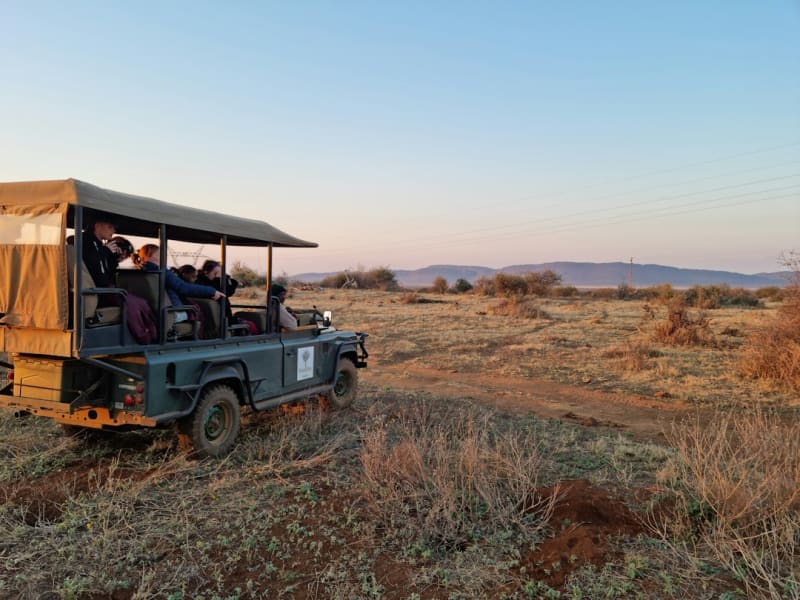
- Road safari: Use a 4WD vehicle, either self-driven or with a guide, for national parks, reserves and remote areas. [1][2]
- Town travel: Use taxis, buses or minibuses between towns and cities. Taxis are available in towns and at Sir Seretse Khama International Airport. [1]
- Cross-border travel: Botswana has tarred road connections with South Africa, Zimbabwe, Zambia and Namibia. Scheduled buses also cross borders with those countries. [1]
For a multi-camp safari, ask the operator whether the itinerary is fly-in, drive-in or a mixture. The operator normally coordinates camp connections and airport transfers, but you should confirm what is included before paying.
Which airports should international travellers use?
International visitors normally enter through Gaborone, Maun or Kasane, depending on the safari route. Most long-haul visitors connect through Johannesburg before flying onward to Botswana. [3]
| Airport | Best for | What the research says |
|---|---|---|
| Sir Seretse Khama International Airport, Gaborone, GBE | Gaborone and onward domestic or regional travel | Botswana's main international gateway, about 15 km north of central Gaborone. Services include connections from Johannesburg, Addis Ababa, Cape Town and Harare. [3] |
| Maun International Airport, MUB | Okavango Delta | Maun is the main gateway to the Okavango Delta and connects with safari camps by light aircraft. [2][3] |
| Kasane International Airport, BBK | Chobe National Park and the Chobe region | Kasane is the main airport for Chobe and also provides access to regional travel near Victoria Falls. [2][3] |
| PG Matante International Airport, Francistown, FRW | Francistown and northern Botswana | Francistown has domestic connections and limited regional traffic, but most safari visitors do not route through it. [3] |
Maun is usually the practical arrival point for an Okavango itinerary. Kasane is more convenient for Chobe, and Gaborone is useful for travellers whose plans begin in the capital or include southern Botswana. The right airport depends on the first camp, not simply on the cheapest international ticket.
How do domestic and fly-in safari flights work?
Fly-in safaris connect a commercial airport with a remote camp by light aircraft. Travellers usually fly internationally or regionally to Maun or Kasane, then board a small aircraft to a private or lodge airstrip. [2][4]
Maun is the main air gateway to the Okavango Delta. Scheduled flights connect it with Johannesburg and Gaborone, while charter flights carry guests onwards to camps and concessions. [3] Kasane serves Chobe and also supports tourism traffic around the wider northern safari region. [2]
Flights between camps are often short, but the research supplied for this article does not establish one standard flight time for every route. One safari source describes typical bush flights as 15 to 45 minutes, while another gives 20 to 45 minutes from Maun to camps. Treat those as route examples, not a guaranteed timetable. [2][4]
What luggage can you take on a bush flight?
Bush-flight luggage limits vary by aircraft, operator and itinerary, and the supplied research does not provide a single verified weight limit. Confirm the current allowance directly with your safari operator before you fly. Ask whether soft-sided bags are required, whether camera equipment is included in the allowance and whether excess luggage can be stored in Maun or Kasane.
This is one of the details worth resolving before booking. A normal international baggage allowance does not automatically apply to a small charter aircraft. Your operator should tell you the aircraft type, baggage rules, airstrip arrangements and what happens to luggage that cannot travel with you.
What are the road transfers and travel times between key parks?
Botswana's main roads are generally tarred, and roads to established areas are regularly graded. Four-wheel drive is required in national parks, game reserves and remote areas. [1]
The available research does not provide reliable, current journey times between Maun, Kasane, Gaborone, Chobe, the Okavango Delta or other parks. Do not plan a route from a generic map estimate alone. Ask the operator for the expected driving time for your exact date, route, vehicle and destination.
Road conditions can affect a safari more than the map suggests. A route that looks straightforward between two towns may become a long transfer once it continues onto park tracks or remote concession roads. This is why many itineraries combine a road transfer on accessible sections with a light aircraft for the final leg.
Self-driving is possible, and rental cars and four-wheel-drive vehicles are widely available in major tourist centres, airports and hotels. Drivers must carry a valid international driver's licence and vehicle registration documents, and Botswana drives on the left. [1]
Is it safe to drive in Botswana?
Driving conditions on Botswana's major roads are generally good, but the official tourism guidance says that four-wheel drive is required in national parks, reserves and remote areas. [1] That does not make every self-drive route suitable for every visitor.
Before choosing self-drive, confirm the vehicle type, insurance, fuel plan, roadside support, park access rules and current road conditions. For a first safari, a guided 4WD transfer removes much of the navigation and vehicle-recovery responsibility. Travellers should also review current safety information, including the 2026 safety advice for Botswana, before setting out.
Are there trains, buses and ride-hailing services in Botswana?
Botswana has no passenger train services. Rail services carry cargo, while buses connect major towns, villages and several neighbouring countries. [1]
Buses are a low-cost way to travel between towns, but they do not reach most remote safari camps. Services may be slower and less comfortable than a private transfer, and minibuses also operate on paved routes. [1][5]
Taxis are available in towns and can be contacted by telephone or found at designated stations. The Botswana Tourism Organisation advises travellers to agree the fare before leaving and to make sure the driver has change. [1] The supplied research does not confirm a nationwide ride-hailing app or coverage area, so confirm local options after arrival rather than assuming an app will work.
For airport arrival in Gaborone, taxis are available from Sir Seretse Khama International Airport. There is also a direct bus service between O.R. Tambo International Airport in South Africa and central Gaborone. [1]
Should you choose a fly-in or drive-in safari?
Choose a fly-in safari when your camps are deep in the Okavango Delta, a private concession or another remote area that is not practical to reach by ordinary vehicle. Choose a drive-in safari when the route follows established roads, when you want to control the pace, or when the itinerary is built around accessible parks and towns. [1][2]
| Choose fly-in travel if... | Choose road travel if... |
|---|---|
| Your itinerary includes remote Delta camps or bush airstrips. [2][4] | Your route follows Botswana's established road network. [1] |
| You want to reduce long overland transfers between camps. | You want to travel overland and can manage the extra driving time. |
| Your operator has confirmed aircraft, airstrip and luggage arrangements. | You have a suitable 4WD vehicle, current route information and the required documents. [1] |
Fly-in travel is faster between remote camps, but it adds aircraft and baggage rules to the booking. Road travel gives you more control over the route, but a remote safari can involve long transfers and difficult tracks. In practice, a mixed itinerary often makes the most sense.
How many hours to Botswana?
There is no single answer because the journey depends on your departure city and connection. The supplied research says most long-haul visitors connect through Johannesburg, and the flight from Johannesburg to Gaborone takes approximately 1 hour 20 minutes. It gives approximately 1 hour 45 minutes from Johannesburg to Maun and approximately 2 hours from Johannesburg to Kasane. [3]
Those are regional flight times, not total travel times from Europe, North America, Asia or Australia. Confirm your full routing, connection time and baggage rules with the airline or booking agent.
Practical tips for arranging transport
- Match the airport to the first camp. Maun generally suits Okavango Delta routes, while Kasane suits Chobe itineraries. [2][3]
- Ask what the safari price includes. Confirm domestic flights, charter flights, airport transfers, road transfers, park access, luggage handling and overnight accommodation during travel days.
- Request exact transfer times. The research does not support standard travel times between Botswana's parks, so ask for a route-specific estimate.
- Check baggage before buying international flights. Bush aircraft have different operating requirements, and the current allowance must come from your operator.
- Carry the right driving documents. Drivers need a valid international driver's licence and vehicle registration documents, according to Botswana Tourism Organisation guidance. [1]
- Plan for the vehicle, not only the destination. Four-wheel drive is required in parks, reserves and remote areas. [1]
- Build in connection time. Do not book a tight self-transfer between an international flight, a scheduled domestic flight and a charter unless the operator has confirmed the plan.
- Check local payment arrangements. For a broader guide to cash, cards and tipping, see Money in Botswana: currency, cards and tipping in 2026.
Travellers combining Botswana with Victoria Falls should ask whether Kasane is the better entry or exit point. The airport is close to the Chobe region and is used for regional tourism travel, but border transfers and entry requirements still need to be confirmed for the specific itinerary. [2]
Planning your Botswana safari
Start by choosing the first wildlife area, then compare the airport, road transfer and bush-flight plan rather than looking only at the accommodation. Review the trips below and request quotes from the verified operators below, asking each one to confirm luggage, transfers and domestic flights in writing.
Frequently Asked Questions
How much is a plane ticket to Botswana?
The supplied research does not establish a current international ticket price to Botswana, so confirm the fare with an airline or booking agent. Most long-haul travellers connect through Johannesburg, then fly to Gaborone, Maun or Kasane. [3]
How much is a plane ticket from Botswana to the UK?
The supplied research does not provide a current fare from Botswana to the UK. Check live prices for your departure airport, connection and travel dates with airlines or a reputable booking agent.
How do I get a Botswana visa?
The transport research supplied for this article does not state who needs a visa, the application process or current fees. Check Botswana's official immigration or government portal for your nationality and confirm the requirement before booking.
How do I immigrate to Botswana?
Immigration is outside the scope of the transport sources used here, and this research does not establish residence, work or long-stay requirements. Check Botswana's official immigration authorities for the visa or residence category that matches your situation.
Is it safe to drive in Botswana?
Major roads are generally in good condition, but four-wheel drive is required in national parks, reserves and remote areas. Botswana Tourism Organisation also says drivers should carry a valid international driver's licence and vehicle registration documents. [1]
Are there tsetse flies in Botswana?
The supplied transport research does not confirm where tsetse flies occur in Botswana or provide current medical advice. Check an official travel-health authority for location-specific guidance before travelling.
How do you travel around Botswana?
Travellers use scheduled flights, light aircraft, private road transfers, self-drive vehicles, buses and taxis. Remote safari camps usually require a 4WD route or a light-aircraft connection from Maun or Kasane. [1][2][4]
How long are flights from Johannesburg to Botswana?
The supplied research gives approximately 1 hour 20 minutes from Johannesburg to Gaborone, approximately 1 hour 45 minutes to Maun and approximately 2 hours to Kasane. These are approximate regional flight times and do not include airport or connection time. [3]
Can I travel between Botswana's safari camps by road?
Yes, some camps can be connected by road, but remote camps and private concessions may require a light aircraft. Your operator should confirm the vehicle route, road conditions and expected transfer time for each camp. [1][2][4]
Does Botswana have passenger trains?
No. Botswana has no passenger train services, although cargo trains operate. Buses connect major towns and villages instead. [1]