
How Safari Tourism Funds Conservation in Zimbabwe (2026)
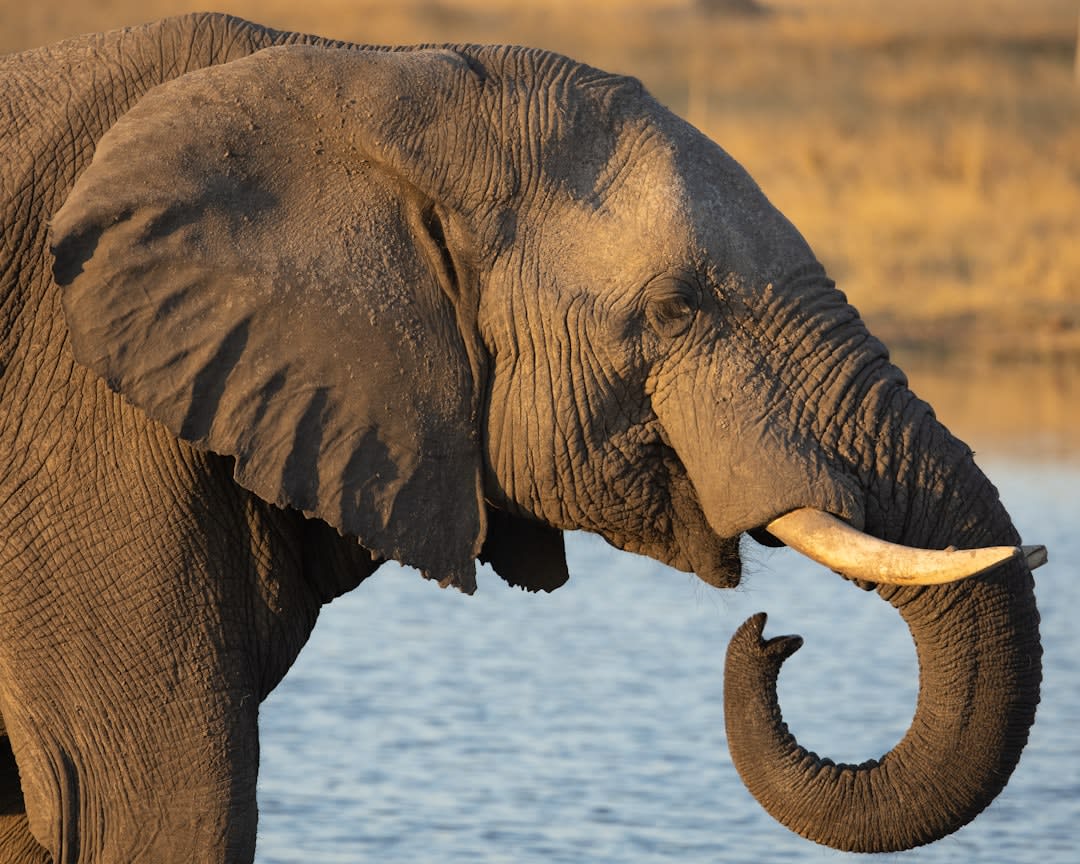
Safari tourism supports Zimbabwean conservation through protected-area operations, community-based natural-resource management, ranger capacity, habitat protection and emerging natural-capital finance. The strongest models combine tourism income with grants, carbon and biodiversity markets, while transparent benefit-sharing remains essential.
Quick answer: In Zimbabwe, safari tourism funds conservation through visitor spending, private concessions, community-based natural-resource management and investment models linked to wildlife and ecosystem outcomes. The Middle Zambezi Conservation Project shows how ecotourism can form part of a diversified finance model: the project spans more than 126,000 hectares, operates through 25-year renewable leases with the Zimbabwe Parks and Wildlife Management Authority, and had mobilised more than US$7 million through a combination of ecotourism, sustainable wildlife activities, carbon and biodiversity markets by the time of the cited report [1].
Tourism is not a standalone solution. Zimbabwe’s conservation finance also depends on public agencies, donors, conservation organisations, communities and private investors. The evidence supports a balanced conclusion: safari income can help keep landscapes protected and create incentives for stewardship, but weak governance, unequal benefit-sharing, climate pressure, human–wildlife conflict and tourism disruption can undermine those gains [2][3][4].
Last reviewed August 2026. Conservation data changes — see the cited sources for the latest figures.
Why safari tourism matters for Zimbabwe’s wildlife
Zimbabwe’s safari economy is built around large, connected landscapes rather than isolated attractions. The Kavango-Zambezi Transfrontier Conservation Area and the Mid-Zambezi Valley are central to WWF Zimbabwe’s 2026–2030 strategy because they contain important habitats, wildlife corridors and communities living alongside protected areas [1]. These landscapes include the Mana Pools, Sapi and Chewore Safari Areas, the wider Zambezi Valley, and conservation areas connected to neighbouring countries through transfrontier initiatives [5].
A functioning wildlife safari requires more than animals and scenery. Protected landscapes need rangers, ecological monitoring, roads, communications, staff housing, water infrastructure, visitor facilities, planning and community engagement. A tourism operation that pays concession fees, park charges, local salaries, service contracts or conservation contributions can therefore help cover costs that would otherwise fall entirely on government budgets or charitable donors. The exact flow of money differs by park, lease, operator and community arrangement, so travellers should not assume that every payment reaches field conservation directly [2][3].
The conservation case is also economic. CAMPFIRE, the Communal Areas Management Programme for Indigenous Resources, was launched in the 1980s as one of Africa’s early large-scale attempts to give rural communities a financial stake in wildlife management. At its peak, revenue from safari hunting, ecotourism and controlled natural-resource use generated millions of dollars annually for participating communities, supporting infrastructure such as schools and clinics [6]. The programme later became a cautionary example of how funding flows and institutional arrangements can weaken, but its history continues to inform community-conservation debates in Zimbabwe [6][7].
How does safari tourism fund conservation in Zimbabwe?
The relationship between a safari booking and conservation is usually indirect and layered. Money can move through several channels before it reaches a ranger team, community project or habitat programme. Understanding those channels helps travellers distinguish a credible conservation contribution from a vague sustainability claim.
| Funding channel | What it can support | Zimbabwe example or context |
|---|---|---|
| Park and concession revenue | Protected-area management, visitor infrastructure, staff and field operations | Tourism facilities and management are part of the wider conservation system in Zimbabwe’s protected landscapes [3][5]. |
| Community-based conservation | Local institutions, livelihoods, education, health services and incentives to tolerate wildlife | CAMPFIRE historically linked safari and natural-resource revenue with community benefits [6]. |
| Private conservation investment | Long-term habitat protection, ecological baselines and landscape management | The Middle Zambezi Conservation Project combines ecotourism and sustainable wildlife activities with carbon and biodiversity markets [1]. |
| Grants and donor partnerships | Ranger support, monitoring, infrastructure, training and community engagement | WWF, IUCN-linked programmes, USAID and other partners have supported conservation capacity and transfrontier work [1][4][8]. |
| Results-based finance | Investment tied to measurable ecological outcomes | Peace Parks Foundation reported work on a proposed US$10 million conservation bond and ecological monitoring for the Limpopo–Banhine linkage, illustrating the direction of conservation finance in the region [9]. |
These channels can reinforce one another. A lodge may create employment and purchase local services; concession income can support the protected area; a community institution can invest revenue in local priorities; and ecological data can help an investor or donor assess whether conservation outcomes are being achieved. The more transparent the chain from visitor payment to outcome, the easier it is to test whether tourism is genuinely supporting conservation [2][3].
The main threats conservation funding must address
Poaching and illegal wildlife trade
Anti-poaching remains a core use of conservation finance. WWF Zimbabwe reports that its previous strategic cycle supported protection of more than 1,000,000 hectares across the Kavango-Zambezi and Mid-Zambezi landscapes through anti-poaching, wildlife monitoring and improved land-use planning [1]. This figure describes habitat supported by the programme; it is not a national measure of poaching or a claim that those landscapes are secure.
Tourism revenue can help pay for patrol logistics, communications, equipment, training and the management systems that make protection possible. However, tourism income alone cannot resolve organised wildlife trafficking, corruption, cross-border crime or the social conditions that may contribute to illegal resource use. Effective protection also requires law enforcement, intelligence, community trust and accountable institutions [1][4][8].
Habitat loss and fragmented corridors
Climate change, population growth and unsustainable land use are identified by WWF Zimbabwe as pressures on ecosystems and communities [1]. Fragmented habitat can restrict wildlife movement and make it harder for animals to respond to drought, changing water availability or declining forage. WWF’s current strategy therefore prioritises restoring transboundary corridors and supporting land-use planning in the Kavango-Zambezi region and Mid-Zambezi Valley [1].
Safari tourism can create an economic reason to retain habitat, particularly where income is shared with communities and linked to long-term land security. It can also cause harm when tourism developments displace local interests, overuse scarce resources or promote greenwashing. An IUCN World Heritage Outlook assessment for Mana Pools, Sapi and Chewore records tourism-related and development concerns alongside broader conservation threats, underlining the need for careful planning in sensitive landscapes [5].
Human–wildlife conflict
People living beside wildlife can bear costs that visitors do not see: crop damage, livestock losses, restricted access to land and the risk of injury. Community conservation is more durable when local residents have meaningful influence over decisions and receive fair, reliable benefits. WWF Zimbabwe’s strategy explicitly includes equitable benefit-sharing, eco-tourism and wildlife credits among the approaches it is considering [1]. The experience of CAMPFIRE also shows why revenue governance matters: when communities cannot see or control benefits, support for conservation can weaken [6][7].
Climate and tourism disruption
Climate resilience is a stated priority in WWF Zimbabwe’s 2026–2030 plan, including catchment restoration, rotational grazing, pasture reseeding, erosion control, waterpoint management and livestock–wildlife coexistence planning [1]. Tourism itself is vulnerable to shocks. WWF’s African nature-based tourism project notes that the COVID-19 crisis caused major losses for tourism businesses, conservation operations and rural livelihoods, with marginalised communities and small and medium-sized enterprises often struggling to access emergency support [4]. A resilient funding model must therefore combine tourism with grants, public finance, community enterprise and newer investment mechanisms.
What is being done on the ground?
WWF Zimbabwe is directing its 2026–2030 strategy towards two priority landscapes: the Kavango-Zambezi region and Mid-Zambezi Valley. Its approaches include corridor restoration, community-based conservation, nature-based solutions and green livelihoods [1]. This is important because it connects wildlife protection with water, grazing, land-use planning and climate adaptation rather than treating conservation as a fence around a park.
ZIMPARKS and transfrontier partnerships remain central to protected-area management. An IUCN-supported transfrontier grant programme reported work involving Zimbabwe Parks and Wildlife Management Authority in Chimanimani, Greater Mapungubwe, Kavango-Zambezi and the Lower Zambezi–Mana Pools transfrontier landscapes. Reported outputs included patrol rations, regular fuel for patrol teams, staff housing at Chimanimani National Park, and repairs to bridges and tourism facilities at Mana Pools and Tuli Guest House [8]. These are practical examples of conservation finance: they do not replace long-term budgets, but they can keep field operations functioning.
Natural Capital is using the Middle Zambezi Conservation Project to test a larger-scale investment model. The project covers more than 126,000 hectares under renewable leases with ZIMPARKS and combines ecotourism and sustainable wildlife activities with carbon and biodiversity markets. The World Economic Forum reported that more than US$7 million had been mobilised and that revenue was already flowing back into the project [1]. Because the model is still part of an evolving conservation-finance field, independent reporting on governance, ecological outcomes and community benefits remains important.
Community and conservation organisations are also developing locally rooted approaches. SAFIRE, the Zimbabwe Environmental Law Association and the Wildlife Conservation Action Network are described as part of a slow revival of Zimbabwe’s community-conservation movement, although the organisations continue to face significant challenges [6]. The African Wildlife Conservation Fund works in Zimbabwe’s south-eastern lowveld on African wild dogs, other large carnivores, prey species, habitats, education and community livelihoods [10]. Travellers interested in species-specific work can also read SafariFind’s guides to African wild dog conservation in Zimbabwe and cheetah conservation in Zimbabwe.
What results can safari tourism deliver—and where are the setbacks?
The clearest reported results are institutional and landscape-based rather than a single national wildlife-population figure. WWF reports support for more than 1,000,000 hectares through anti-poaching, monitoring and planning [1]. The Middle Zambezi initiative has mobilised more than US$7 million and established a diversified revenue pathway across a landscape exceeding 126,000 hectares [1]. The transfrontier grant programme supported patrol logistics, staff housing and repairs to conservation and visitor infrastructure [8].
There are also important capacity gains. USAID reported training for hundreds of rangers, scouts and community members in basic wildlife-trafficking responses across Zimbabwe and neighbouring countries, alongside specialist leadership and wellness training for rangers in the region [11]. Such training can improve capability, but the cited research does not establish a national reduction in poaching or a specific population increase as a result.
Setbacks remain substantial. Conservation areas need reliable funding beyond short grants and beyond the peaks of the tourism season. Community models can lose legitimacy when revenue is delayed, captured by intermediaries or distributed unfairly [6][7]. Tourism can generate conservation income but can also create land-use pressure, waste, water demand and disturbance if poorly planned [2][5]. Climate change adds uncertainty, while economic or public-health shocks can rapidly reduce visitor income [1][4]. The honest conclusion is that safari tourism is a valuable funding stream, not proof that every tourism operation is conservation-positive.
How travellers can support responsible conservation
- Ask where the money goes. Look for operators that explain concession fees, conservation levies, community payments, employment and partnerships in specific terms rather than relying on general claims.
- Prefer transparent local benefits. Ask whether local residents hold decision-making roles, receive predictable benefits and can raise concerns about tourism or wildlife management. This follows the principle of equitable benefit-sharing highlighted in WWF Zimbabwe’s strategy [1].
- Choose low-impact operations. Smaller groups, responsible driving, careful water and energy use, and respect for wildlife viewing rules reduce pressure on sensitive habitats. Ecotourism can support conservation, but its environmental and social impacts still require management [2][3].
- Support credible conservation partners. Where possible, check the named park authority, community trust, conservation organisation or programme and look for reporting on activities and outcomes.
- Do not buy wildlife products. Avoid souvenirs or experiences that encourage illegal trade, harassment, handling of wild animals or damaging interactions.
- Support communities beyond the lodge. Use locally owned guides, craftspeople, cultural enterprises and services where available, so tourism value is not concentrated only in an external operator.
Travellers can book conservation-supporting safaris on SafariFind, while still checking each operator’s stated funding and community commitments before booking. The most responsible choice is an informed one: ask what is funded, who benefits, how results are measured and what happens when tourism revenue falls.
The outlook for Zimbabwe’s conservation economy
Zimbabwe’s conservation-finance direction is becoming more diversified. Traditional tourism and community revenue are being combined with grants, private investment, carbon, biodiversity markets and proposed results-based finance. WWF’s strategy places this shift within a broader landscape approach that links ecological connectivity, climate resilience, community livelihoods and wildlife protection [1].
Success will depend on governance as much as on visitor numbers. Transparent financial flows, secure community rights, credible ecological baselines, accountable park management and independent reporting are necessary if safari tourism is to retain public trust. Zimbabwe has examples of both promise and caution: CAMPFIRE demonstrated the potential of community benefits but also the consequences of weakened funding arrangements, while the Middle Zambezi model illustrates a newer attempt to attract long-term capital [1][6][7].
For visitors, the practical message is straightforward. A wildlife safari can help finance the people and systems that protect Zimbabwe’s landscapes, but the positive outcome is not automatic. Tourism works best when it is part of a broader, transparent conservation strategy that keeps habitats connected, supports communities and measures what the money achieves.
Frequently Asked Questions
How does safari tourism fund conservation in Zimbabwe?
Safari tourism can fund conservation through park and concession revenue, community-based natural-resource management, local employment, conservation contributions and private investment in protected landscapes. In the Middle Zambezi Conservation Project, ecotourism forms part of a diversified model that also includes sustainable wildlife activities, carbon and biodiversity markets [1].
Does my safari booking directly pay Zimbabwean rangers?
Not necessarily. Money may pass through operators, concession agreements, park authorities, community institutions or conservation partners before supporting patrols or management. Travellers should ask each operator to explain its funding arrangements rather than assuming that every booking payment reaches rangers directly [2][3].
What is CAMPFIRE in Zimbabwe?
CAMPFIRE is the Communal Areas Management Programme for Indigenous Resources, a community-conservation model launched in the 1980s. It used revenue from safari hunting, ecotourism and controlled natural-resource use to give rural communities a financial stake in wildlife protection; at its peak, it generated millions of dollars annually for participating communities [6].
Which Zimbabwe landscapes are conservation priorities in 2026?
WWF Zimbabwe’s 2026–2030 strategy prioritises the Kavango-Zambezi region and the Mid-Zambezi Valley, with work focused on habitat protection, corridor restoration, community conservation, climate resilience and green livelihoods [1].
What are the biggest threats to Zimbabwe’s wildlife?
The research identifies poaching, habitat fragmentation, unsustainable land use, climate change and human–wildlife conflict as major challenges. Tourism disruption can also reduce income for conservation operations and rural communities [1][4][5].
How much land does the Middle Zambezi Conservation Project cover?
The project spans more than 126,000 hectares and is managed through 25-year renewable lease agreements with the Zimbabwe Parks and Wildlife Management Authority [1].
How much funding has the Middle Zambezi project mobilised?
The World Economic Forum reported that more than US$7 million had been mobilised and that revenues were already flowing back into the project. The model combines ecotourism and sustainable wildlife activities with carbon and biodiversity markets [1].
How can tourists support conservation responsibly in Zimbabwe?
Choose operators that explain where conservation and community money goes, support locally owned services, follow wildlife-viewing rules, avoid wildlife products and ask how benefits and ecological results are measured.
Does ecotourism always benefit wildlife?
No. Ecotourism can provide vital conservation funding, employment and research support, but poorly governed tourism can cause habitat pressure, unequal benefits, disturbance and greenwashing. Transparent finance and careful management are essential [2][3][5].
What role do grants play in Zimbabwean conservation?
Grants can support patrol fuel and rations, staff housing, infrastructure repairs, monitoring, training and community engagement. An IUCN-linked transfrontier programme reported these kinds of outputs across several Zimbabwean conservation landscapes [8].


