Ask Tembo
Community Conservancies in Mozambique: Conservation in 2026

Community conservancies in Mozambique connect local governance, sustainable livelihoods and wildlife protection across terrestrial and marine landscapes. Progress is visible in places such as Inhambane Bay, Maputo National Park and the Greater Gorongosa landscape, but weak enforcement, food insecurity, climate pressure and uncertain finance remain significant challenges.
Quick answer: Community conservancies in Mozambique are locally led or co-managed areas where communities help govern land, fisheries and natural resources alongside government agencies and conservation organisations. Mozambique's conservation system includes three community conservation areas identified by ANAC, while newer initiatives are expanding community governance around protected areas and marine ecosystems.[5][7] The strongest evidence from 2026 shows practical gains—such as no-take zones, habitat restoration, fisheries management and local ranger training—alongside continuing problems with enforcement, food insecurity, climate impacts and long-term financing.[1][2][6]
Last reviewed July 2026. Conservation data changes — see the cited sources for the latest figures.
Why community conservancies matter in Mozambique
Mozambique contains an extensive network of protected landscapes and coastal ecosystems. The government has designated 25% of the country's territory—equivalent to 18.57 million hectares—as conservation areas. This system includes national parks, national reserves, hunting areas, wild game farms and community conservation areas.[5] Community conservancies therefore sit within a broader national framework rather than operating as isolated tourism projects.
The approach matters because many Mozambican households depend directly on land, forests, rivers and marine resources. Conservation rules that exclude local people from decisions can be difficult to enforce and may deepen conflict, particularly where communities face food insecurity or have experienced displacement. Research on four coastal communities in Mozambique found that food insecurity and weak "nested governance"—the connection between community, local and national institutions—contributed to the collapse of rule enforcement in one community and continued to challenge all four.[2]
Community-based conservation also reflects Mozambique's history. Ocean Revolution Mozambique reports that traditional stewardship practices in Inhambane Bay were disrupted during the country's civil war and are now being revived through cooperation between traditional knowledge holders and marine science.[1] In terrestrial areas, the legacy of conflict, changing land use and the expansion or reorganisation of protected areas has made participation and fair governance central to conservation planning.[5]
For wildlife travellers, this means that conservation is not only about what happens inside a national park. It also depends on how neighbouring communities access water, manage grazing and fishing, respond to wildlife, receive tourism benefits and participate in decisions affecting their land.
The main threats facing community conservation areas
Illegal wildlife and forest crime
The practical implication is clear: community conservancies need reliable patrol capacity, trusted reporting systems and effective links to Mozambique's protected-area authority and law-enforcement institutions.
Gorongosa illustrates the human-resource dimension. Its law-enforcement team comprises 260 trained rangers, led by Mozambican conservation professionals Tsuere Buramo, Head of Law-Enforcement, and Alfredo Matevele, Deputy Head of Law-Enforcement.[8] That is a park-level figure, not a national total, but it shows the scale of sustained staffing required to protect large landscapes.
Habitat loss and unsustainable resource use
Community conservation areas must balance ecological recovery with immediate household needs. The 2026 peer-reviewed study of coastal Mozambique found that aligning governance investment with development interventions can strengthen support for conservation by addressing underlying drivers of non-compliance and environmental degradation.[2] This is not an argument for weakening conservation rules; it is evidence that rules are more durable when communities have a credible stake in them and when institutions can enforce them fairly.
In marine areas, pressure can include unsustainable fishing and damage to mangrove, seagrass and reef habitats. Ocean Revolution Mozambique reports that it has established 12 no-take zones covering 3,000 hectares and helped restore more than 5,000 hectares of seagrass and mangrove habitat in Inhambane Bay.[1] These are programme results reported by the organisation, not a national measure of marine recovery.
Human–wildlife conflict
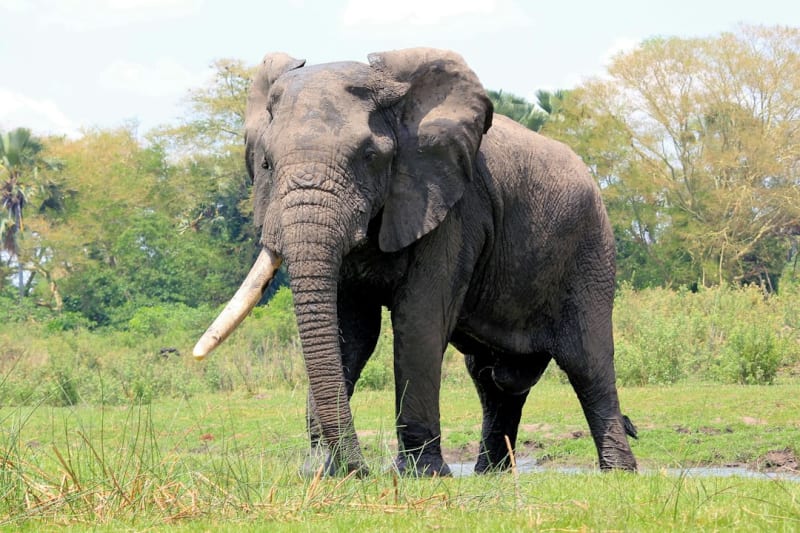
Where communities and wildlife share water, crops and movement corridors, conflict can undermine support for conservation. In Limpopo National Park, community-based natural-resource-management committees and training in human–wildlife coexistence are part of the livelihoods programme supported through the SADC Transfrontier Conservation Area Financing Facility.[13] In Magude District, the Mozambique Wildlife Alliance has supported Rapid Response Units intended to redirect elephants away from villages while building local resilience and capacity.[12]
These interventions should be judged by whether they reduce risk for residents as well as wildlife. A response team, a water project or a conservation rule cannot by itself resolve wider questions about land rights, compensation, crop protection or access to grazing.
Climate and coastal change
Climate impacts add pressure to already complex management decisions. A 2026 field mission on Mozambique's marine protected areas identified climate impacts, financing, legislative awareness and public engagement as persistent challenges.[6] The same mission reported that rising sea temperatures were affecting coral reefs, contributing to degradation and species displacement, and recommended adaptive management to regulate human activity and improve ecosystem resilience.[6]
Coastal ecosystems also have a protective function. Peace Parks Foundation reports that healthy coastal ecosystems can buffer erosion and extreme weather while supporting biodiversity and climate resilience.[3] Mangrove and seagrass restoration can therefore serve both conservation and community-adaptation goals, although the research supplied here does not quantify national climate benefits.
What is being done: parks, programmes and partnerships
| Landscape or programme | Community-conservation action | Evidence reported |
|---|---|---|
| Inhambane Bay | Community-led marine management, no-take zones, seagrass and mangrove restoration | 12 no-take zones covering 3,000 hectares; more than 5,000 hectares of seagrass and mangrove habitat restored by Ocean Revolution Mozambique.[1] |
| Coastal Mozambique | Integrated conservation and development, nested governance and local rule-making | A 2026 Marine Policy study recommends continued technical and financial support until fair and effective enforcement systems are established.[2] |
| Maputo Bay and Maputo National Park | Fisheries councils, alternative livelihoods, aquaculture, agriculture and fish-processing infrastructure | Three communities were formally gazetted, and collaborative resource-management plans were developed during the reported marine-protected-area work.[6] |
| Limpopo National Park | Community natural-resource-management committees, irrigation and coexistence training | Training was provided to 11 community rangers, while a process began to revitalise 11 community committees.[13] |
| Greater Gorongosa | People-centred development, scientific research and professional law enforcement | The Gorongosa Project reports a 260-person trained ranger team and a recovery of flora and fauna since the end of civil conflict, while noting that substantial problems remain.[8] |
Marine community management
Ocean Revolution Mozambique is a notable example of a locally rooted organisation. Its Executive Director, António de Sacramento Cabral, describes a model combining traditional knowledge, marine science and community governance in Inhambane Bay. The organisation won the UNDP Equator Prize in 2022, according to its own 2026 account.[1] Its work includes no-take zones, habitat restoration and renewed local stewardship.
Other marine partnerships connect community fishing groups with conservation organisations. The BIOPAMA II impact report describes work by Santuario Bravio de Vilanculos with the Chingonguene fishing community to protect the Inhambane Estuary and mouth, provide boats and develop small enterprises supporting sustainable fishing. It also reports that Centro Terra Viva partnered with Community Fishing Councils near Maputo National Park on ecosystem resilience, fish processing and market access.[7]
Protected-area partnerships and local institutions
ANAC, the Administração Nacional das Áreas de Conservação, is a central government partner in Mozambique's protected-area system. Peace Parks Mozambique works with ANAC in landscapes including Maputo National Park, Limpopo National Park, Banhine National Park and Zinave National Park.[3][13] The partnerships combine park management, ranger training, infrastructure and community-development work, although the level of community decision-making can differ between sites.
The UNDP-supported Small Grants Programme is also intended to expand community conservancies around protected areas. Its Mozambique strategy identifies collaboration with Gorongosa National Park and Maputo National Park during proposal development, dissemination, oversight, capacity building and reporting, and includes support for local associations creating conservancy areas in Maputo.[7]
Community conservancies, livelihoods and tourism
Conservation income is most credible when communities can see how it is generated, governed and distributed. Relevant activities in the research include sustainable fishing, aquaculture, agriculture, fish processing, market access, irrigation, community ranger employment and local conservation committees.[6][7][13] These interventions do not eliminate poverty or guarantee compliance, but they can make conservation rules more compatible with household priorities.
A question about Mozambique? Ask Tembo
Tourism can contribute through park fees, accommodation, guiding, employment, procurement and direct partnerships with community enterprises. The relationship is not automatic: tourism revenue can be seasonal, unevenly distributed or vulnerable to crises. Mozambique's experience during COVID-19 demonstrated the financial fragility of conservation areas. BIOFUND approved an emergency plan of up to US$3 million in 2020 to maintain the jobs of up to 950 rangers in the national conservation system when tourism revenues fell sharply.[11]
Peace Parks' 2024 Mozambique impact report shows the continuing importance of external finance. Peace Parks reported providing more than US$9.2 million in financial support to Mozambique parks and operations in 2024, managing an additional US$6.3 million in external donor funding, and covering 71% of park operational costs.[13] These figures concern Peace Parks-supported parks and operations; they are not the total funding for all Mozambican community conservancies.
Travellers can book conservation-supporting safaris on SafariFind, but responsible visitors should ask operators how payments reach parks, local staff and community partners. A well-run safari should be able to explain its conservation and community relationships without making unverified claims about wildlife numbers or local benefits. For broader trip planning, compare routes in this guide to Mozambique safari tours for first-timers and assess whether the itinerary includes a genuine, locally accountable conservation partner.
Results and setbacks: what the evidence shows
The results are promising but uneven. In the marine sphere, reported gains include 12 no-take zones, 3,000 hectares under no-take protection and more than 5,000 hectares of seagrass and mangrove restoration in Inhambane Bay.[1] Partnership grants have also combined biodiversity work with livelihood infrastructure near Vilanculos and Maputo.[7]
Terrestrial programmes are strengthening the systems around protected areas. Limpopo's reported work includes irrigation improvements, committee revitalisation and community-ranger training.[13] Gorongosa reports wildlife and habitat recovery since 2004, while explicitly acknowledging continuing conservation problems.[8] The evidence supports a cautiously positive assessment of recovery and capacity-building, not a claim that Mozambique's conservation challenges have been solved.
The principal setback is institutional durability. The coastal Mozambique study concludes that external partners should continue providing technical and financial support until fair and effective rule-enforcement and nested-governance structures are firmly established.[2] A separate assessment of Mozambique's protected areas identifies dependence on donors and the need for internal finance to reduce the risks created by fluctuations in external funding.[5]
Marine conservation faces similar sustainability concerns. The 2026 field mission reported progress in community engagement, co-management, restoration and legislative collaboration, but persistent problems with finance, climate impacts, legislative awareness and public engagement.[6] Community conservancies are therefore best understood as long-term governance projects—not short-term anti-poaching campaigns or marketing labels.
How travellers can help responsibly
- Choose transparent operators. Ask who manages the area, which community institutions participate, and whether fees or levies support conservation and local livelihoods.
- Respect local rules. Follow guidance on fishing, marine access, wildlife viewing, photography, waste and community visits. Rules are part of conservation governance, not an inconvenience added for tourists.
- Do not pressure guides to approach wildlife. Close encounters can increase stress and conflict, particularly around elephants and other dangerous animals. Read SafariFind's guide to African elephant conservation in Mozambique before booking a wildlife itinerary.
- Support locally owned services where possible. Community guides, craft producers, transport providers and accommodation businesses can retain more tourism value locally, although visitors should avoid assuming that every business is community-owned.
- Check health and travel requirements early. Conservation-conscious travel also means protecting your own health and respecting public-health advice; review the current Mozambique vaccinations and health rules for Japanese travellers if that guidance applies to your trip.
- Ask for evidence, not promises. Prefer operators that name their park, partner organisation and programme, and that distinguish verified results from aspirations.
Frequently Asked Questions
Frequently Asked Questions
What are community conservancies in Mozambique?
They are community-led or co-managed areas where local institutions help govern land, fisheries and natural-resource use alongside government and conservation partners. Mozambique's conservation framework includes three community conservation areas identified by ANAC, while newer initiatives are expanding conservancy work around protected areas.[5][7]
How many community conservation areas does Mozambique have?
The research cites three community conservation areas in Mozambique in an ANAC-based description of the national conservation system.[5] It does not establish that this remains a complete 2026 national inventory, because community-managed marine areas and newer local conservancy initiatives may be recorded under different legal categories.
Where can I see community conservation in Mozambique?
Examples in the research include Inhambane Bay, the Inhambane Estuary and mouth near Vilanculos, Community Fishing Councils near Maputo National Park, and community initiatives associated with Limpopo National Park and Greater Gorongosa.[1][6][7][13]
How does community conservation help marine ecosystems?
It can establish local rules such as no-take zones, support sustainable fishing, restore mangroves and seagrass, and connect conservation with enterprises and market access. Ocean Revolution Mozambique reports 12 no-take zones covering 3,000 hectares in Inhambane Bay.[1]
What are the biggest threats to community conservancies in Mozambique?
The main documented challenges are illegal wildlife and forest crime, habitat degradation, food insecurity, weak rule enforcement, human–wildlife conflict, climate impacts, limited legislative awareness and unstable finance.[2][6][8]
How does tourism support conservation in Mozambique?
Tourism can support conservation through park fees, accommodation, employment, guiding, local procurement and funding for protected-area operations. Its benefits are not automatic, and tourism income can be vulnerable to crises, as the COVID-19 period showed.[11][13]
Are community conservancies the same as national parks?
No. National parks are formal protected areas within Mozambique's conservation system, while community conservancies or community conservation areas focus on local governance and stewardship. They can overlap with, surround or be linked to protected areas through partnerships.[5][7]
What should I ask a safari operator about community benefits?
Ask which community organisation participates, how tourism revenue or fees are allocated, whether local people hold decision-making roles, and which conservation results can be verified. Operators should identify specific parks, partners and programmes rather than making general claims.
Can community conservation reduce human–wildlife conflict?
It can help when it combines local decision-making with practical measures such as coexistence training, water planning and rapid response. In Magude, Rapid Response Units have been supported to redirect elephants away from villages, while Limpopo National Park has trained community rangers in human–wildlife coexistence.[12][13]
Is community conservation in Mozambique financially secure?
Not consistently. Research identifies dependence on external donors, unstable tourism income and the need for stronger internal finance. The coastal governance study recommends continued technical and financial support until local enforcement and nested governance systems are firmly established.[2][5][11]
Trips that match this guide