
Black Rhino Conservation in Malawi (2026): Progress and Threats
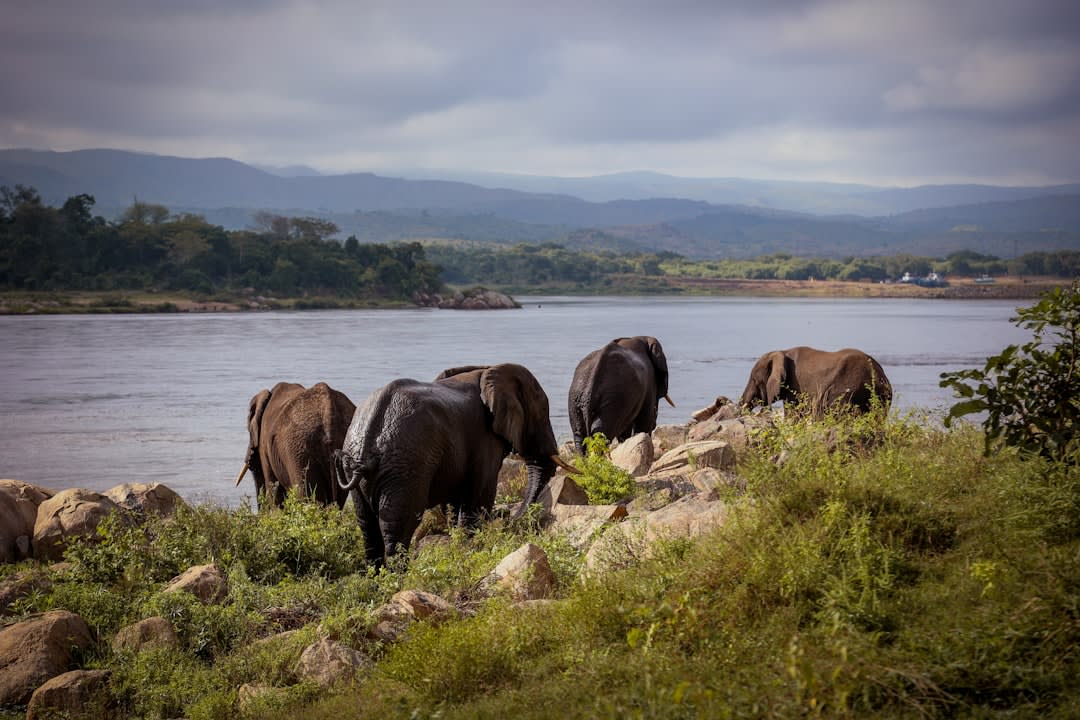
Malawi’s black rhino population is recovering after the species was eliminated from the country by poaching. The country had an estimated 66 black rhinos at the end of 2024, but poaching, habitat pressure and the need for sustained protection remain serious challenges [1].
Last reviewed August 2026. Conservation data changes — see the cited sources for the latest figures.
Black rhino conservation in Malawi: the quick answer
Black rhinos (Diceros bicornis) are Critically Endangered, but Malawi is one of the countries where reintroduction has rebuilt a small national population. The latest figure in the research estimates 66 black rhinos in Malawi at the end of 2024, with two reported rhino poaching cases in the latest period shown [1].
Reintroductions to Liwonde National Park began in 1993, and African Parks, working in partnership with the Malawian Government, added 17 rhinos from South Africa in 2019. These efforts have restored the species to former habitat, strengthened genetic diversity and created a conservation population that depends on long-term security and monitoring [2][3].
Why black rhino conservation matters in Malawi
Malawi is a significant black rhino conservation story because the species was brought back after decades of local extinction. Black rhinos once occupied a much wider area of sub-Saharan Africa, but intensive poaching caused their continental population to fall from roughly 100,000 animals in 1960 to fewer than 2,500 by 1995 [2]. Other sources describe a decline from approximately 65,000 in the 1970s to about 2,400 in 1995 [4].
The black rhino is a browsing specialist. Its hooked upper lip helps it select and pull leaves, shoots and branches from woody vegetation, and it generally uses thick bush, shrubland, woodland and other habitats where browse and water are available [4]. Protecting black rhino habitat therefore supports more than one large mammal: it helps maintain functioning savanna and woodland ecosystems and the wider wildlife communities that depend on them.
Black rhinos are also important because their recovery demonstrates why conservation cannot rely only on protecting animals in their last strongholds. Reintroduction, population management, biological monitoring, anti-poaching work and cooperation between governments and conservation organisations can expand the species’ range when suitable, secure habitat is available [2][3].
Where are black rhinos found in Malawi?
The principal Malawi locations identified in the research are Liwonde National Park and Majete Wildlife Reserve. Both are managed by African Parks in partnership with the Government of Malawi, and both received black rhinos after poaching had eliminated the species from their former ranges [2].
Liwonde is the clearest documented example of Malawi’s reintroduction programme. Reintroductions from South Africa began in 1993. When African Parks assumed management of Liwonde with the Government of Malawi in 2015, a small founder population was present. In 2019, 17 additional black rhinos were transferred from South Africa to improve population genetics, expand the species’ range and increase the potential for a viable population [2].
The transfer formed part of the WWF Black Rhino Range Expansion Project, or BRREP, and was carried out under a custodianship agreement between the Governments of Malawi and South Africa. The rhinos were captured in KwaZulu-Natal, quarantined for six weeks, flown from Durban to Lilongwe and transported to Liwonde, where they were released on 12 November [3].
Visitors considering a Liwonde National Park safari itinerary should understand that a rhino sighting is never guaranteed. Black rhinos are shy, secretive animals that can be difficult to track and observe, particularly in dense vegetation [4]. The value of a visit is broader than seeing one species: responsible tourism helps sustain the protected-area economy in which wildlife protection takes place.
The main threats to Malawi’s black rhinos
Poaching and illegal horn trafficking
Poaching remains the principal direct threat to black rhinos. The species’ historic collapse was driven by large-scale killing for its horn, and continued illegal trade still limits population growth in parts of Africa [2][5]. In the 2025 State of the Rhino figures, Malawi was listed with 66 black rhinos and two reported rhino poaching cases in the latest poaching-count period provided by that source [1].
That figure should be interpreted carefully. A reported poaching count is not the same as a complete measure of illegal activity, and a small population can be highly vulnerable even when the absolute number of incidents is low. Every mature breeding animal matters to a reintroduced population, especially while numbers remain modest and the species’ distribution is concentrated in a limited number of protected areas.
Habitat loss and fragmentation
Black rhinos need secure space containing suitable browse, water and cover. Habitat loss caused by land clearance for agriculture can reduce available range, while human settlements can fragment wildlife habitat and limit safe movement between protected areas [4]. For Malawi, the long-term question is not only whether rhinos survive inside existing reserves, but whether those reserves remain ecologically suitable and socially supported as surrounding land use changes.
Human-wildlife conflict and community pressure
Large wildlife areas are not isolated from people. Conservation organisations increasingly emphasise that communities living alongside wildlife must benefit from conservation and participate in decisions about land and wildlife management [1][7]. Without local support, protected areas can face pressure from resource use, illegal entry and conflict. A durable black rhino programme therefore requires more than armed protection: it also needs credible partnerships, local employment and conservation benefits that communities can recognise.
Climate and environmental change
Climate change is identified alongside habitat loss and the illegal horn trade as a major threat to African rhinos [6]. Changes in rainfall, water availability and vegetation can affect the quality of browse and the resilience of protected habitats. The research does not provide a Malawi-specific climate impact figure, so the most accurate conclusion is that climate variability adds management uncertainty rather than assigning an unsupported national estimate.
What is being done to protect black rhinos in Malawi?
Reintroduction and range expansion
Reintroduction is the foundation of Malawi’s black rhino recovery. The Liwonde programme moved animals from South Africa into habitat where the species had disappeared, then added 17 more individuals in 2019 to enlarge the founder population and improve genetic prospects [2]. Range expansion reduces the risk of concentrating the entire national population in one location and forms part of a broader African strategy to rebuild viable populations.
The BRREP project leader, Dr Jacques Flamand, described population management as an essential tool for critically endangered black rhinos. According to African Parks, BRREP had moved 220 black rhinos to sites covering more than 300,000 hectares by the time of the Malawi translocation [3]. That regional experience is relevant to Malawi because successful translocations require specialised capture, quarantine, transport, release and post-release monitoring.
Protected-area management and anti-poaching
African Parks takes responsibility for the rehabilitation and long-term management of protected areas in partnership with governments and local communities. Its rhino conservation model includes creating safe havens, preventing poaching and managing populations over the long term [2][3]. In Malawi, this work is particularly important because the national population is small and reintroduced animals remain valuable targets for organised wildlife crime.
Effective protection typically combines ranger patrols, intelligence, biological monitoring, secure infrastructure and rapid coordination. The research confirms the importance of anti-poaching, anti-trafficking, protection and biological monitoring across black rhino conservation, but it does not provide a Malawi-specific breakdown of ranger numbers, patrol hours or technology results [5]. Those details should not be inferred or presented as national statistics without a current park report.
Regional cooperation and science
Malawi’s rhino programme is connected to regional conservation planning. The IUCN African Rhino Specialist Group works across African range states, including Malawi, and collaborates with state, community, municipal and private-sector conservation programmes [7]. Regional cooperation matters because rhino populations, expertise, funding and translocation opportunities are not confined neatly within national borders.
Genetic management is another reason the 2019 Liwonde transfer was significant. African Parks specifically states that the additional rhinos improved population genetics, while BRREP’s work demonstrates how animals from earlier translocations can contribute to later conservation moves [2][3]. In a small reintroduced population, careful decisions about founders, breeding and movement can influence resilience for decades.
Results and setbacks: an honest assessment
The principal success is that black rhinos are again present in Malawi after local extinction caused by poaching. Reintroductions began in Liwonde in 1993, and further transfers restored rhinos to protected areas including Liwonde and Majete [2]. The latest research-based national estimate of 66 black rhinos shows that Malawi holds a small but meaningful population rather than a single token introduction [1].
The wider species trend provides cautious encouragement. African black rhino numbers have recovered from the mid-1990s low point, with estimates ranging from 5,366–5,627 in one WWF summary and 6,788 in more recent figures covering the end of 2024 [5][6]. Differences between estimates reflect different assessment dates and reporting methods; they should not be combined as though they were one survey. The consistent message is that the species has increased from its historical low but remains Critically Endangered.
Malawi’s recovery is still vulnerable. A national population of 66 is small compared with the species’ former abundance, and the research does not establish a self-sustaining population trend for each Malawian park. Nor does it demonstrate that poaching, habitat pressure or climate risks have been solved. Conservation gains can be reversed if funding, law enforcement, habitat management or community support weaken.
The wider African picture reinforces that caution. At the end of 2024, Africa’s rhino population was estimated at 22,540, including 6,788 black rhinos and 15,752 white rhinos; black rhino numbers grew by 5.2%, but habitat loss, climate change and illegal trade continued to threaten the recovery [6]. The African Rhino Conservation Framework for 2025–2035 also calls for more inclusive, community-centred management as human populations and pressure on ecosystems grow [6][7].
Community benefits and the role of tourism
Conservation succeeds more reliably when people living near protected areas have a reason and opportunity to support it. The 2025 State of the Rhino research stresses that communities must benefit from conservation, while the IUCN’s African framework calls for approaches that respond to changing political, social and demographic conditions [1][7]. This makes local livelihoods, consultation and fair distribution of tourism benefits part of rhino conservation—not an optional add-on.
A wildlife safari can contribute by generating accommodation, guiding, park-access and conservation revenues, although the exact flow of funds depends on the park, operator and concession arrangement. Travellers should ask how conservation fees are used, whether staff are locally employed and whether the operator supports the protected area or community programmes. A responsibly selected safari lodge in Malawi can help visitors make more informed decisions about where their travel spending goes.
Tourism must also be managed carefully. Black rhinos are sensitive wild animals, and close approaches, crowding or pressure to guarantee sightings can undermine welfare and visitor safety. Guides should maintain a respectful distance, follow park rules, avoid blocking an animal’s route and never encourage off-road pursuit simply to obtain a photograph.
Travellers can book conservation-supporting safaris on SafariFind, but the responsible choice is to treat tourism as one contribution to a larger system that includes government agencies, African Parks, rangers, scientists and neighbouring communities.
How travellers can help black rhino conservation responsibly
- Choose legal, conservation-minded operators. Ask whether the itinerary uses authorised parks and guides, and whether fees or donations support protected-area management or local community initiatives.
- Do not buy wildlife products. Never purchase rhino horn, carved horn items or souvenirs that may encourage illegal trade. Poaching for the illicit horn market remains the central direct threat to black rhinos [2][5].
- Follow viewing rules. Keep the distance required by guides and park authorities, remain quiet and avoid surrounding animals with vehicles.
- Support longer-term conservation. Consider donating to established organisations with transparent programmes rather than giving money to unverified wildlife appeals.
- Respect communities. Use local guides and businesses where possible, ask permission before photographing people and recognise that conservation landscapes are also lived-in social landscapes.
- Share accurate information. Explain that Malawi’s rhino recovery is real but fragile. Avoid claiming that the species is “saved” or that one reintroduction has solved poaching.
Conclusion
Black rhino conservation in Malawi is a qualified success story: reintroductions have restored the species after its disappearance, and the country’s population was estimated at 66 animals at the end of 2024 [1][2]. Liwonde National Park, Majete Wildlife Reserve, African Parks, the Government of Malawi, South African partners and BRREP have all contributed to that recovery [2][3].
The next stage is harder than the first. Malawi must keep rhinos safe, maintain habitat, protect genetic and demographic health, and ensure that neighbouring communities see lasting value in conservation. Continued funding, professional management, regional cooperation and responsible tourism will determine whether a small reintroduced population becomes a secure and growing part of Malawi’s wildlife heritage.
Frequently Asked Questions
Are black rhinos found in Malawi in 2026?
Yes. Black rhinos are found in Liwonde National Park and Majete Wildlife Reserve, where they were reintroduced after poaching eliminated them from their former ranges [2].
How many black rhinos are in Malawi?
The latest figure in the supplied research estimates 66 black rhinos in Malawi at the end of 2024 [1].
When were black rhinos reintroduced to Malawi?
Reintroductions to Liwonde National Park began in 1993. A further 17 rhinos were transferred from South Africa in 2019 [2].
Where can I see black rhinos in Malawi?
The research identifies Liwonde National Park and Majete Wildlife Reserve as Malawi’s black rhino locations [2]. Sightings are not guaranteed because black rhinos are shy and can be difficult to track in dense vegetation [4].
Are black rhinos endangered?
Yes. The black rhino is classified as Critically Endangered. Its population recovered from fewer than 2,500 in the mid-1990s, but poaching, habitat loss, climate change and illegal trade remain threats [4][5][6].
What is the biggest threat to black rhinos in Malawi?
Poaching for the illegal horn trade is the main direct threat. Habitat loss and fragmentation, human-wildlife conflict and climate-related environmental change also create longer-term risks [1][2][4][6].
Who protects black rhinos in Malawi?
African Parks manages Liwonde and Majete in partnership with the Government of Malawi. Conservation also involves South African partners, the WWF Black Rhino Range Expansion Project and regional expertise from the IUCN African Rhino Specialist Group [2][3][7].
How can a safari help black rhino conservation in Malawi?
A safari can support the protected-area economy through park fees, accommodation, guiding and other visitor spending, but the exact conservation benefit depends on the park and operator. Travellers should ask how fees are used and choose authorised, responsible providers [1][6].
Can visitors get close to black rhinos in Malawi?
Visitors should not seek close approaches. Black rhinos are wild, shy and potentially dangerous animals, so guests should follow guide instructions, keep the required distance and never pressure a guide to improve a sighting [4].
Has black rhino conservation in Malawi succeeded?
It has achieved an important success: reintroduction restored black rhinos to Malawi after local extinction, and the national population was estimated at 66 animals at the end of 2024. The population remains small and requires sustained protection, habitat management and community support [1][2].


