African Elephant Conservation in Uganda (2026): Threats & Recovery
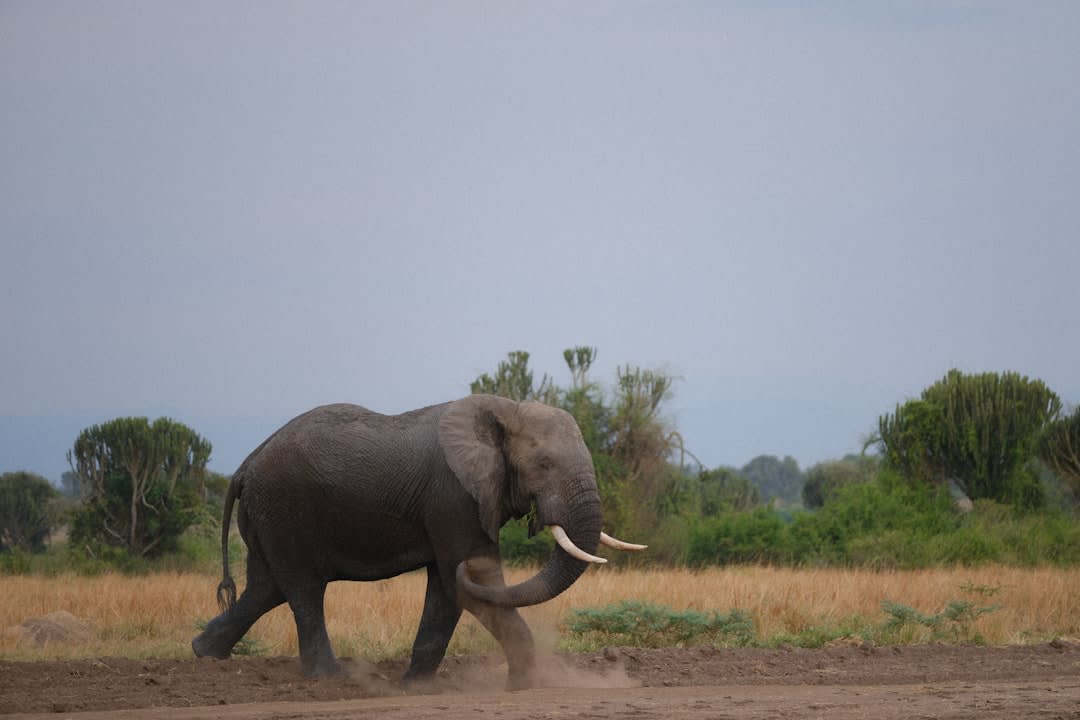
Uganda’s elephant populations have recovered substantially from the crisis years of the 1980s, but habitat loss, human-elephant conflict and ivory poaching remain serious threats. The latest figures in the available research range from 5,564 elephants in protected areas to 7,975 nationally in 2021, reflecting different survey dates and coverage.
Quick answer: African elephant conservation in Uganda is showing a long-term recovery, but it is not a finished success story. Uganda Wildlife Authority’s Elephant Conservation Action Plan estimated 5,564 elephants in wildlife protected areas, while a 2023 report citing 2021 national wildlife figures gave a total of 7,975; the estimates should not be treated as directly comparable because their survey coverage and methods differ [1][2].
Uganda’s main conservation priorities are protecting elephant habitat, preventing ivory poaching, reducing conflict with neighbouring communities and improving monitoring across connected landscapes. Queen Elizabeth, Murchison Falls, Kidepo Valley and Kibale national parks are central to that work [1][3].
Last reviewed August 2026. Conservation data changes — see the cited sources for the latest figures.
Why African elephant conservation matters in Uganda
Uganda is an important refuge for African elephants in East Africa. The country’s protected areas include savanna landscapes, woodland, river systems and forest habitats that support elephants alongside species such as lions, buffaloes and chimpanzees. Elephants also move across international boundaries, making conservation dependent on cooperation between Uganda and neighbouring countries, particularly the Democratic Republic of the Congo (DRC) [1][3].
The country’s elephant population suffered a severe historic decline. The Elephant Conservation Action Plan reports that numbers in key protected areas fell to about 2,000 in the 1980s, before gradually increasing to an estimated 5,564 in protected areas [1]. Conflict and political upheaval during the 1960s through the early 1980s allowed widespread poaching and caused major losses of wildlife in Uganda [2].
That history explains why the current recovery matters. It also explains why a national total needs careful interpretation: elephants are not confined to one park, and surveys may cover protected areas differently. The Uganda plan specifically notes that the protected-area estimate could be higher if remnant forest populations outside national parks and wildlife reserves were surveyed [1].
Uganda protects elephants under national wildlife law, and elephants remain listed under Appendix I of the Convention on International Trade in Endangered Species of Wild Fauna and Flora (CITES), according to the national action plan [1]. The plan covered 2016–2026 and was developed by Uganda Wildlife Authority (UWA), the country’s statutory wildlife-management agency [1].
Uganda elephant population: what the available evidence shows
No single number in the available research should be presented as the definitive 2026 population. The sources use different dates, locations and survey approaches. The most useful interpretation is that Uganda’s elephant population has increased substantially since the 1980s, while some individual landscapes remain below historical levels [1][2][3].
| Evidence | Figure or finding | What it means |
|---|---|---|
| UWA national action plan | 5,564 elephants estimated in wildlife protected areas | A protected-area estimate, not necessarily a complete national count [1] |
| Historical comparison in the action plan | About 2,000 elephants in the 1980s, rising to 5,564 in protected areas | Shows substantial long-term recovery, associated by the plan with conservation, legislation, policy and improved stability [1] |
| Murchison Falls Protected Area | 1,330 elephants in the cited survey results | The population had not returned to its 1960s–1970s peak levels when the plan was written [1] |
| Kibale National Park study | 566.27 elephants estimated in 2019, with 95% confidence limits of 377.24–850.02 | A dung-count estimate for one forest park, not a national total [4] |
| 2021 national figure reported in 2023 | 7,975 elephants | A later national figure reported by Yale Environment 360; it is not directly comparable with the UWA protected-area estimate [2] |
In Kibale National Park, researchers estimated 566.27 elephants between August 2019 and February 2020 using line transects and dung-pile density, compared with 393 recorded in 2005 [4]. The study described this as a slow increase, while also assessing distribution and conservation threats. Forest surveys are especially important because elephants can be difficult to count directly in dense vegetation [4].
Murchison Falls illustrates the more complicated side of recovery. The action plan cited 1,330 elephants in Murchison Falls Protected Area, but said the population still had a long way to go to regain its 1960s and 1970s peak [1]. Recovery at national level therefore does not mean that every park has returned to its former carrying capacity.
The main threats to elephants in Uganda
Ivory poaching and illegal trade
Poaching for ivory is one of the two key threats identified in Uganda’s Elephant Conservation Action Plan, alongside habitat loss [1]. The plan states that illegal ivory trade had increased during the five years before its publication and warns that poaching damages Uganda’s natural heritage, rural economic security and wildlife-tourism revenue [1].
Illegal killing is not only a field-protection problem. It involves trafficking networks, demand outside elephant range states and weaknesses in the detection, investigation and prosecution chain. Uganda’s wider anti-poaching response is covered in SafariFind’s guide to anti-poaching and wildlife crime in Uganda. For elephants specifically, effective conservation requires patrols, intelligence, secure evidence handling, cross-border cooperation and reliable population monitoring.
Habitat loss and fragmentation
Habitat loss reduces the space available for elephants and can divide formerly connected ranges. The national action plan identifies the expansion of human settlement and agriculture as drivers of rising human-elephant conflict, because people have increasingly occupied areas that historically formed part of elephant range [1].
Fragmentation is particularly important for elephants because they require access to water, forage and movement routes across large landscapes. The IUCN country brief recommends stronger community organisations, nature-based livelihoods, ranger coverage and digital monitoring to address pressures including habitat destruction, poaching and conflict [5].
Human-elephant conflict
When elephants raid crops, the consequences can be immediate for households living near protected areas. Crop loss can damage food security and income, while fear and property damage can weaken local support for conservation. The UWA action plan describes increasing conflict as human populations expanded into former elephant range [1].
Practical deterrents must be locally appropriate and non-lethal. A 2025 IUCN country brief reports that beehive fences in Murchison Falls National Park helped deter elephants and reduce crop-raiding, while non-lethal deterrents and trenches were used in Kibale National Park [5]. These interventions should be assessed over time with communities rather than treated as universal solutions.
Climate and changing resources
The available Uganda-specific research does not provide a quantified national estimate of climate-change impacts on elephants. However, changes in rainfall, water availability and vegetation can increase pressure where elephants and farms share limited resources. The conservation response should therefore combine habitat protection, landscape connectivity, water and fire management, and conflict-prevention measures. Where evidence is still limited, monitoring is essential before making precise claims about population effects.
What is being done: parks, rangers and conservation programmes
UWA is the principal agency implementing elephant protection in Uganda. Its 2016–2026 Elephant Conservation Action Plan sets out national priorities for elephant monitoring, law enforcement, habitat protection, conflict management and cooperation with communities and neighbouring countries [1].
- Queen Elizabeth National Park and Conservation Area: The park is one of Uganda’s key elephant areas and a cited Monitoring the Illegal Killing of Elephants (MIKE) site. Research has also examined movements between Uganda’s Queen Elizabeth Conservation Area and Virunga National Park in the DRC, demonstrating the importance of transboundary security [1][3]. For practical trip planning, SafariFind’s guide to Queen Elizabeth National Park safari costs and booking provides visitor context.
- Murchison Falls National Park and Protected Area: Murchison is another MIKE site named in the action plan. Conservation measures include ranger protection, population surveys and community conflict-reduction work. The IUCN brief specifically identifies beehive fences as a tool used to deter crop-raiding elephants [1][5].
- Kidepo Valley National Park: Kidepo is among the key protected areas where the action plan records a gradual elephant increase since the late 1980s [1]. Its location makes landscape-level security and monitoring important, although the research supplied here does not provide a current park-specific count.
- Kibale National Park: Researchers used dung-pile surveys to estimate the elephant population and examine threats between 2019 and 2020. The study’s methodology illustrates why repeated, standardised monitoring is needed in forest habitat [4].
External conservation funding also supports Uganda’s work. Between 2020 and 2023, the IUCN Save Our Species African Wildlife Initiative awarded six grants totalling €523,748 to six Ugandan civil-society organisations. The initiative reported enhanced management and protection of more than 1,014,300 hectares of critical wildlife habitat, along with conflict-reduction activities including elephant deterrence [5]. These are programme outputs, not proof that every threat has been solved.
In Murchison Falls, the Elephant Conservation Action Plan and partner reports also identify ranger infrastructure and operational capacity as important. The International Elephant Foundation reported supporting ranger stations, a veterinary facility and a Joint Operating Command Center coordinating ranger and security operations in the park [6]. Such support can strengthen field protection, but long-term results depend on continuity, funding, staff welfare, accountability and community relationships.
Community participation and tourism’s role
Elephant conservation cannot succeed through enforcement alone. Communities living beside parks experience the costs of wildlife presence, so conservation programmes need to reduce crop damage, create credible benefits and involve local people in decisions. The IUCN country brief recommends strengthening community-based organisations and expanding nature-based livelihoods so that communities can sustain conservation actions beyond individual projects [5].
Responsible tourism can contribute through park fees, local employment, guiding, accommodation, transport and conservation partnerships. The research supplied for Uganda notes that wildlife-tourism revenue is heavily affected by poaching and that park entrance fees help fund ranger patrols and related operations [1][6]. Tourism is not automatically beneficial: operators should follow park rules, avoid disturbing elephants and support businesses that employ local people fairly.
Travellers can book conservation-supporting safaris on SafariFind, including trips focused on Uganda’s major wildlife areas. A safari is most responsible when it treats elephant sightings as a privilege, not a guaranteed product, and when spending supports the protected-area economy without encouraging close or unsafe encounters. SafariFind’s Uganda safari tours comparison can help visitors understand how itineraries differ by park and trip length.
Results and setbacks: a balanced 2026 assessment
Uganda’s clearest conservation result is the broad recovery from the approximately 2,000 elephants reported in the 1980s to 5,564 in protected areas in the UWA action plan [1]. A later report citing 2021 national figures recorded 7,975 elephants, reinforcing the picture of recovery, although differences in coverage mean the two numbers should not be used as a simple growth calculation [2].
There are also encouraging site-level findings. Kibale’s estimated population increased from 393 in 2005 to 566 in 2019, although the study characterised the increase as slow and gave wide confidence limits around the estimate [4]. Uganda’s wider wildlife recovery has been linked to stronger protection, legislation and greater national stability after the upheavals of the earlier period [1][2].
The setbacks are equally important. Murchison Falls had not regained its historical 1960s–1970s elephant numbers when the national action plan assessed it [1]. Habitat conversion continues to bring farms and elephants into closer contact, while poaching remains a strategic threat even where populations are recovering [1][5]. Funding can also be vulnerable to interruptions in tourism and to short-term project cycles. The IUCN brief’s recommendations for stronger local organisations, livelihoods, ranger coverage and digital monitoring show that conservation capacity still needs investment [5].
The most accurate 2026 conclusion is therefore cautious optimism: Uganda has demonstrated that elephant populations can recover when protection and governance improve, but maintaining that recovery requires reliable monitoring, secure habitat, effective law enforcement and tangible benefits for neighbouring communities.
How travellers can help Uganda’s elephants responsibly
- Choose licensed operators and follow UWA park regulations, guide instructions and minimum viewing distances.
- Never request off-road approaches, feeding, touching or baiting of wild elephants.
- Support accommodation, guides, drivers and community enterprises that employ people living near protected areas.
- Ask operators how their trips contribute to conservation or local communities, without demanding unsupported claims about specific donations.
- Do not buy ivory or any wildlife product whose legal origin is unclear; illegal ivory trade is a central threat identified by Uganda’s national action plan [1].
- Keep noise low, avoid blocking elephant routes and allow animals to move away freely.
- Share sightings responsibly and avoid publishing sensitive information about locations that could increase disturbance or security risks.
Visitors interested in combining wildlife with other Ugandan landscapes can also plan journeys around destinations such as the linked SafariFind guides to Masindi and Kabwoya Wildlife Reserve. The conservation principle remains the same: travel should support protected-area management and local livelihoods while keeping wildlife welfare ahead of close-up photographs.
Frequently Asked Questions
How many elephants are there in Uganda in 2026?
There is no single 2026 population figure in the supplied research. UWA estimated 5,564 elephants in Uganda’s wildlife protected areas, while a 2023 report cited 7,975 nationally in 2021; the estimates have different dates and coverage and are not directly comparable [1][2].
Are elephants increasing in Uganda?
Yes, the available evidence shows a long-term increase from about 2,000 elephants in the 1980s to 5,564 in protected areas in the UWA action plan. Recovery is uneven, and Murchison Falls had not returned to its 1960s–1970s peak when the plan was written [1].
What is the biggest threat to elephants in Uganda?
The two principal threats identified by Uganda’s Elephant Conservation Action Plan are habitat loss and poaching for ivory. Human-elephant conflict increases as settlement and agriculture expand into historic elephant range [1].
Which Ugandan parks are important for elephant conservation?
Queen Elizabeth, Murchison Falls and Kidepo Valley national parks are identified as key elephant protected areas in the national action plan. Kibale National Park is also important for forest-elephant research and monitoring [1][4].
Does Uganda still have an elephant-poaching problem?
Ivory poaching remains a serious conservation threat even though Uganda’s elephant population has recovered over the long term. The national action plan identifies illegal ivory trade and poaching as central risks requiring continued law enforcement and monitoring [1].
How does human-elephant conflict affect Ugandan communities?
Elephants can damage crops and property when farms and settlements overlap with their historic range. Uganda-supported responses include beehive fences in Murchison Falls and non-lethal deterrents and trenches in Kibale [1][5].
Can tourism help protect elephants in Uganda?
Yes. The research states that park entrance fees help fund rangers and that wildlife tourism supports conservation revenue and local economic activity. Tourism is most helpful when visitors follow park rules and spend through responsible local operators [1][6].
What is the elephant population in Kibale National Park?
A study conducted between August 2019 and February 2020 estimated 566.27 elephants, with 95% confidence limits of 377.24–850.02. The estimate came from dung-pile surveys and should not be treated as a current national total [4].
What organisation protects elephants in Uganda?
Uganda Wildlife Authority is the principal government agency responsible for wildlife management and implements the country’s Elephant Conservation Action Plan. Conservation partners, civil-society organisations and communities also contribute to habitat, monitoring and conflict-reduction work [1][5].
How can visitors help Uganda’s elephants?
Visitors can use licensed operators, follow guide instructions, keep a safe distance, avoid buying ivory, support local businesses and choose trips that contribute to responsible protected-area tourism. They should never pressure guides to create closer wildlife encounters.